
These ideas run from zero dollars to the cost of a single can of paint, and the one that fits your room depends on whether you have a free afternoon or a free ten minutes. The catch is patience: a brass lamp from a consignment shop sat ignored for three weeks before the right buyer noticed its 1960s base shape. New shade, twelve dollars, and it looks deliberate now. That same patience separates the pieces that read as collected from the ones that read as bought.
1. Thrift and Consignment Finds

The best pieces in my living room came from a consignment shop on a street I almost skipped. A brass lamp with a dented shade sat there for three weeks before I noticed the base shape was right out of a 1960s showroom. New shade, $12 at a big-box store, and it looks like I hunted it down on purpose.
Thrift stores in higher-end neighborhoods tend to get the good furniture first. Consignment shops are pickier about condition, so the bones are usually solid even when the finish is dated. Flea markets reward early mornings and loose plans: the mirror you need might show up as a frame with broken glass, or a mirror without a frame at all. Either way works if you know a coat of paint or new hardware takes something from dated to designer in an afternoon.
Brass candlesticks, blue and white pottery, vintage art, classic lamp shapes, mirrors with good frames: these are the things that read as collected rather than bought. The limit is patience. I keep a running list on my phone so I don’t come home with a third ceramic owl because it was cheap.
2. DIY Oversized Picture Frames

Oversized artwork changes a room immediately, but the frame is where the money disappears. Pre-made frames in large sizes run into the hundreds, and that is before custom matting or shipping. Building your own drops the cost to the price of a few boards and a miter box, which most makers already own.
1-by-2 or 1-by-3 pine from the home center works for the frame itself. Cut four pieces to your dimensions, miter the corners, and join them with wood glue and corner braces or a staple gun. The back gets a sheet of thin plywood or hardboard tacked on, and the art sits inside rather than behind glass. For printable art, canvas, or even fabric, the same structure holds.
Paint or stain the frame before assembly to keep the finish out of the corner joints. Black, white, or a tone that matches the wall will read as intentional rather than homemade. The savings come from skipping the glass, the mat, and the labor markup built into store frames. A 36-by-48-inch DIY frame costs roughly what a 16-by-20 pre-made one does, and the wall impact is not close.
3. Faux Grasscloth Wallpaper
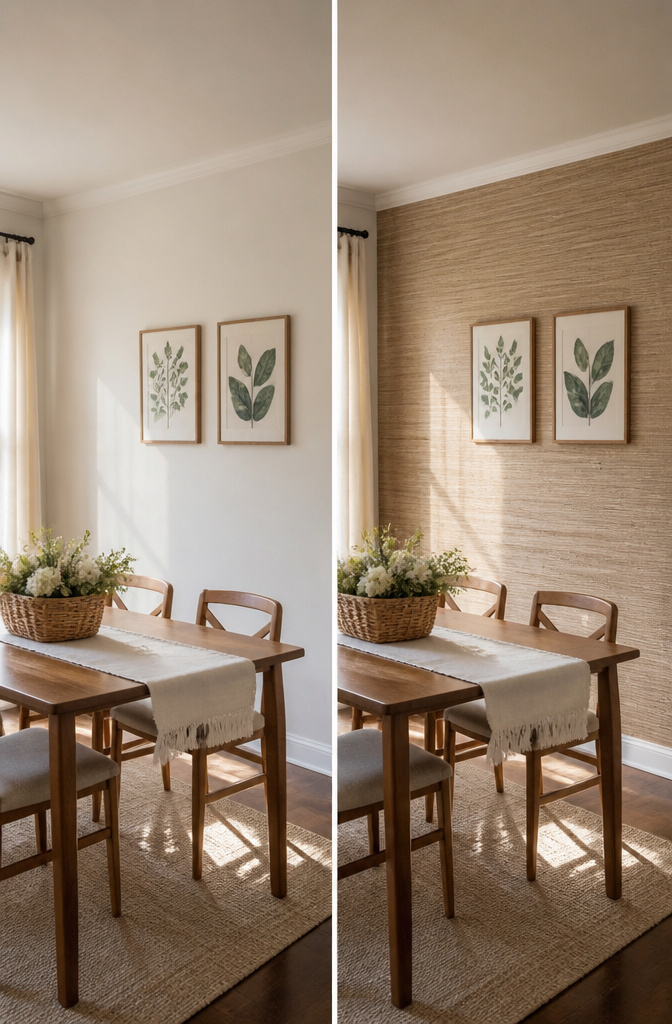
Real grasscloth wallpaper carries a price tag that stops most budgets cold. Hundreds, sometimes thousands, for natural woven wall covering turns what should be a warm, textured accent into a splurge you can’t justify. The look itself is worth wanting, though: that soft, layered dimension reads as quiet luxury in a dining room or bedroom, and it does things flat paint never will.
Faux grasscloth wallpaper lands the same visual effect at a fraction of the cost. Modern versions carry the irregular weave pattern and tonal variation well enough that you’d need to be standing close and looking for the seam to spot the difference. Some lines come peel-and-stick, which changes the game for renters or anyone nervous about commitment. The backing strips away clean, so you’re not gambling your security deposit on a style experiment.
Application stays simple enough for an afternoon. Clean the wall, start from a level line, and smooth as you go; the texture forgives minor wall imperfections that would telegraph through standard paper. The warmth it adds to a space punches far above its price point, and that gap between what it looks like you spent and what you actually spent is the whole point of decorating on a budget.
4. Inexpensive Pillow Covers

Throw pillows drain a budget fast when you buy the whole thing. Designer versions run upward of $60 for a single pillow, which is why swapping just the cover and reusing the insert you already own is the smarter move. Amazon carries budget-friendly covers in enough patterns, colors, and textures to mimic what shows up in boutiques. The ones with hidden zippers and textured fabrics hold up best in daily use and still cost a fraction.
Stored covers take up almost no closet space compared to bulky pillows, so seasonal changes stay practical. Mix a few budget covers with one luxe fabric and the sofa reads layered rather than cheap. Trends become low-risk experiments when the cover costs less than a takeout lunch.
5. Rearrange What You Own
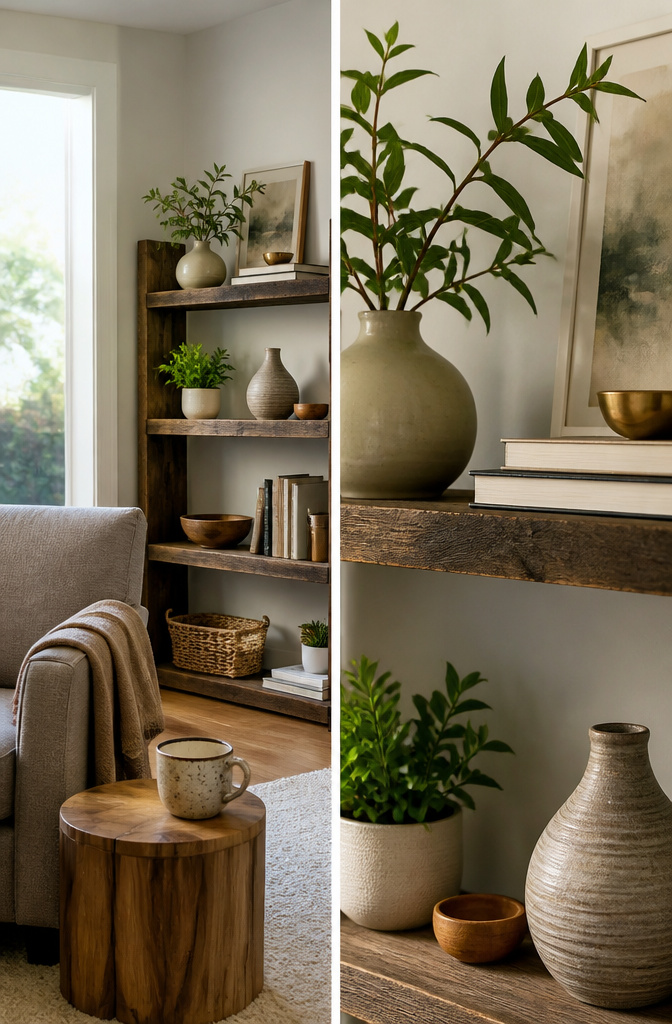
The lamp that used to live on my nightstand now sits on the side table by the sofa, and the difference is enough that guests ask if it is new. Shopping your own house is the fastest zero-dollar refresh there is. Pull a vase from the bedroom into the kitchen, swap the books on the coffee table for the stack on the desk, and the room resets itself without a trip to the store.
I clear the whole surface first when I am stuck. Everything off the mantel, everything off the shelf, then put back only what I still like and move the rest to a closet. That empty-start method breaks the habit of leaving things where they have always sat. It also edits down clutter fast; extras go into a bin for a season, and when they rotate back out they look interesting again.
The planter that felt tired on the bathroom counter groups differently with a chinoiserie jar and a stack of books on the living room shelf. Same pieces, new context. No paint, no purchase, no reason to wait until Saturday.
6. Affordable Window Curtains
Windows draw the eye whether you mean them to or not. Bare ones feel unfinished, and the wrong treatment makes a whole wall feel cheap.
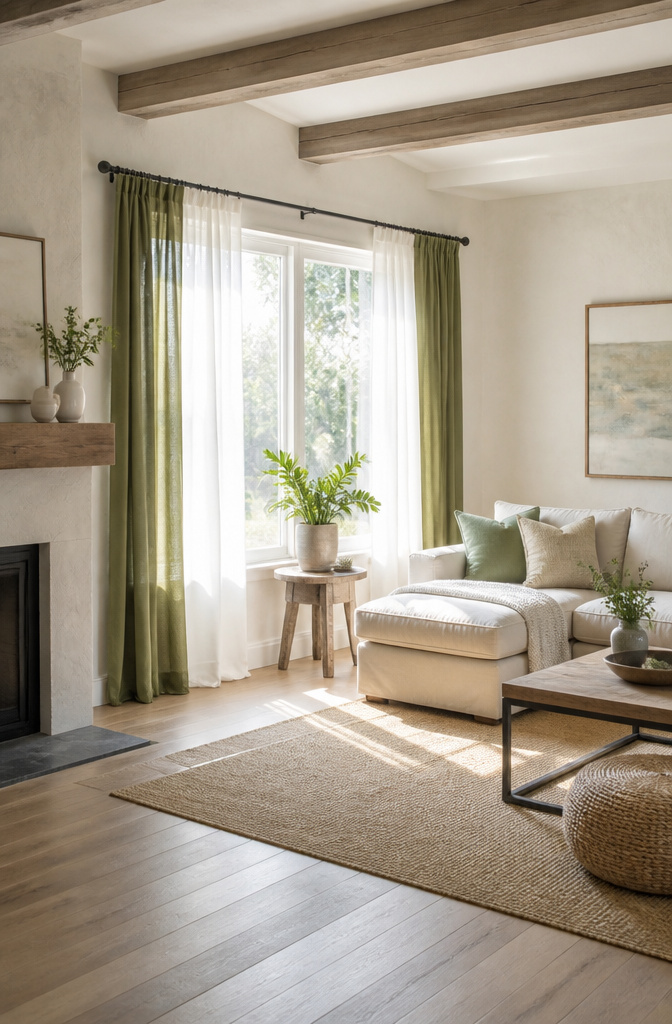
The ready-made panels at IKEA, HomeGoods, and Overstock run a fraction of custom work. My white IKEA panels hang beside green ones from Overstock, and the mix reads intentional because both hit the floor clean and the hardware matches.
Mount the rod halfway between the window frame and the ceiling, and extend it wide enough that the open curtain just clears the glass. The fabric looks fuller, and the window itself looks larger. If you want more drama, paint the sash a deep charcoal like Iron Ore and layer a bamboo shade underneath. The contrast does what crown molding does at a tenth of the cost.
7. Paint or Wallpaper Accent Wall

One bold wall changes a room for the cost of a single can of paint or a roll of peel-and-stick paper. The rest of the space stays neutral, so you are not buying five gallons to cover four walls you barely notice.
Removable wallpaper has come far enough that some patterns read as grasscloth or deep texture from a few feet away. A dining room I saw recently used the faux version, and the warmth was real even if the weave was not. Peel-and-stick goes up in an afternoon and comes down without wall damage, which matters if the deposit matters.
Paint plays the same trick for even less. A deep blue at the far end of a hallway turns the walk into something intentional. Ceilings work too, though they ask more of your neck and your ladder.
The limit is the commitment. One wall is a trial. Two walls start to look like a decision you did not fully make. Keep the others in a quiet tone and let the single surface carry the whole room.
8. Wall Molding for Architecture
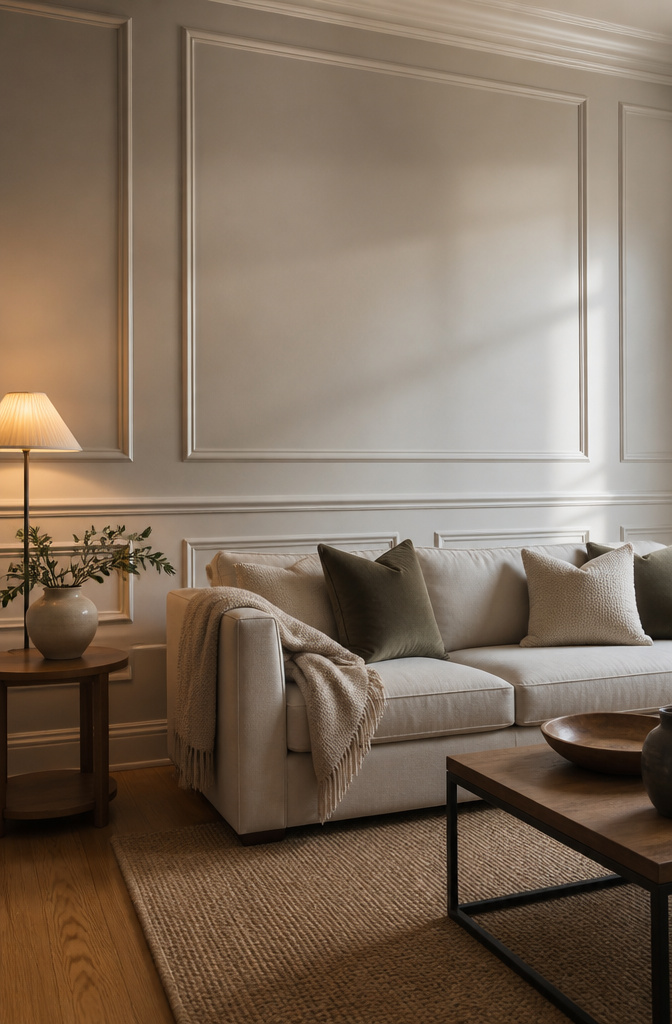
Flat walls read as unfinished once you start looking for it. The fix is trim that costs less than a single framed print and installs with a miter box and finish nails.
Picture frame molding is the starting point most people recognize: four pieces of colonial or ranch casing arranged into rectangles that sit below chair-rail height. Chair rail itself splits the wall horizontally and gives an excuse to run two paint colors, which reads as more design work than it is. For something more formal, box molding stacks those picture frames in a grid between baseboard and rail. None of it moves studs or reroutes wiring. It sticks to the surface, gets caulked at the joints, and reads as original architecture after a coat of semigloss.
Paint matters as much as placement. Glossier sheen on the trim than the wall creates shadow lines that fake depth even under cheap apartment fluorescents. I’ve seen rooms where the molding was MDF from the hardware-store bargain bin and the paint job was what sold it.
The limit is landlord tolerance in a rental. Construction adhesive behind the trim leaves nail holes to patch later, but the adhesive itself can pull paper or paint on removal. In owned space, the risk disappears and the payoff is permanent character for the cost of a Saturday and maybe sixty dollars in materials.
9. Plants for Life and Texture
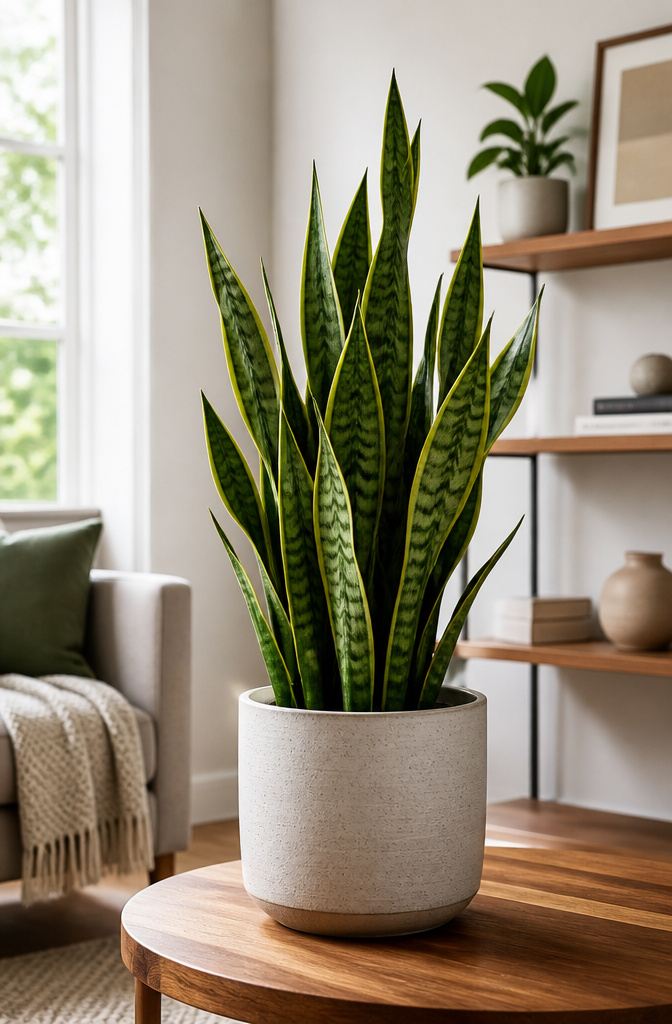
A single healthy plant on a table or shelf brings more life to a room than most accessories twice its size. Real greenery softens hard edges and adds color that shifts with the light through the day. For anyone who has killed a succulent through overwatering, cacti and succulents forgive the busiest schedule, needing water only when the soil has dried through. Pothos and snake plants handle low light and irregular care about as well.
Faux options have improved enough that a quality artificial stem used season after season beats a grocery-store bouquet that browns in a week. The trick is buying one or two stems on sale rather than a full arrangement that looks dated fast. Hang a trailing pothos in a wicker basket for bohemian texture, or keep a single stem in a plain vase for mid-century restraint.
The cheapest route costs nothing at all: most plant people love sharing cuttings. A snip in water roots in weeks, and you trade the patience for a full green corner without the garden-center markup. When a room feels flat, this is the move I try first.
10. Swap Light Fixtures

The overhead light in my last apartment was a flush-mount dome from the nineties that made every evening feel like a dentist’s waiting room. Swapping it for a $12 brass schoolhouse fixture from a thrift store changed the whole room in twenty minutes. A new light fixture is the fastest way to shift a room’s mood without touching the walls.
Thrift stores and online marketplaces are where the worthwhile pieces hide. Look for lamps with classic shapes, even if the shade is yellowed or dated. A replacement shade costs less than a whole new lamp, and the base is what actually shows. Metal lamps with exposed bulbs lean industrial; soft-toned minimalist fixtures read Scandinavian.
Ceiling swaps look harder than they are. The wires are color-coded, and the bracket either lines up with the old box or it doesn’t. If it doesn’t, that’s a landlord or electrician job, not a Saturday project. Table lamps sidestep the question entirely. Either way, the light you live under is worth choosing deliberately.
11. New Hardware on Old Furniture
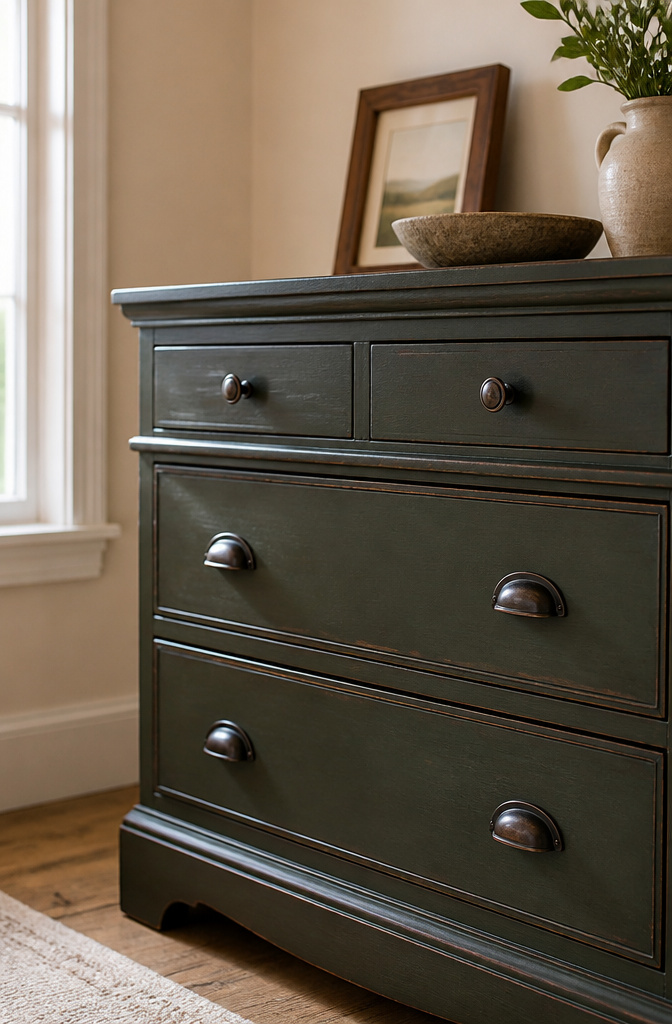
The brass pulls on my dresser had turned green at the edges, but the drawers still slid smooth. New hardware cost less than a cappuccino and took twelve minutes to install with a screwdriver I already owned.
Match the new piece to the old hole spacing or you will drill fresh holes that show on drawer faces meant to stay clean. Centers on pulls run 3 or 3.75 inches apart on most older furniture; measure before you shop. Knobs need only one hole, which forgives a lot.
Style is where you make the piece yours. A tapered bar pull reads modern; a cup bin pull turns the same dresser farmhouse. Oil-rubbed bronze against painted wood looks custom in a way the original brass never did.
Big-box hardware stores carry the basics, but online salvage shops and estate-sale lots sell mismatched vintage sets for pocket change. I have found Bakelite knobs for under a dollar each and iron pulls by the pound. The hunt is half the point, and the result looks like you planned it all along.
12. Baskets and Trays

Baskets and trays earn their keep in almost every room, and they cost next to nothing if you know what to hunt for. Woven seagrass, rattan, or wire baskets add the kind of natural texture that keeps a neutral room from feeling sterile. A white kitchen especially benefits; the warmth of a woven container against clean cabinets does more than a new decorative object ever could. Blankets, magazines, toys, or the mail you will sort tomorrow all disappear inside, and the room looks finished without looking staged.
Trays work the same trick on flat surfaces. A wooden or metal tray corrals coffee supplies on a counter, groups candles on a coffee table, or gathers perfume bottles on a dresser so the surface reads as one intentional arrangement instead of scattered clutter. If a room feels flat, add texture before buying more decor. One woven basket or a simple wooden tray changes how the whole space reads. Both pieces move where you need them, and you will use them for years without tiring of the look.
13. Paint Over What You Have
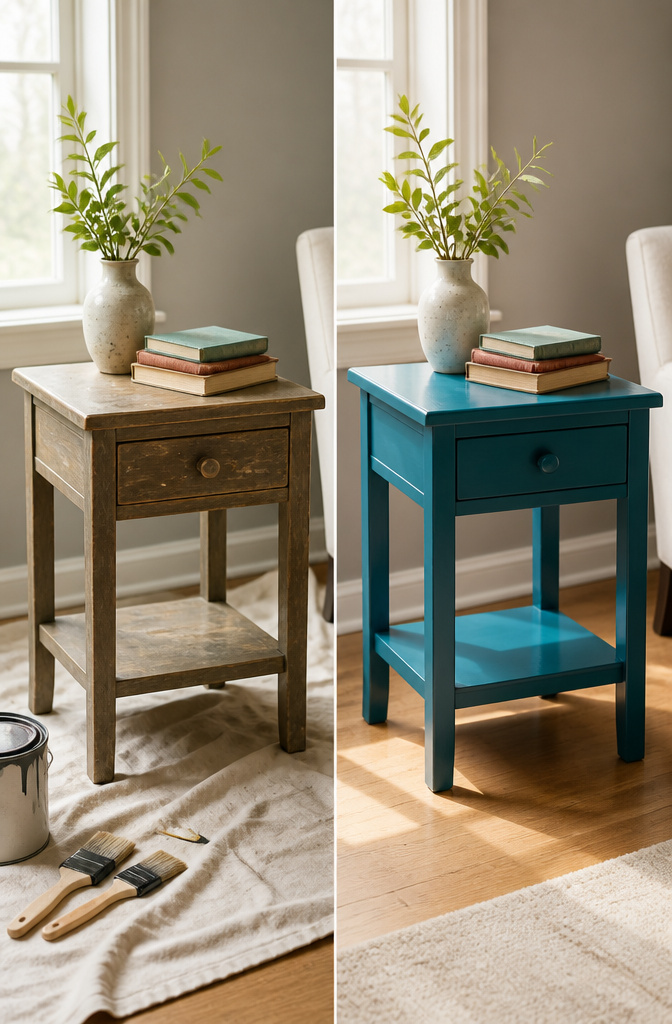
A can of paint has pulled more things in my home back from the brink than any other single tool. The trick is matching the paint to the surface, and that part is simpler than the shelf of specialty cans suggests. Latex or acrylic water-based paint works on walls, furniture, and most decorative accessories. Oil-based paint or a dedicated metal formula holds up on lamp bases and anything that gets handled often. For glass or ceramic vases, a primer made for slick surfaces keeps the coat from chipping when someone sets it down hard.
New hardware runs about two dollars a pull at the big-box stores, and swapping knobs on a dresser or side table takes ten minutes with a screwdriver. The combination of fresh paint and updated pulls makes a thrifted piece feel built for the room instead of dropped into it.
Frames are the easiest win. A mismatched cluster in flat black or one warm white unifies a wall in a single afternoon. The paint itself is the cost, and the labor is the kind of mindless work that pairs well with a podcast.
14. Simple Vignettes

A small stack of books, a chipped piece of pottery, a branch from the yard: that is the whole budget for a vignette. The trick is treating these things as intentional, not leftover.
The surface matters first. A coffee table, a windowsill, the top of a dresser, any flat area that catches light becomes the stage. Clear everything off it. Wipe it clean. The empty space reads as possibility, not as bare.
Build in odd numbers. Three objects, five, never two or four. The eye rests on asymmetry. Height variation keeps the arrangement from flattening into a line. A tall jar behind a low bowl, a small frame propped against a stack of books. The books do not need to match, but their spines should not scream at each other. Turn them spine-in if the colors fight.
Rotate seasonally without buying anything. Store half your objects in a box for three months. Pull them back out, and the room feels new. The chinoiserie jar that sat in the bedroom last winter reads as a discovery on the living room shelf.
A vignette fails when every object demands equal attention. Choose one thing to lead, usually the tallest or the most personally strange. The others support it. If nothing in the grouping connects to your actual life, no borrowed styling trick will save it. The pottery should be yours, the flowers from your walk, the frame holding your grandmother’s photograph.
Why DIY Beats Buying New
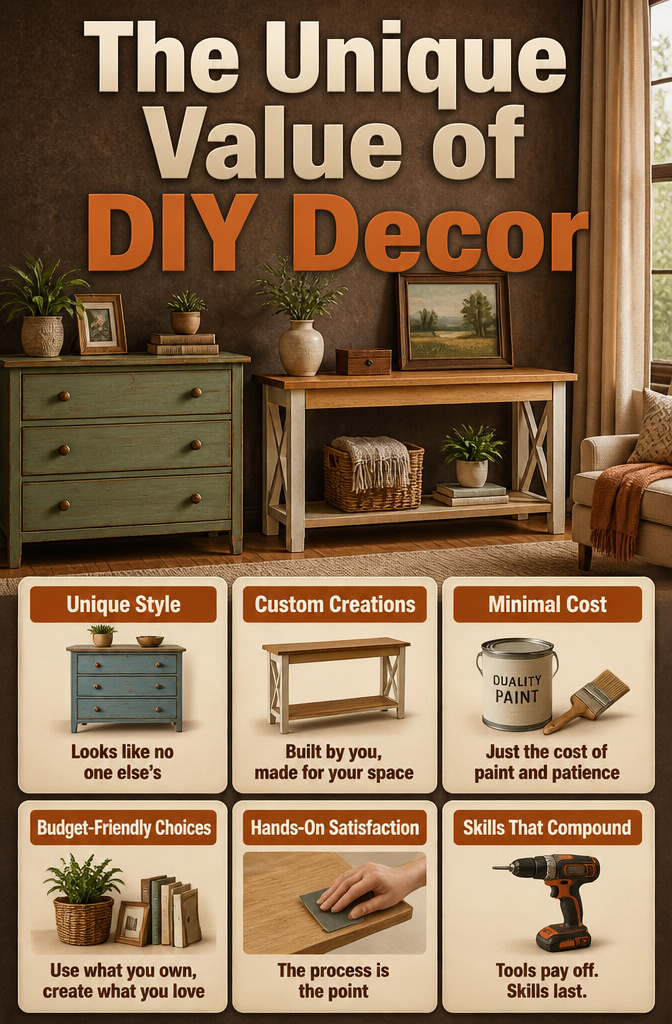
A $200 console table from the big-box store looks identical to the next one on the shelf. The frame built from pine and a miter box in an afternoon looks like no one else’s, and that difference is what makes a room feel finished rather than furnished.
The satisfaction runs deeper than style. One source notes that paint and new hardware have transformed more pieces in her home than she can count. A can of paint and an afternoon of sanding turns a curbside dresser into something that reads custom, something a retail version would charge five times as much to approximate. The hands-on time is the point, not the obstacle; the maker notices the grain of the wood, the way the light hits a particular wall, the exact blue that reads right in that corner. No algorithm curating a feed can replace that attention.
Budget constraints also force better choices. Unlimited options tend toward clutter, toward trendy pieces that do not speak to each other. A tight budget makes you use what you already own, move pieces between rooms, find three items from elsewhere in the house before you buy. Those collected pieces carry memory and mismatch in ways that showroom sets never duplicate. The room ends up looking like the person who lives there, not the brand that sold to them.
For anyone with a drill, a brush, and a free Saturday, the cost of a DIY refresh is often just the cost of paint and patience. The tools pay for themselves by the third project. The skills compound faster than that.
Tools to Keep Handy

A decent drill and a good level carry more of these projects than anything else in the junk drawer. The oversized frame build needs both. The wall molding trick is almost impossible without the level; crooked chair rail reads as cheap even when the material cost nothing.
Paint brushes and a basic staple gun handle the faux grasscloth, the pillow covers, and the curtain hem if you are shortening drop cloths. The staple gun does not have to be electric. My manual one fired through a canvas drop cloth and pine lath last spring without jamming, though the trigger hand ached for two days.
Measuring tape is the tool people skip and regret. Eyeballing a 96-inch curtain panel or a frame meant to fill a specific wall gap wastes free material fast. I keep a 25-footer clipped to the shop pegboard and a cheap 12-foot in the kitchen junk drawer, because the twenty seconds of walking to retrieve it is when the shortcut temptation wins.
None of this needs to be new. Habitat ReStores near me sell dead-stock tape measures for two dollars, and drills last decades if the battery still holds.
Frequently Asked Questions
What are some budget home decor ideas?
Shop thrift and consignment stores for brass candlesticks, vintage art, and mirrors with good frames. Build oversized picture frames from pine boards instead of buying pre-made ones. Use faux grasscloth wallpaper or peel-and-stick accent paper for texture without the cost of natural materials. Swap pillow covers instead of buying whole new pillows, and shop your own house by rearranging lamps, vases, and books into new rooms and groupings.
How can I decorate my home on a budget?
Start with what you already own. Clear every surface and put back only what you still like, moving the rest to another room or into storage for a seasonal rotation. Add paint or new hardware to dated furniture, and look for classic lamp shapes or solid wood pieces at thrift stores in higher-end neighborhoods. A single can of paint on one accent wall changes a whole room for under fifty dollars.
What are some easy DIY home decor projects?
Build an oversized picture frame from 1-by-2 or 1-by-3 pine, mitered at the corners and joined with wood glue and corner braces. Skip the glass and let the art sit inside. Install picture frame molding or chair rail with a miter box and finish nails, then paint it in a glossier sheen than the wall to fake depth. Both projects need only basic tools and cost a fraction of store-bought equivalents.