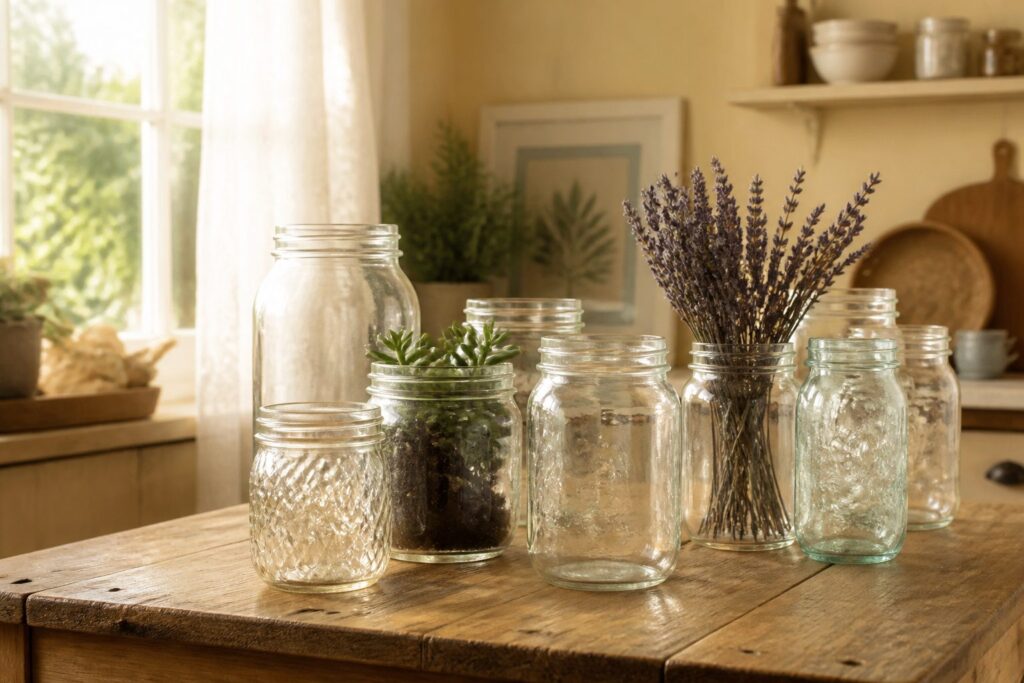
The projects range from a 5-minute jar of tea lights to wiring a lamp kit, and the deciding factor is the lid.
Slotted banks and tissue holders mean cutting a canning lid with snips and filing the edge smooth, while plants and candles need only a clean jar. Pick the jar’s job first, then the tools.
1. Propagation Vases
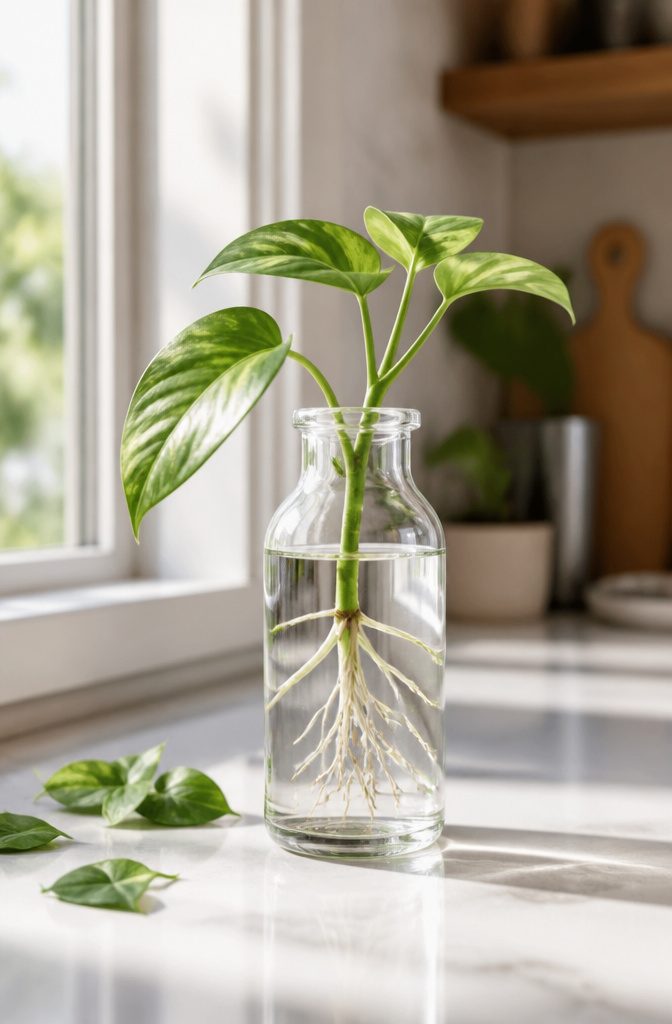
Clear glass matters most in a propagation vase, because the roots are what you came to look at.
A small jar with a narrow mouth, like a jam jar or a pint-size canning jar, holds a cutting upright without a stand, and the clear sides let you watch the white roots lengthen. Colored glass hides them.
Fill the jar so only the bottom node of the stem sits underwater.
Strip any leaves that would dip below the waterline, since they rot and cloud the water. Top it off as it drops, and swap it out when it looks murky.
Set the jar in bright, indirect light, such as a windowsill that doesn’t get hard afternoon sun. Direct sun heats the water and invites algae on the glass.
2. Piggy Bank
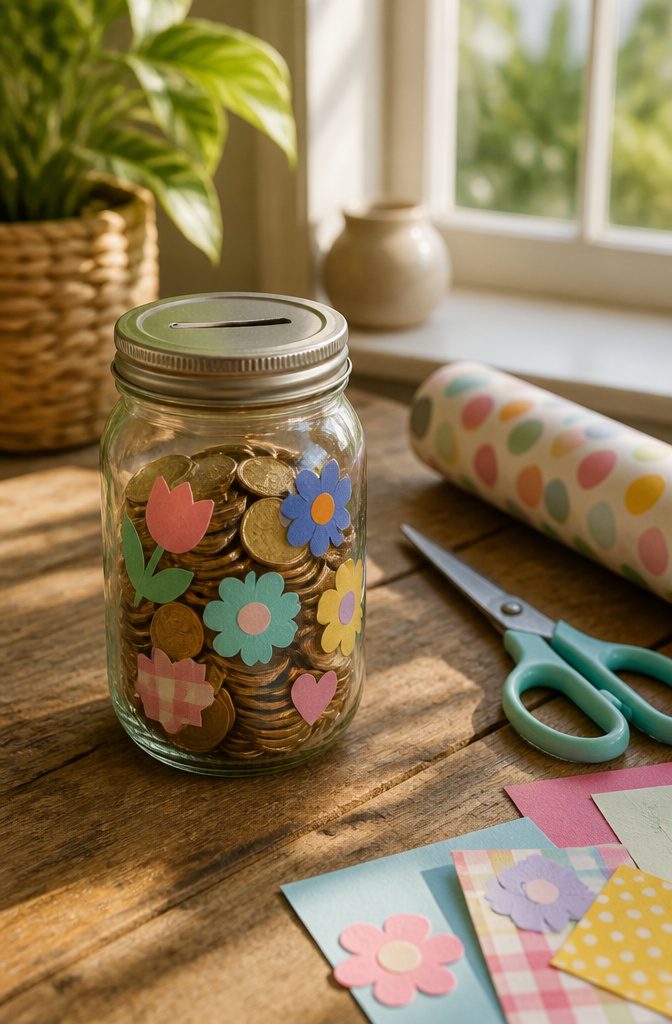
A slotted lid is what turns a plain jar into a bank, and you can make one from the lid you already have.
Trace a slot onto a two-piece canning lid, drill a small pilot hole at each end, then work a utility knife or small snips between the holes.
File the cut edges smooth, because raw metal catches fingers and coins alike. Wear gloves for the cutting.
Paint and stickers are the fun part, and glass takes both best on the outside, where a coin can’t scrape it.
A kid can name the jar, cover it in stickers, or leave one clear window so the stack of coins stays visible. Clear glass also rewards souvenir coins, pressed pennies, and foreign change better than a solid color does.
3. Candy Jars With Cookie Cutter Toppers
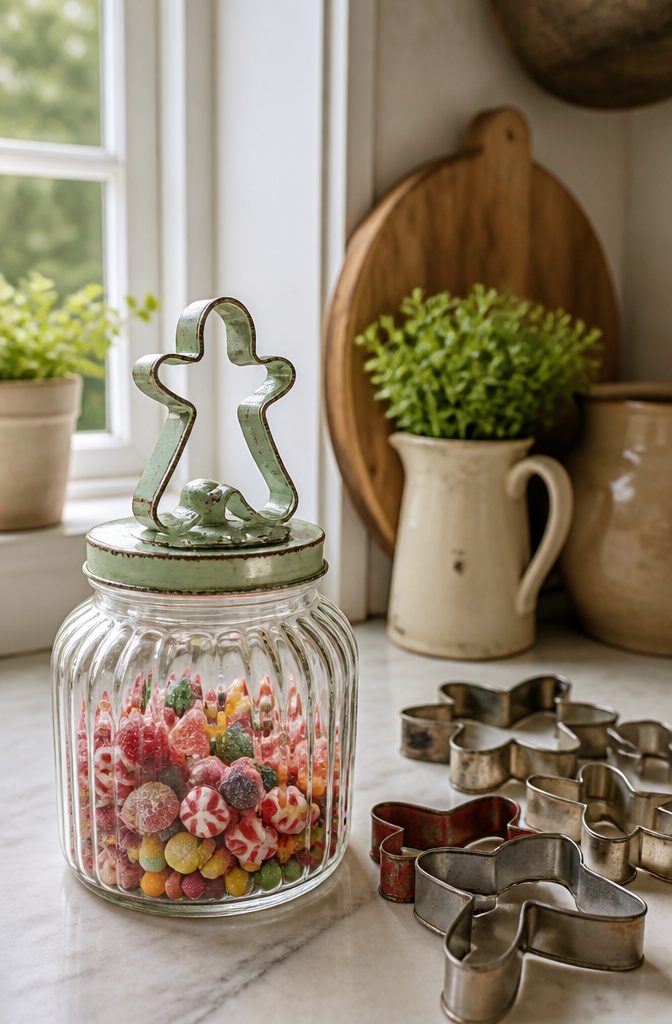
A vintage metal cookie cutter makes a good candy jar topper because it already has a shape people recognize: a star, a heart, a gingerbread man.
Set the cutter flat on top of the lid with the cutting edge facing up, and the open outline frames whatever sits underneath.
Run a bead of hot glue around the edge that touches the lid, then hold it level until it sets.
Old cutters beat new ones for a few reasons. The aluminum and tin versions have a soft patina, and the slightly dented, hand-bent edges look like they belong on a shelf.
Pick a cutter narrower than the lid so it sits inside the rim and doesn’t overhang. Thrift stores and flea markets usually sell them cheap, and they’re light enough that the glue holds.
4. Solar Mason Jar Lights
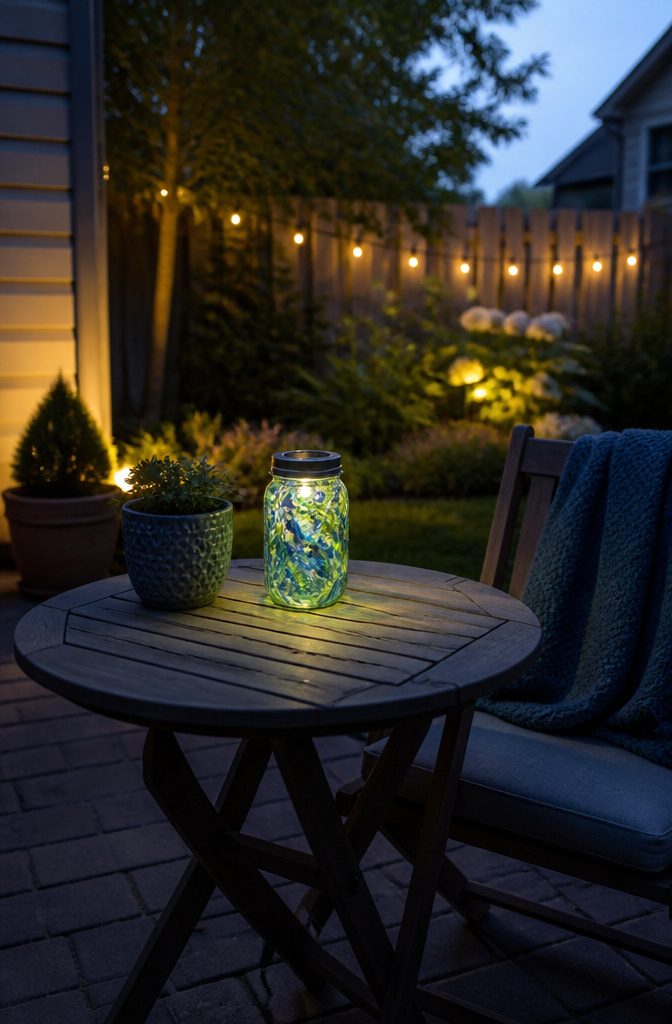
Marbled lanterns start with nail polish, a mason jar and a dollar store solar light, and the polish does all the decorating.
Drip a few colors onto the surface of a tub of water, swirl them once or twice with a toothpick, then dip the jar so the film wraps the glass.
Keep the swirl light, because overworking it muddies the colors into one flat shade.
Once the polish dries, set the solar light inside or fit the top of the light into the lid. At dusk the light shines through the thin color and throws soft, mottled patches onto the table or porch rail.
I’d pick two or three colors that sit well together, like blue and green, over a rainbow. Nail polish is thin and translucent, so light colors glow best and dark ones go nearly opaque.
5. Painted and Distressed Jars
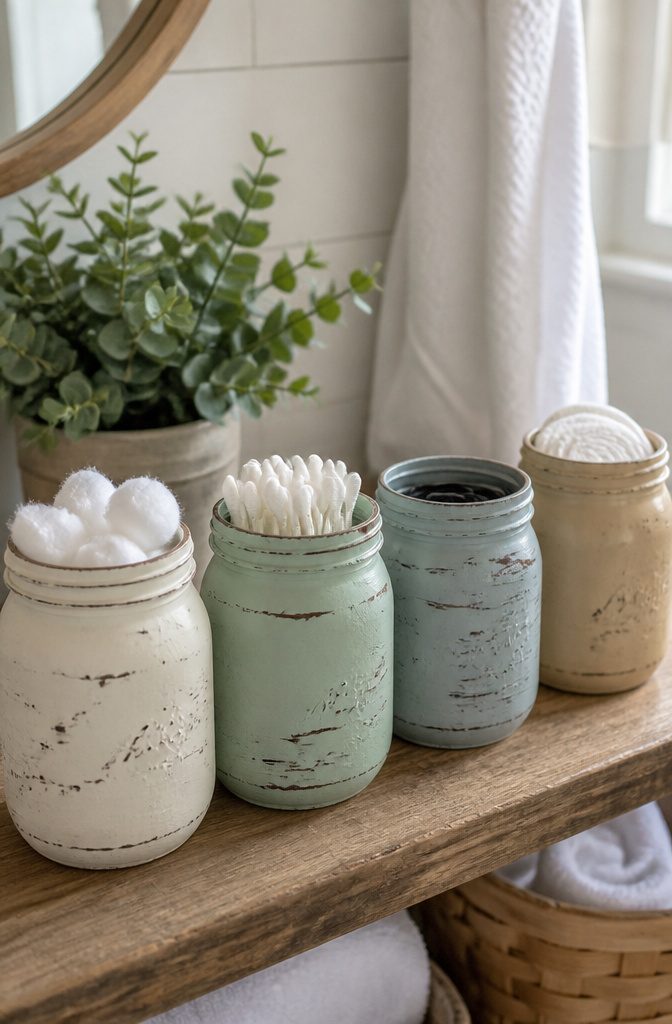
Paint decides how a mason jar ends up looking, so pick it first. Chalk paint, acrylic and spray paint all stick to glass, and chalk paint gives the most forgiving matte, farmhouse finish.
If you plan to decoupage over the top, paint the jar first. Use a spray paint, such as a primer, or an acrylic made for glass, because ordinary craft paint tends to peel under a wet layer of glue.
For the distressed look, let the paint dry completely, then rub sandpaper over the rim, the raised lettering and the edges, where wear would happen naturally.
Sand only the high points and the glass shows through like an old piece of painted furniture. A bathroom shelf holding a few of these makes a handy spot for cotton balls and swabs.
6. Soap Dispenser
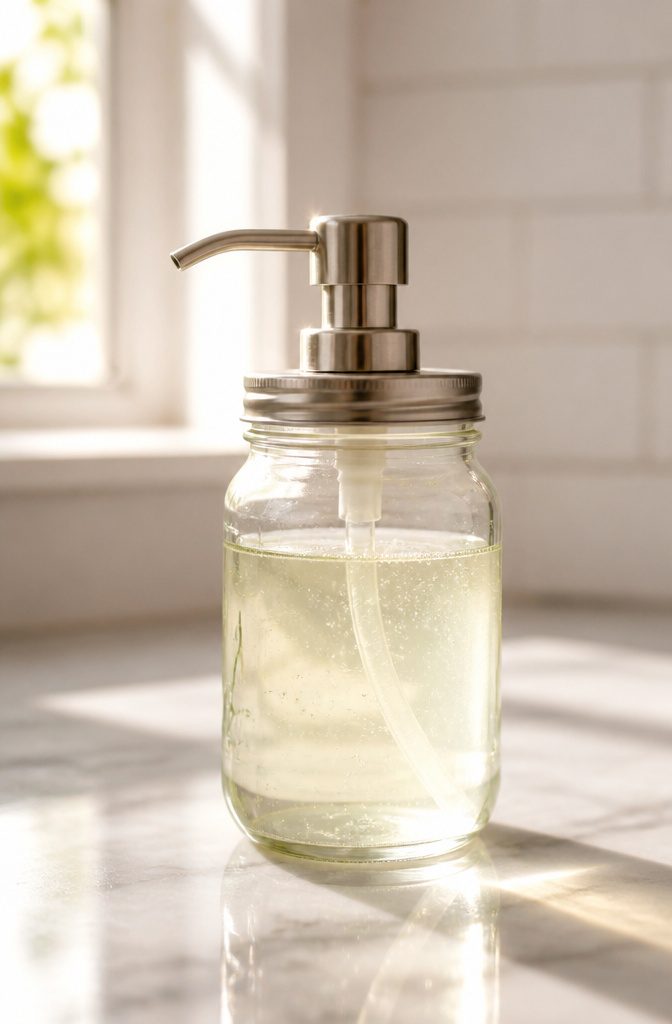
Pump lids are sold in a few thread sizes, and the one that matters is whether the lid fits a regular-mouth or wide-mouth jar.
Check the ring on your jar before you buy anything, because a pump made for one will not seat on the other. Many pump kits are made to screw straight onto a standard mason jar, which is the easiest route.
If you want a different lid, a two-piece canning lid works with a little drilling. Trace the pump collar on the flat insert, then punch the hole slightly smaller than the pump stem so the metal grips it.
A nail and hammer start the hole; snips widen it. Set the pump through, screw the ring down, and trim the dip tube so it stops just above the jar bottom.
7. Memory Jar
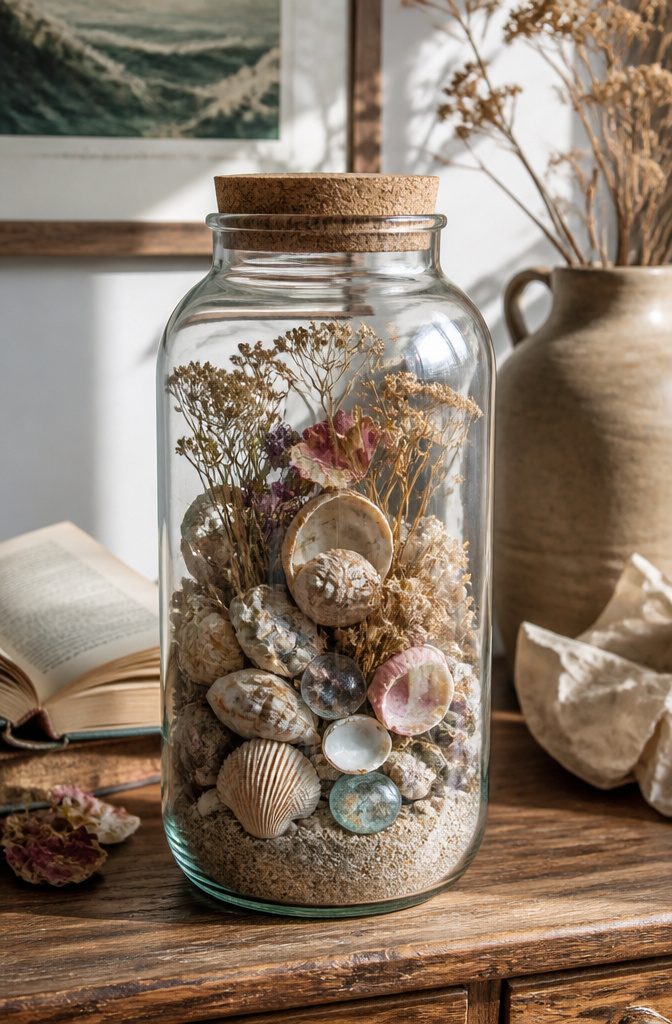
A memory jar works best when the contents are things that take up space and mean something: sand and shells from a beach, sea glass, a flower lei from a honeymoon, a grandparent’s keychain or fishing lure.
Mixing objects from different people is fine. A keychain next to a fishing lure is a quiet way to keep two grandparents in the same place.
To start one, pick any glass jar you already own and set it where you pass it daily.
Drop in the first keepsake that day, then add a folded note or small object as the year goes on. Choose a wide-mouth jar so your hand fits in when it gets full.
I’d skip a slotted lid here, since that is better suited to coins. A plain lid keeps the contents easy to pour out and read.
8. Candle Holders
Pouring your own candle is simple: melt wax, stir in essential oil, set a wick in the jar, pour, and let it harden. Lavender is a popular scent, and a filled jar makes a good handmade gift.
For a no-wax option, a jar of tea lights or a floating candle is safer for kids.
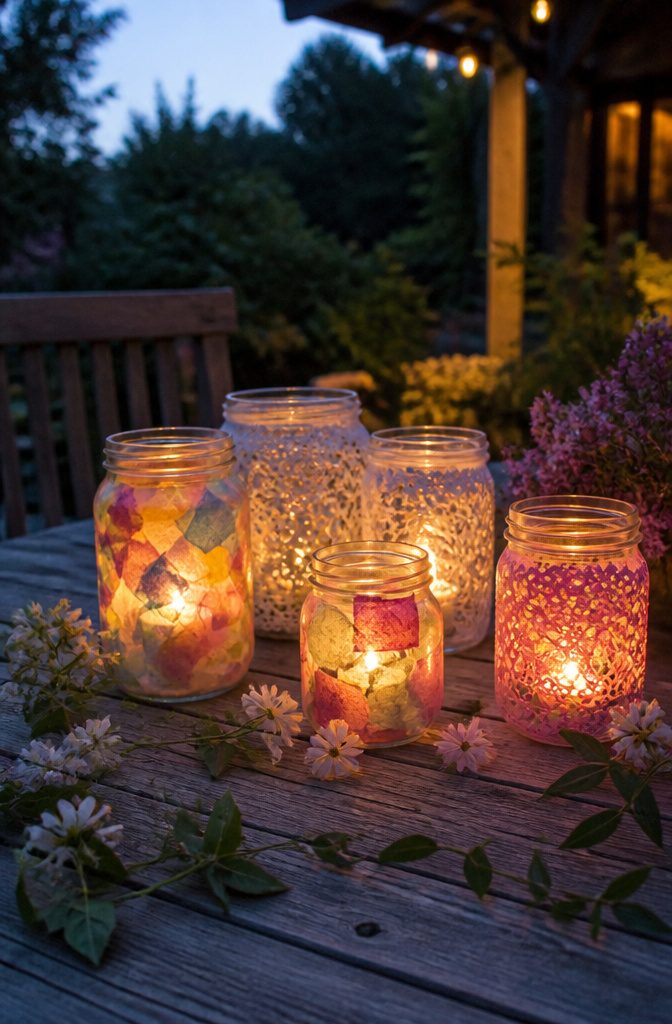
Wrap the outside in Mod Podge with tissue paper squares, ribbon, or glitter, or cut a doily pattern so the flame throws shadows across the table.
Outdoors, the jar works as a bug deterrent.
I’d choose a floating candle in water with citrus and basil over tiki torch fluid, since the fluid needs a hole poked through the lid for the wick, and fuel in glass is the riskier route.
9. Mason Jar Herb Garden
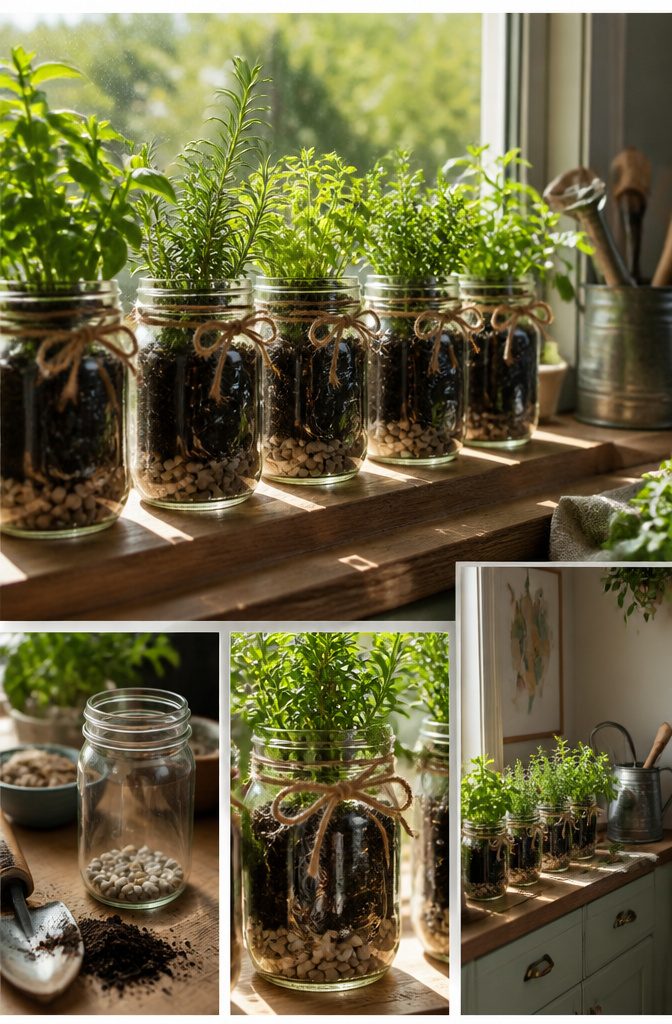
A jar has no drainage hole, and that decides almost everything about this project. Water pools at the bottom, roots sit in it, and basil rots from below long before the leaves look wrong.
I put an inch or so of pebbles under the soil as a buffer, then water a little at a time and tip out any excess.
Herbs in jars also work as gifts, so labeling matters. A strip of chalkboard tape or a paper tag tied on with twine keeps basil from being mistaken for something else.
I’d keep these on a sunny windowsill and skip them for thirsty plants. Pick herbs that tolerate dry spells, and water sparingly.
10. Hanging Planters
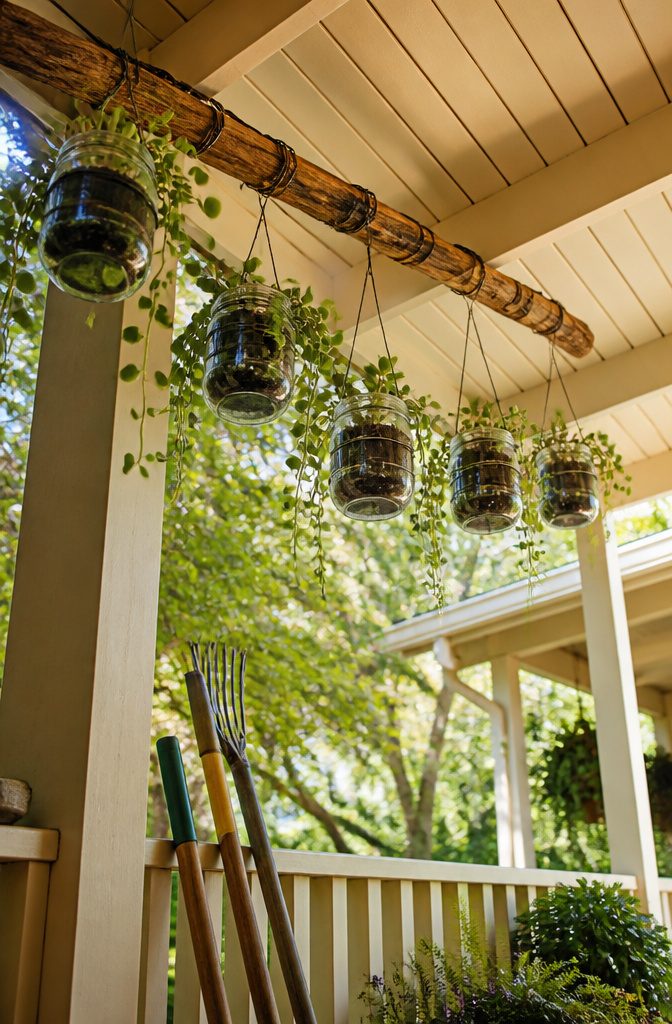
Wire beats twine for most hanging jars. Twine looks softer, but it stretches and rots when the soil stays damp, and a jar full of wet soil is heavy.
Wrap 16–18 gauge craft wire twice around the neck, just under the lip, then twist the ends tight with pliers. The wire has to sit below the threaded rim so it can’t slide up and off.
Run a second length through the loop on each side and join them into a hook at the top. Test the weight over a table before you hang it.
Hang jars from a sturdy curtain rod, a porch beam, or a ceiling hook rated for the load, in bright light.
Keep them clear of walkways, since glass and foreheads don’t mix. Drill a few holes in the base, or stick with plants that live in water.
11. Picture Frames
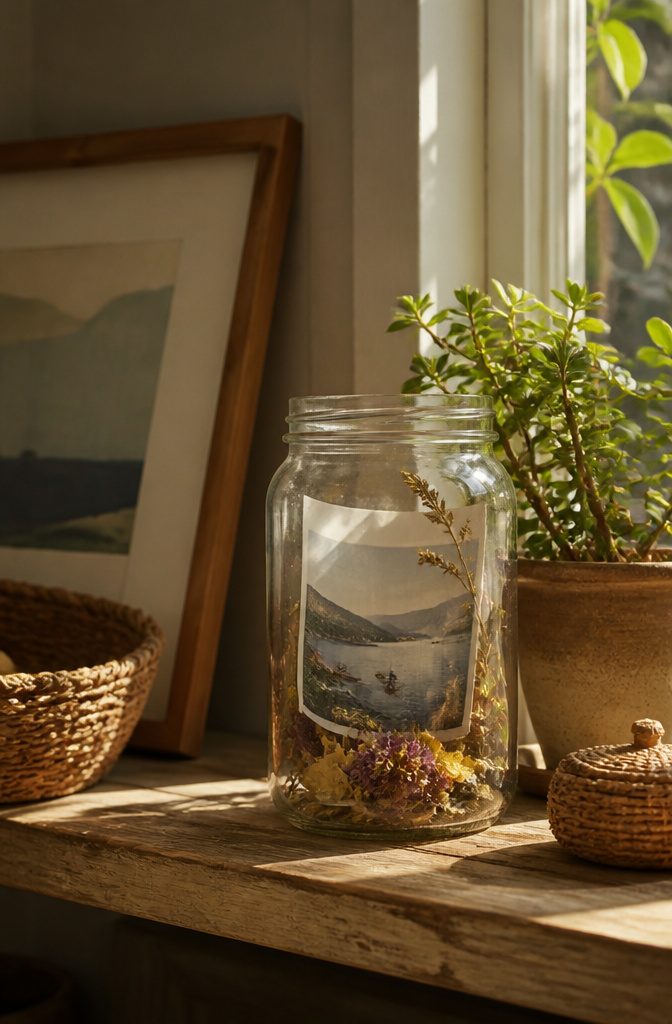
A photo can sit inside the jar or on the outside of the glass, and the inside version is the one I’d make first.
Slide a printed picture in so it curls against the wall of the jar, then drop leaves or other small keepsakes in the bottom.
Pick things from the day the photo was taken, like leaves from the same walk, and the jar becomes a little scene instead of a plain frame.
Screw the lid on. A closed lid keeps dust off the photo, which matters because you can’t wipe the inside of a jar easily once a print is in there.
A curled print never looks as crisp as one in a flat frame, and that’s the cost of this style. Choose a wide-mouth jar so the paper slides in without creasing.
12. Bird Feeders
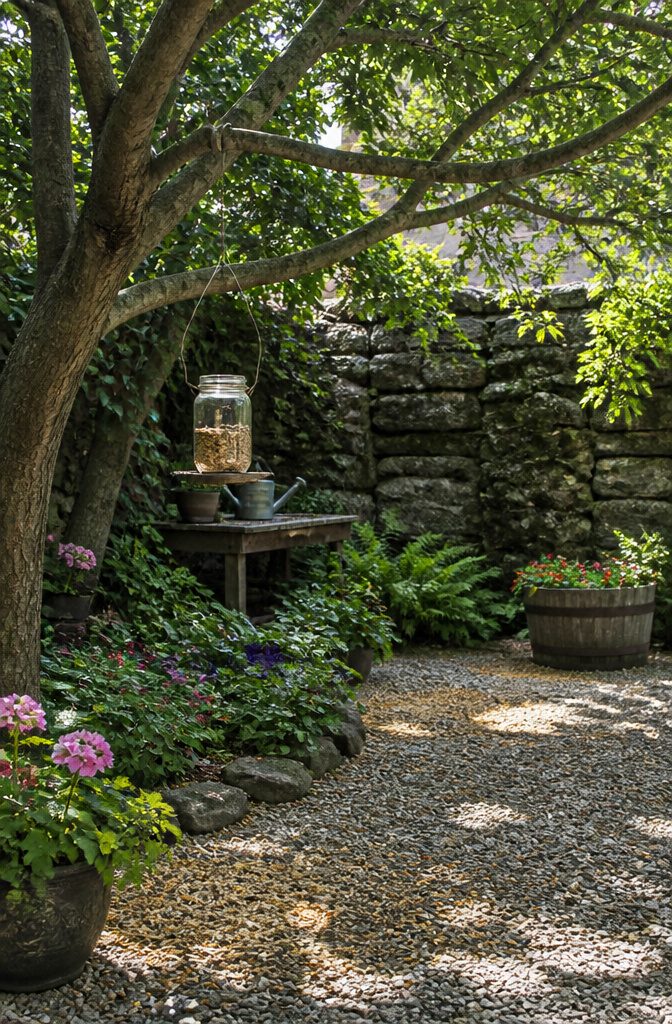
Two builds cover most jar feeders.
The simplest is a thrift store setup: a chicken feeder base attached to the bottom of the jar, then a dish glued on top, so the jar acts as a seed reservoir that refills the tray as birds eat.
I’d pick this one over a plain jar with a hole, because the tray gives birds a place to perch and keeps seed from spilling out.
Hanging is where most of these fail, so use a sturdy wire or chain rather than string, and pick a branch that can take the weight of a full jar.
Glass is heavy, and a swinging jar can hit a trunk. Hang it where the wind won’t knock it around.
Weather matters too. Rain soaks seed and turns it moldy, so tuck the feeder under an eave or a leafy branch, and empty it after a wet week.
13. Sea Glass Lanterns
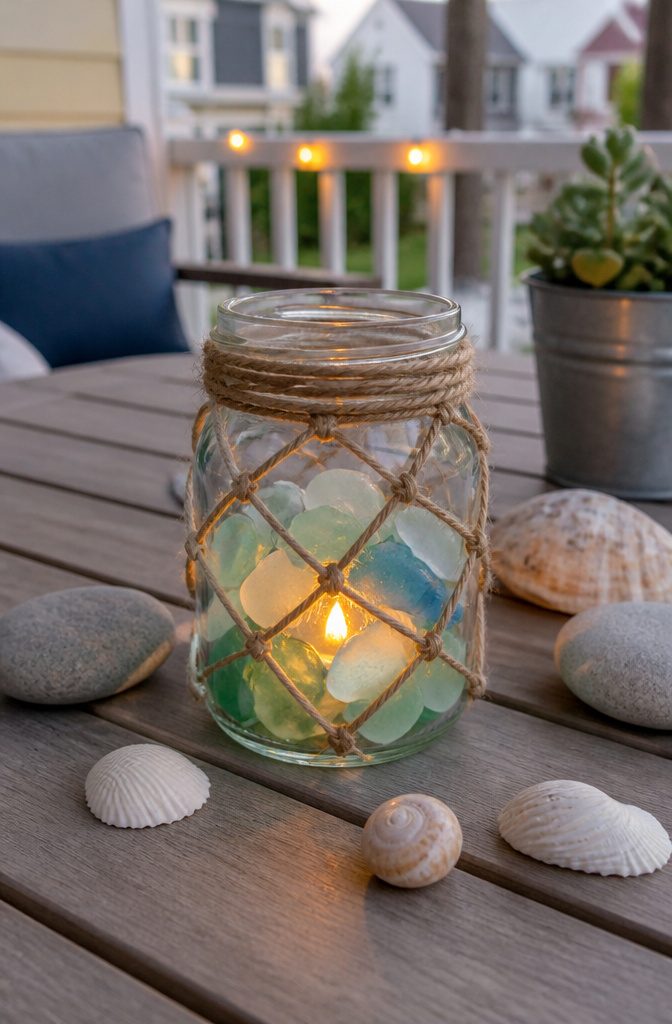
Frosted, pale green and blue glass looks like it washed up on a beach, and that softness is what makes these lanterns work.
Fill a clean jar about halfway with sea glass, or with tumbled glass pieces from a craft store, and the mix of clear and tinted bits scatters light in a way plain glass never does.
For light, I’d pick a flameless tea light over a real candle. A battery tea light set on top of the glass keeps the jar cool, and the pieces glow from the center.
A short string of fairy lights coiled inside gives a sparkly, starrier look, and the battery pack hides under the glass.
Wrap twine around the jar’s neck to finish it. Set it on a porch table or windowsill after dark.
14. Halloween and Christmas Decor
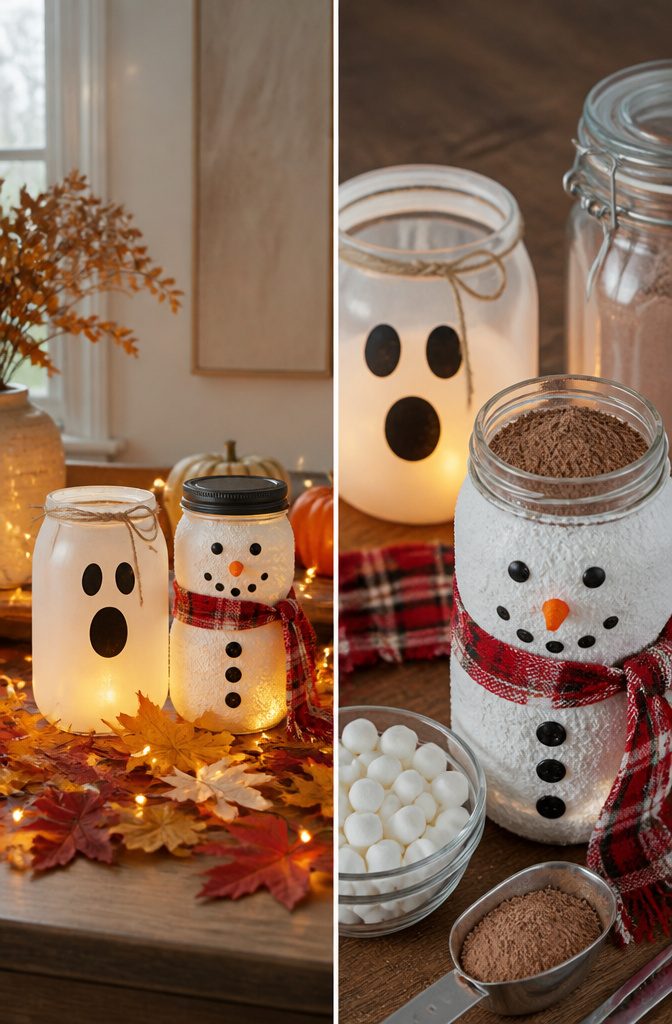
Mason jar Halloween lanterns work because the face does the decorating: a jack o’ lantern, Dracula or a ghost, glowing from the porch or the party table.
The mummy version is the one I’d hand to kids, since it’s spooky-cute rather than scary.
For Christmas, the Santa and Frosty jars double as gifts, and both are easy enough for beginners.
Hot cocoa jars dressed as snowmen suit neighbors, teachers and hostesses, and I’d pick them over a candle for anyone on your list who loves chocolate.
Spring needs even less.
Speckled eggs on a mason jar give you Easter decor with a spray-painted base and a few dots. Wildflower decals on spray-painted jars take just minutes once the paint dries, and they work as lanterns or seasonal flower holders.
15. Storage Containers
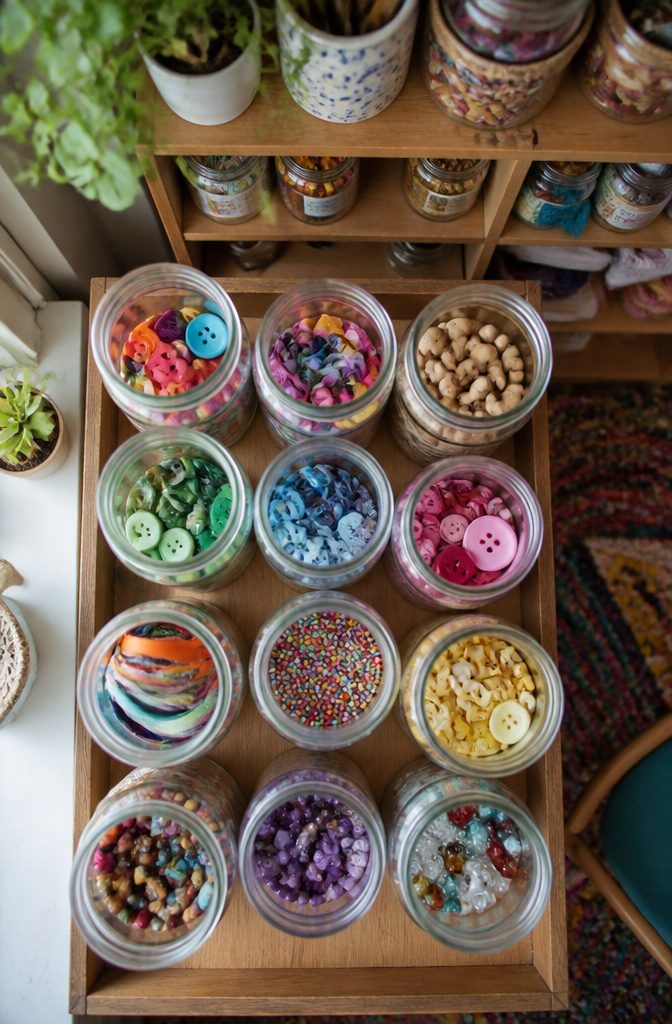
Mason jars hold more than pickles, and a thrift store or your own recycling bin is the cheapest place to find them. Regular or wide mouth rarely matters for these jobs.
- Kitchen: Dry foods like pasta, rice, beans and oats keep well in lidded jars, and wide mouths make scooping easier.
- Craft supplies: Buttons, beads, ribbon scraps and brushes sort by color or type, and you can see what’s inside without opening anything.
- Bathroom: Cotton balls, swabs and hair ties stay tidy in a small jar on the shelf.
- Labels: Chalkboard stickers or a patch of chalkboard paint on the front let you rewrite the label when the contents change. I prefer them over permanent paint for pantry jars.
16. Cookie Mix and Bath Salt Gifts
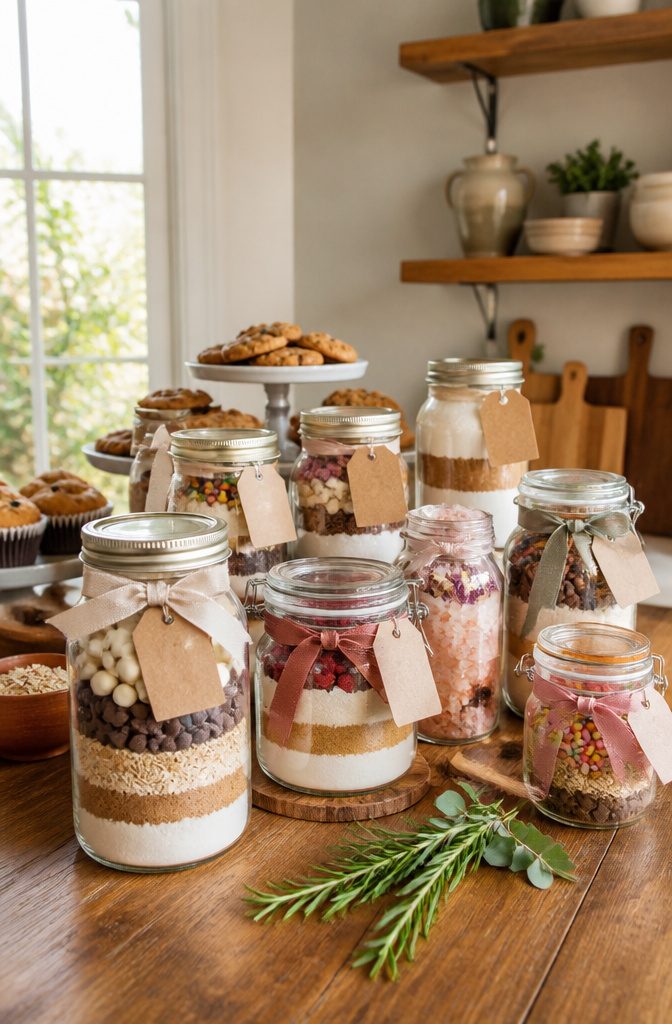
Layering is what makes a cookie mix jar worth giving: the dry ingredients sit in visible stripes, so the jar looks finished before anyone reads a word.
Pack each layer down with a spoon so it stays flat and doesn’t shift into the next one.
Put the fine, powdery ingredients at the bottom and chunkier add-ins like candy on top. Fill the jar to the lid, because gaps let the layers slump in transit.
Bath salts need no baking and no recipe card, which makes them the easier gift. Decorate the outside of the jar with fabric, ribbon or lace, and the plain salts read as a handmade present.
Add a tag that names the contents. For a cookie mix, it should list whatever the giver has to add.
17. Decorative Vases
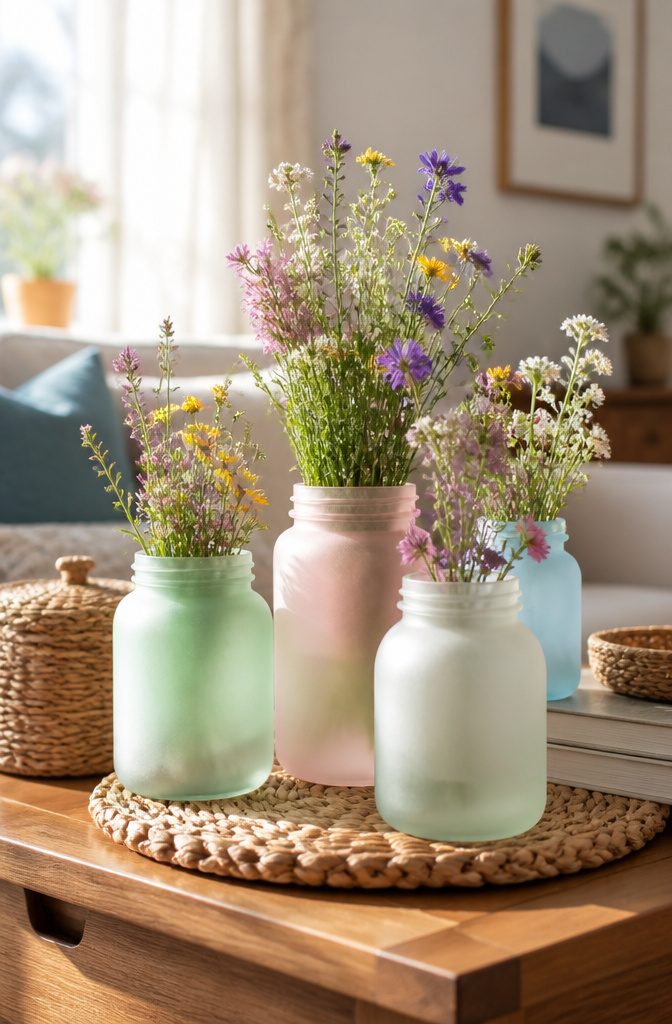
Frosted jars look best as vases, and the finish comes from spray paint. Clean the glass first and use Goo Gone on any leftover label glue, because paint skips over residue.
Then build up 4 or 5 thin coats of matte spray paint, letting each dry before the next. Thin coats matter more than speed; one heavy pass runs and streaks.
Paint isn’t the only way to dress one up. Stickers and washi tape work for kids, and a few wraps of thin jute twine around the neck hide the rim and give a finished look.
I’d pick twine for a bare jar with wildflowers and paint for a mixed bunch. A tealight tucked inside also works when the stems run out.
18. DIY Lamp
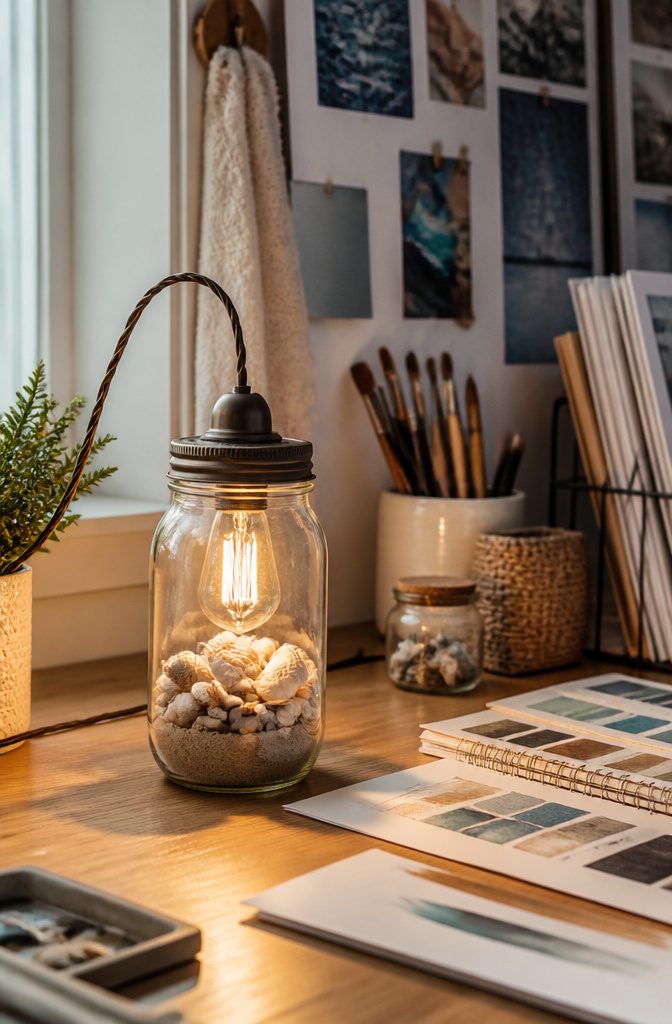
A lamp kit is what makes this project work: it supplies the socket, cord and plug, so almost any jar can become a base.
Shells, as one example, look good packed inside a clear mason jar, and you can fill yours with whatever suits the room.
The basic build is a socket attached to the top of the jar.
Fill the jar, set the kit’s socket on the opening, and thread the cord out so it sits flat. That’s the whole assembly, and it fits an afternoon with room to spare.
Drilling glass is the other route, and I’d skip it.
A hole through the side or base lets the cord exit neatly, but it calls for special bits and slow, steady work, and one slip can crack the jar. Run the cord out the top and keep the glass whole.
19. Glow-in-the-Dark Jars
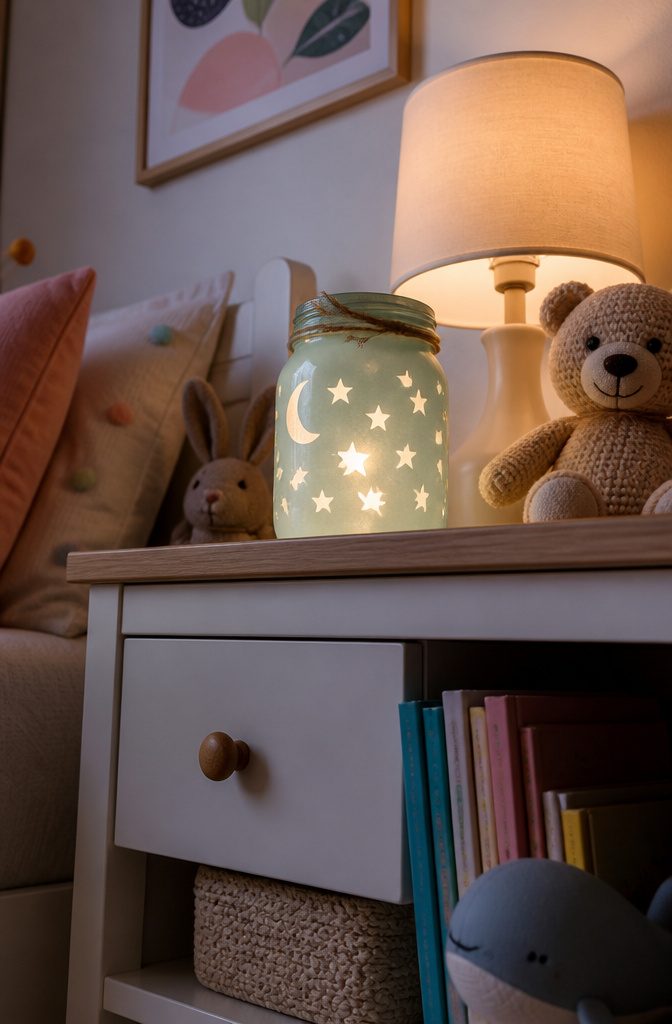
Glow paint works best on the outside of a clear jar, brushed on in thin coats rather than one thick one.
Thick paint looks chalky by day and doesn’t glow any brighter, so let each coat dry before adding the next. Stars, dots and moon shapes read well at night, and a jar painted solid gives a soft, even light.
Charging is the whole trick to the glow. Set the finished jar near a bright lamp or a sunny window for 10–15 minutes, then carry it into a dark room.
The glow fades over a few hours, so recharge it with light each evening if you want it on a nightstand or shelf.
Painting the inside of the lid pale or white helps too, since a light base makes the glow look stronger.
20. Faux Terrariums
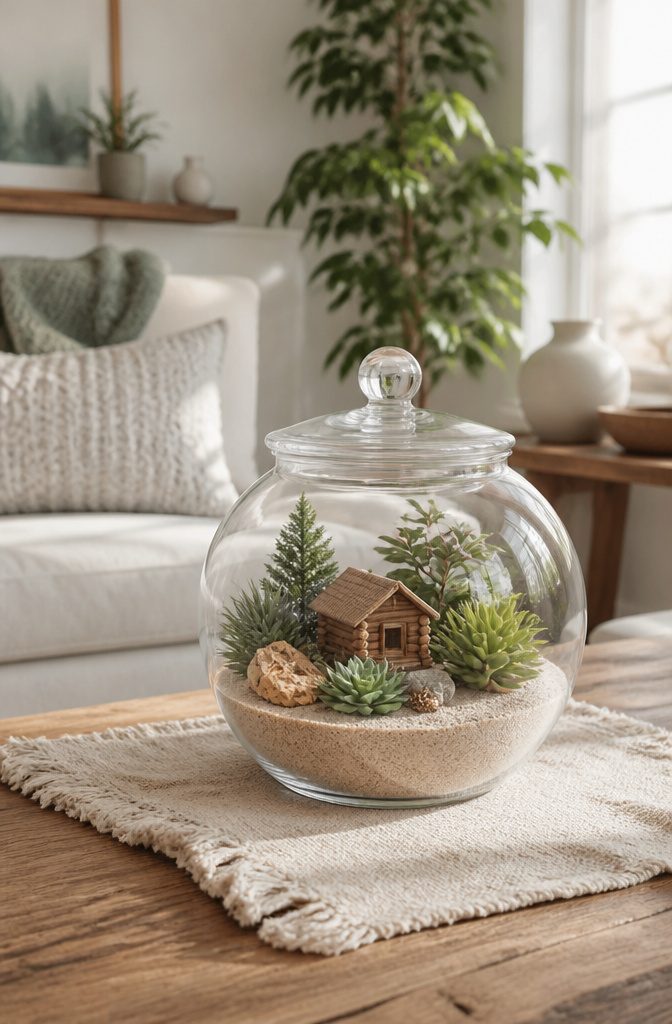
A faux terrarium is a scene, not a garden, so nothing in the jar needs light, water or a green thumb.
Start with a clean, dry jar and pour in a layer of sand deep enough to hide the bottom edge.
A wide-mouth jar on its side or upright gives you room to reach in, and that matters more than any other choice here.
Build the landscape from the back forward. Press small figures, such as tiny animals, shells or a toy cabin, into the sand so they stand on their own.
Fake succulents and bits of moss fill the gaps. Set the tallest piece at the back and the smallest at the front, and the jar reads as depth instead of clutter.
Tweezers help with tight spots. Skip loose glue; a dot of hot glue on each base keeps figures upright when the jar gets moved.
21. Wildflower Jars
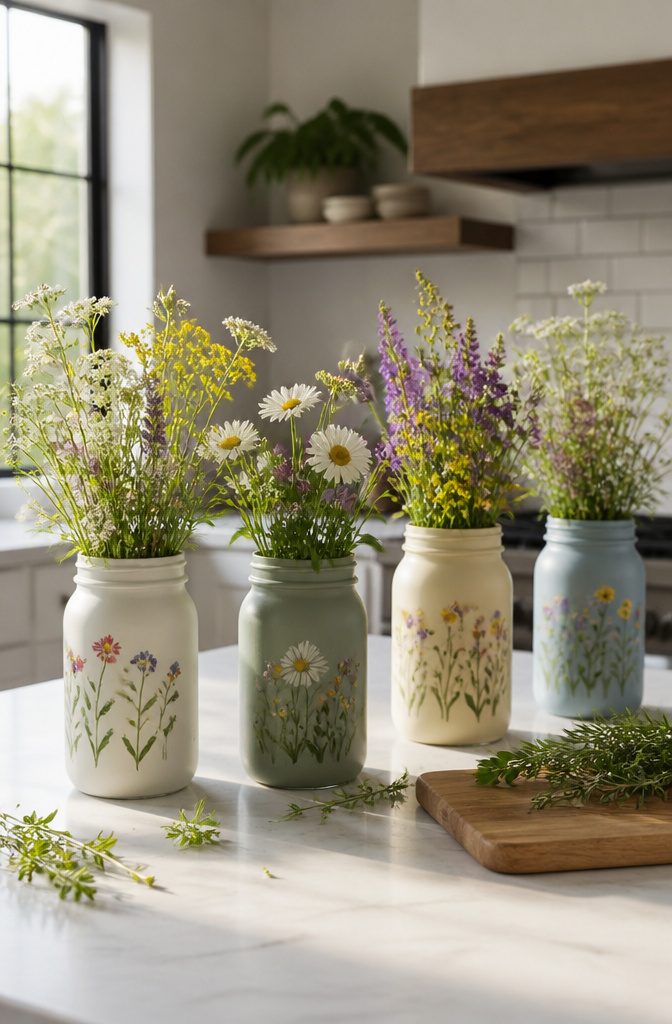
Wildflower decals and matte finish spray paint turn mismatched jars into a matching set.
Spray the outside first and let it dry completely, since the decals go on only after that. Once the paint is dry, the project takes just a few minutes.
I like matte over gloss here because it gives the decals a quiet, chalky backdrop, and fingerprints don’t show. The decals I’d start with are the Amazon wildflower set, which suits jars of any size.
Use the finished jars for seasonal flowers in water, or turn them into lanterns. Lanterns are my pick, because light shows the decals off best after dark.
22. Air Fresheners
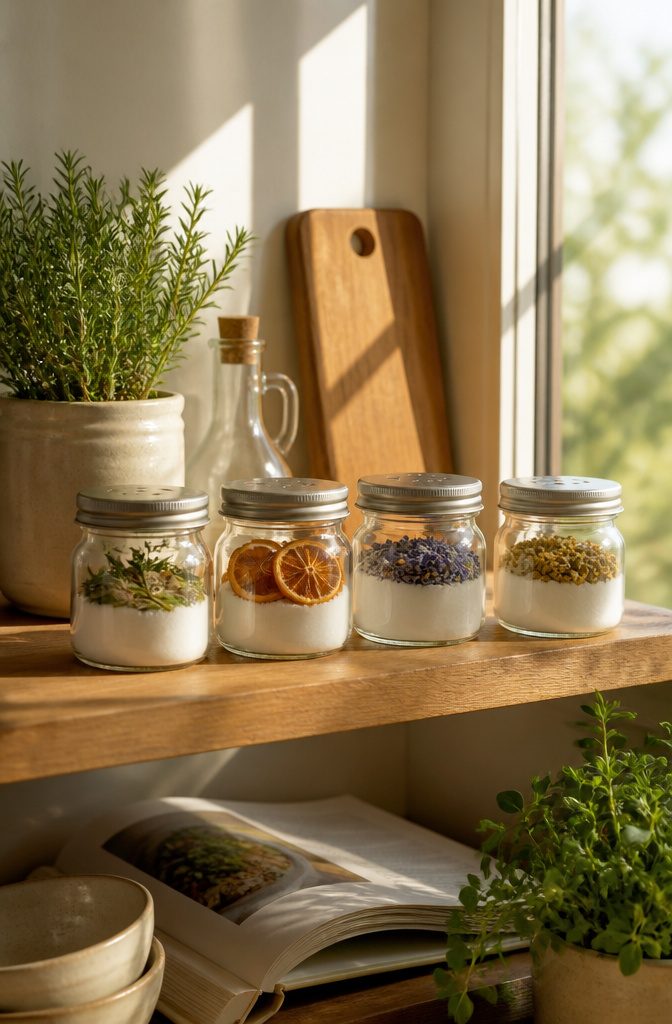
A jar air freshener works because the lid does the pacing.
A solid lid traps the scent, so poke holes through it, or swap in a piece of fabric or a perforated lid, and the fragrance drifts out slowly instead of all at once.
For the scent, I like baking soda in the bottom of a clean jar with a few drops of essential oil stirred in. Dried citrus peel, cinnamon sticks or lavender buds also work, and they look good through the glass.
Punch the holes in a metal lid with a hammer and a nail, working over a scrap of wood.
Start with a few small holes and add more only if the scent is too faint. Refresh it with a few more drops of oil whenever it fades.
23. Night Lights
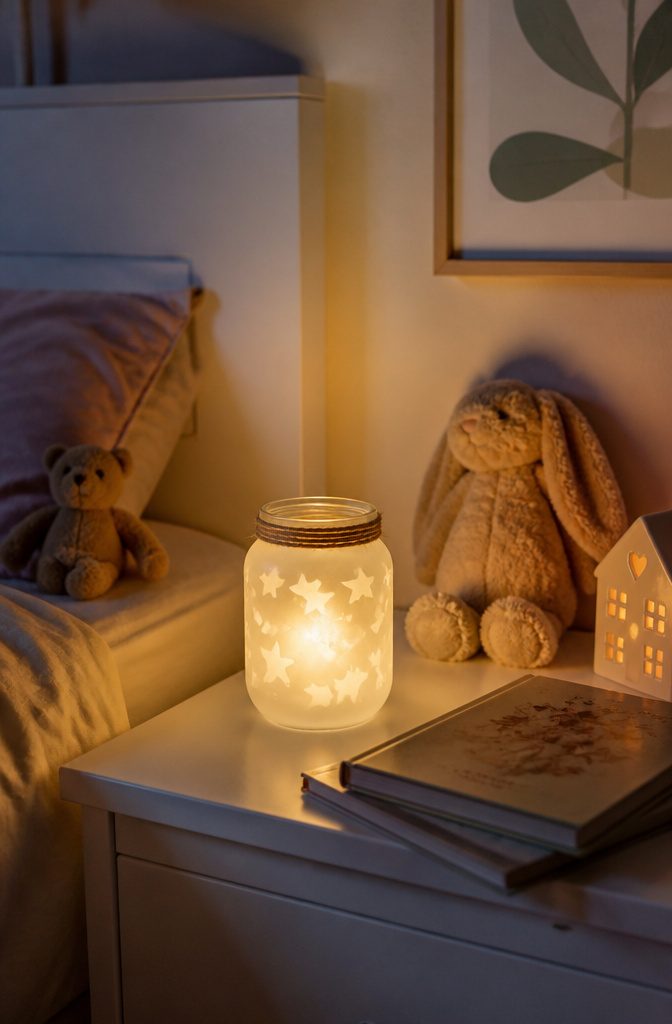
A battery tealight is the easiest light source for a jar, and it is safer than a flame for a bedroom shelf.
Pull the tealight apart, set the little LED board on the inside of the lid, and the glass becomes the diffuser. Dropping a handful of grass or moss in the bottom gives you a firefly jar that kids can hold.
For a softer glow, spray the outside with frosted glass paint. Frosted glass spray paint turns a hard point of light into an even wash, which is what you want next to a pillow.
Tape a photo inside before you close the lid, and the jar becomes a personal luminary for a child’s room.
I’d skip anything that needs a socket or cord for a kid’s bedside. Batteries keep it simple.
24. Tissue Holders
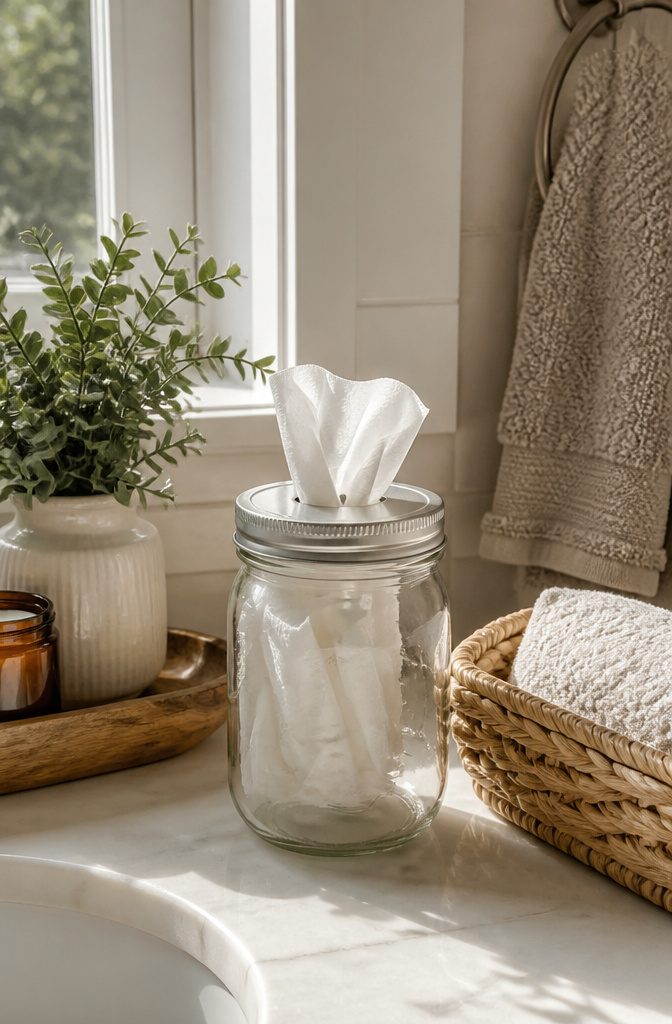
A metal canning lid works best for a tissue holder, because a slot cut in it holds its shape and the lid still screws on and off for refills.
The two-piece kind is easiest: use the flat insert and keep the ring. Trace a slot about the width of a pulled tissue, drill a starter hole at each end, and open it with tin snips or a rotary tool.
Sand or fold down the cut edge, since fresh metal is sharp enough to slice a finger on every pull.
Plastic lids are simpler to cut with a craft knife, but they crack more easily. Pull the tissue or wipe up through the slot, leaving a corner showing, and use pop-up wipes so each one draws the next.
25. Utensil Holders
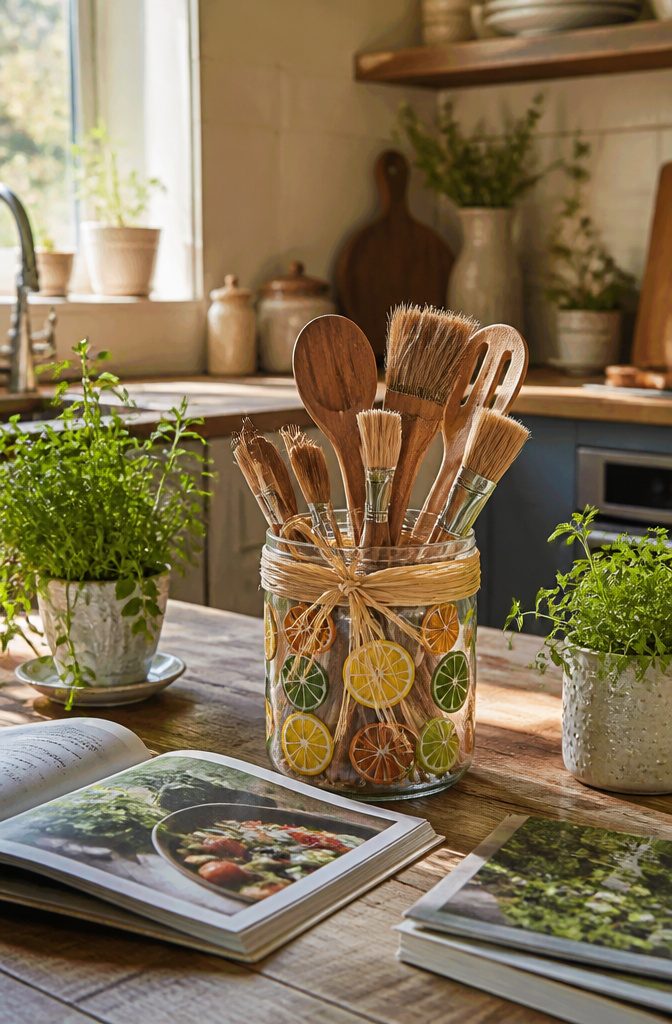
Pickle jars and other large jars hold more than you’d expect, and the size is what makes them work as utensil holders.
Pencils and paintbrushes stand upright in one with room to spare, and the same jar handles spatulas and wooden spoons on a kitchen counter.
For decoration, cut citrus slices from colorful permanent vinyl, stick them on the glass, and wrap raffia around the neck of the jar. It reads as a finished piece without any paint.
In the bathroom, the same jar sorts toothbrushes, makeup brushes and cotton swabs.
Match the jar’s color to your bathroom decor so it blends in instead of looking like leftover kitchen gear. I’d pick one wide jar over several small ones, because tall brushes tip over in a narrow mouth.
Frequently Asked Questions
What can you make with glass jars?
Glass jars work as propagation vases, soap dispensers, solar lights, candle holders, herb planters, bird feeders, night lights, lamps, and storage containers. They also become gifts, such as layered cookie mix or bath salts.
How do you paint mason jars?
Use spray paint, such as a primer, or an acrylic paint made for glass, because ordinary craft paint tends to peel.
Chalk paint also sticks and gives a matte, farmhouse finish. For a distressed look, let the paint dry completely, then sand only the rim, raised lettering and edges.
What are some seasonal jar crafts?
Halloween lanterns with jack o’ lantern, Dracula, ghost or mummy faces are popular, and the mummy is the friendliest for kids.
For Christmas, Santa and Frosty jars and hot cocoa jars dressed as snowmen make easy gifts. For spring, speckled eggs on a spray-painted jar give you Easter decor, and wildflower decals suit lanterns or flower holders.
What is the easiest glass jar craft for beginners?
Bath salts in a decorated jar need no baking and no recipe card, so they are one of the simplest gifts.
Santa and Frosty jars are also easy enough for beginners. A fabric, ribbon or lace wrap on the outside makes plain salts look handmade.