The right craft for a three- or four-year-old depends on whether you want something that hangs on the wall or something that keeps working after the glue dries. The answer changes everything else: process art wins the longer afternoon, while product art works when the child needs to see a finish line. A cardboard tube kazoo or a paper plate puppet becomes tomorrow’s play, not a shelf decoration; bubble painting and leaf prints, meanwhile, build the motor control and observation skills that outlast any single project. Fifteen to twenty minutes is the real engagement window, and the materials are already in your kitchen drawer.
1. Printmaking Projects

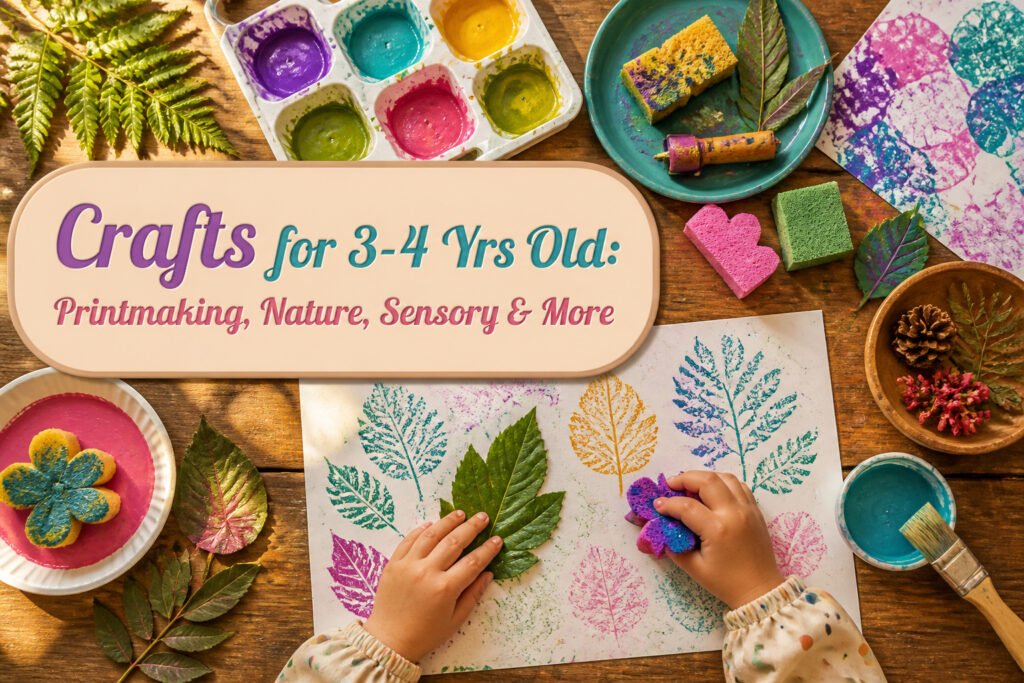
Potato stamping lands right in the sweet spot for 3- and 4-year-olds because the whole body gets involved in pressing down, holding still, and peeling the potato back off the paper without smearing. The tuber itself is big enough for small hands to grip, and a butter knife or plastic knife run by an adult is all the prep it takes. A leaf shape or a set of zigzags cut into the cut face gives a crisp print that still forgives wobbly aim, which matters at an age when patience outlasts precision by about fifteen minutes, maybe twenty.
Crayon resist works the same muscle group differently. The child scribbles hard with a wax crayon, then brushes thin watercolor or thinned tempera over the top. The paint slides off the wax and pools on the bare paper, so the drawing ghosts up through the color. The magic of it keeps them spreading paint longer than they might otherwise, which builds endurance in the wrist and fingers. Both techniques sit in the printmaking family because the image transfers from one surface to another, even if the "press" is a palm and the "plate" is half a russet.
Non-toxic paint, washable markers, and construction paper cover almost every setup here. The materials are the same ones already crammed in most kitchen drawers, so the project starts when the idea hits, not after a store run.
2. Nature Crafts

Leaf prints turn a walk into the first half of a craft afternoon. The collecting matters as much as the pressing: a three-year-old who chooses the jagged oak over the smooth maple is already sorting by texture and edge, and that quiet looking builds the observation skills that outlast the paint. Back inside, dip one side of each leaf in tempera and press it to paper or a scrap of cardboard. Let the child arrange the prints; the overlap and gaps are theirs to solve.
Nature painting extends the same idea. A sturdy stick becomes a brush, a flat stone a palette, and the results are deliberately unpredictable. The paint slides differently across bark than paper, and a preschooler notices that friction without any prompting.
Safety with outdoor materials means checking what comes back through the door. Avoid small seed pods, pebbles under an inch, or anything a child could fit in a closed fist and then their mouth. The rule is simple: if it is smaller than a golf ball, it stays outside. Glue and paint are the only supplies that cross the threshold, and the craft stays open-ended without the choking hazard.
3. Sensory Crafts

Bubble painting lands in that sweet spot where the doing matters more than anything you hang on the fridge. Dish soap, water, and a little glycerin or corn syrup make the mix, then the child blows through a wand made from whatever lid is clean in the drawer. The paper catches what pops, and the result is unpredictable by design, which is exactly why three-year-olds stick with it. Four sources back this category, and they all point to the same window: plan for fifteen to twenty minutes of real engagement, then expect the interest to drift.
Slime follows the same logic. The stretch and squish hold attention because the material keeps changing under small hands, not because the batch turns out Instagram-perfect. Cleanup is where parents need the real heads-up. Bubble mix means soap rings on the table and maybe the floor; slime leaves residue in cuffs and under nails. Neither craft asks for precision, but both ask for a drop cloth and a hand-wash station ready before you start.
4. Recycled Materials Crafts

Toilet paper rolls and egg cartons sit in most recycling bins long enough to become fair game for a rainy afternoon. The binoculars start with two rolls taped side by side, then a quick wrap of construction paper around the outside so the glue stick has something to grip. A string threaded through the sides becomes the neck strap, and suddenly the living room turns into a birdwatching expedition. Hand-eye coordination gets a workout whether the "birds" are houseplants or the actual backyard.
Egg carton flowers work the same way: the cups get trimmed, painted if you have the patience, and pinched at the base so they open like petals. A pipe cleaner poked through the center becomes the stem, and the whole thing glues onto a folded card. Construction paper leaves fill out the bouquet. Five separate craft collections back this category as a go-to, and the math is obvious: recyclable items, glue sticks, and construction paper are already in the house, so the budget stays at zero. The flowers won’t look perfect, but for a three-year-old, the process of poking that pipe cleaner through counts as triumph enough.
5. Seasonal Crafts
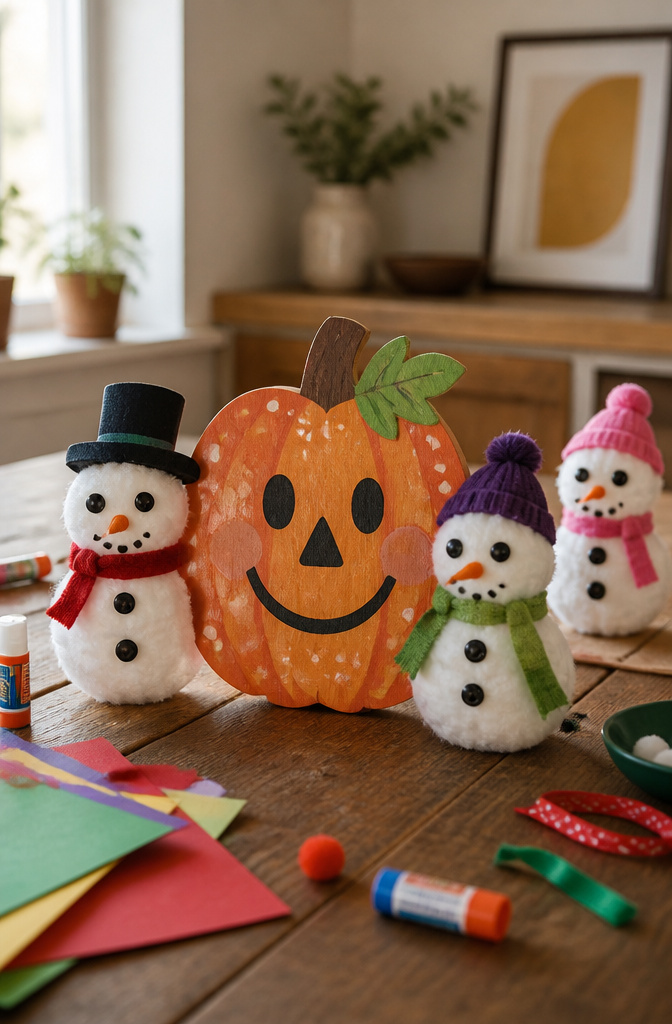
Holiday crafts land hardest when a three-year-old can see the finish line. Pumpkin cutouts and cotton-ball snowmen work because the result hangs on a door the same afternoon, not in some theoretical future. My neighbor’s kid still talks about the paper-bat garland they strung last October because she watched it flutter every time the kitchen door opened.
Save one piece for gifting. At this age the concept of "giving away" something they made is still shaky, but watching a grandparent tape a handprint reindeer to the fridge bridges that gap. The card or decoration becomes proof they participated in something bigger than playtime.
Halloween and Christmas dominate here because the buildup is visible, the house changes, and a preschooler clocks that shift. A traced-hand turkey in November works the same way, though fewer sources bother with the in-between holidays. The decoration that stays up two weeks carries more weight for a four-year-old than the masterpiece that ships off immediately.
Storage matters more than parents expect. That painted pumpkin plate from October, pulled out the next September, reads like a time machine to a kid who has no calendar yet.
6. Simple Art Projects

Handprint art works for this age because three- and four-year-olds have not yet developed the fine control finger painting demands. The grown-up traces the outline while the child fills it in or watches the shape become a butterfly, a fish, whatever the day calls for. Washable paint and a paper towel roll are the whole setup, and the project is done in the fifteen to twenty minutes that match a preschooler’s actual attention span.
Painting with cars lands in the same easy afternoon slot. The wheels dip into paint and roll across paper, leaving striped tracks that look like deliberate patterns even when they are not. The motion itself keeps active kids engaged longer than standing still at an easel usually manages. Both activities use supplies already in most houses, and cleanup is a quick rinse rather than a restoration project.
7. DIY Toys

The best afternoon crafts for this age are the ones that keep working after the glue dries. A cardboard tube kazoo decorated with paint or stickers becomes an instrument the moment they hum into it, not a shelf decoration. Paper plates and handprints cut into sea creatures turn into puppets with a popsicle stick handle, then into tomorrow’s puppet show.
Pipe cleaner finger puppets follow the same rule: the bending and wrapping is the craft, but the real payoff is the voice the child gives it afterward. The same looped wire that holds beads for a lizard shape can hold a face drawn on a paper oval.
This DIY clay is chemical-free, making it safe for even the littlest hands.
That kitchen-made clay bakes hard enough to keep, so the figure a three-year-old pinched into shape lasts as a "treasured souvenir" instead of crumbling by bedtime.
Small parts need watching. Attached beads or googly eyes on any puppet or instrument should be checked before the craft goes into play; at three, everything still goes to the mouth. Supervision shifts from the making table to the floor once the toy is in use.
Why Process Beats Product
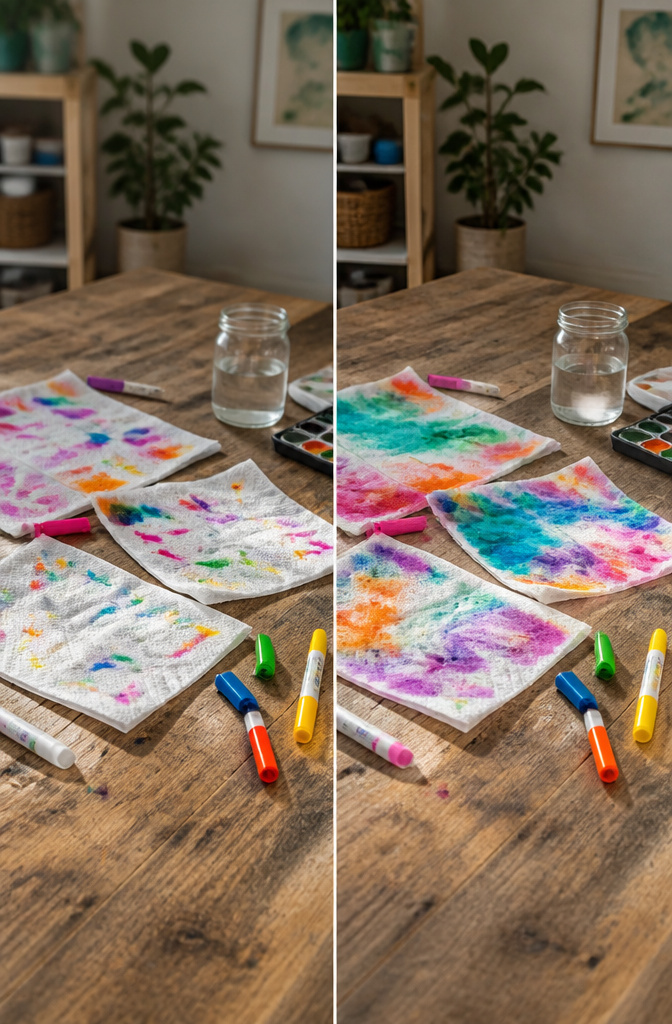
Product art has a finished picture in mind. Process art does not. The paper towel craft that teaches color blending through absorption works because no rule dictates how the child should scribble, and that absence of a rule is the whole point. The preschooler decides where the marker goes, how saturated the towel becomes, and when the piece is done.
For a three- or four-year-old, the brain is busy wiring motor control and cause-and-effect, not planning a composition to match an adult template. When the goal shifts from "does it look like the example" to "what happens when I do this," the child stays at the table longer and the parent stops hovering. The frustration on both sides drops because nobody is failing at a standard that was never appropriate to begin with.
The adult’s job becomes simpler: set out materials, name what the child is doing, step back. The finished towel may look like a storm of color to a grown-up eye. To the child it is the record of twenty minutes of independent choices, and that record matters more than how it would frame on a wall.
Materials Worth Keeping On Hand
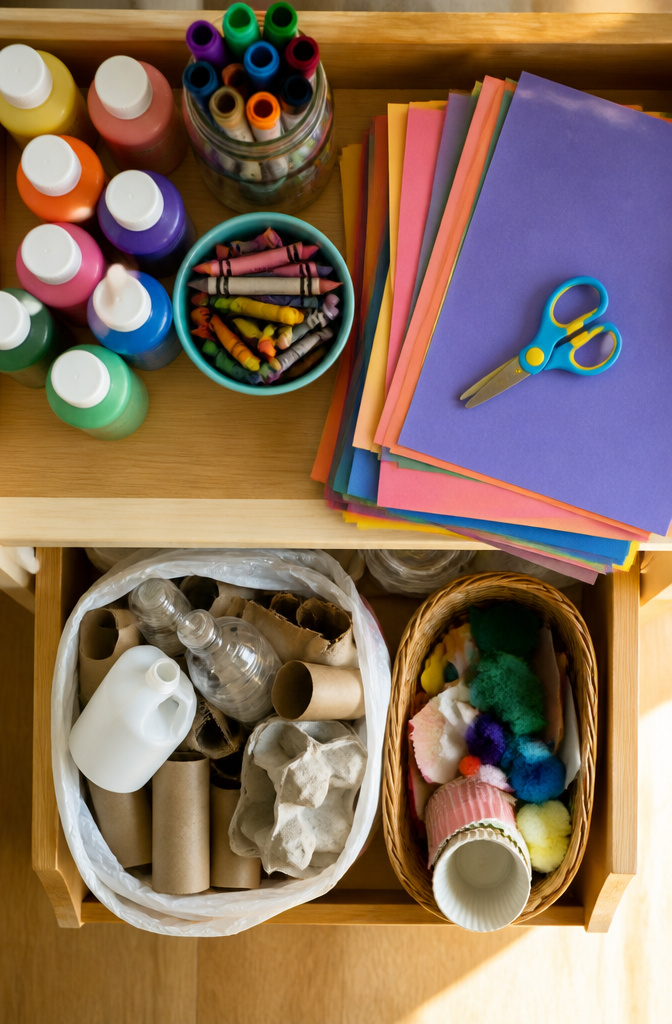
Most afternoons with a three- or four-year-old, you do not want to hunt down supplies. Keep a small stock of non-toxic paint, washable markers, construction paper, glue sticks, and a decent pair of blunt scissors within arm’s reach. The washable markers alone have saved more shirts than I can count.
Toilet paper rolls, empty plastic bottles, and that stack of Amazon cardboard build up faster than you’d think. I keep a paper grocery bag tucked behind the trash bin for collecting them. When a craft calls for binoculars or a nature board, the material is already inside the house.
Glue sticks beat liquid glue for this age. The dry time is basically zero, and the cleanup is a damp cloth rather than a scrub brush. Construction paper tears well, cuts reasonably, and holds up to enthusiastic handling. For paint, non-toxic is the baseline; washable is the upgrade that keeps rugs in the family.
The whole setup costs little because most of it is already there. A fresh pack of markers and a ream of construction paper might be the only purchase in months. The recyclables cost nothing at all, which matters when a single project might last fifteen minutes and the next idea starts immediately after.
How Long and How Much Help

A craft with a three-year-old runs about 15 to 20 minutes before interest drifts, which is actually useful information when you’re blocking out an afternoon. That window matches the natural attention span at this age, so the setup and cleanup together will likely take longer than the making itself. Plan one project, maybe two if the first uses similar materials, and leave the rest for tomorrow.
Adult hands need to stay close the whole time, not just for the tricky parts. Three-year-olds are still figuring out pressure and sequence, so they’ll press glue sticks flat or paint the table while the paper waits. The real safety issue is small parts. Buttons, googly eyes, and beads all carry genuine choking risk at this age. Skip them entirely or swap in drawn eyes with a marker and use larger materials that cannot fit through a toilet paper tube. The afternoon goes smoother when the materials remove the worry.
Frequently Asked Questions
What are some fun, easy toddler crafts to do with my kids?
Potato stamping, crayon resist painting, leaf prints, bubble painting, and painting with toy cars all work well for this age. Each one uses simple motions and everyday materials, so you can start when the idea hits instead of after a store run. The projects in this list focus on pressing, scribbling, blowing, and rolling rather than fine control a three-year-old does not yet have.
What materials do I need for preschool crafts?
Keep non-toxic paint, washable markers, construction paper, glue sticks, and blunt scissors within arm’s reach. Toilet paper rolls, empty plastic bottles, and cardboard from packages are worth collecting too. Glue sticks beat liquid glue for this age because the dry time is basically zero and cleanup needs only a damp cloth.
How long should a preschool craft activity last?
Plan for about fifteen to twenty minutes of real engagement before interest drifts. That window matches the natural attention span of a three- or four-year-old, so setup and cleanup together will likely take longer than the making itself. One project, maybe two if they share materials, is a realistic afternoon.
Do preschool crafts need to look perfect?
No. The focus should be on process art, where the value comes from the doing rather than a finished picture in mind. When the goal shifts from matching an example to seeing what happens next, the child stays at the table longer and frustration drops on both sides. The record of independent choices matters more than how the piece would frame on a wall.