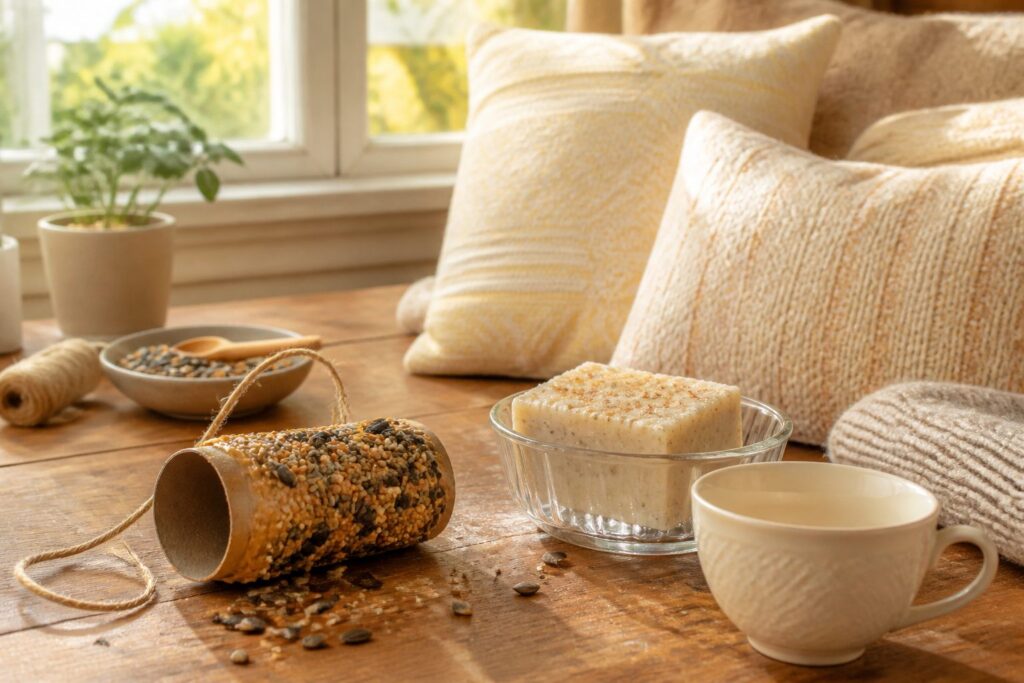
The projects run from a free toilet paper roll bird feeder to a sugar scrub bar and sweater pillows, and the one that fits you depends on how much prep you’ll tolerate.
Anything needing more than ten minutes of setup or a long drying time tends to get abandoned, especially with kids, so start with peanut butter, seed and string.
1. Easy Crafts for Adults
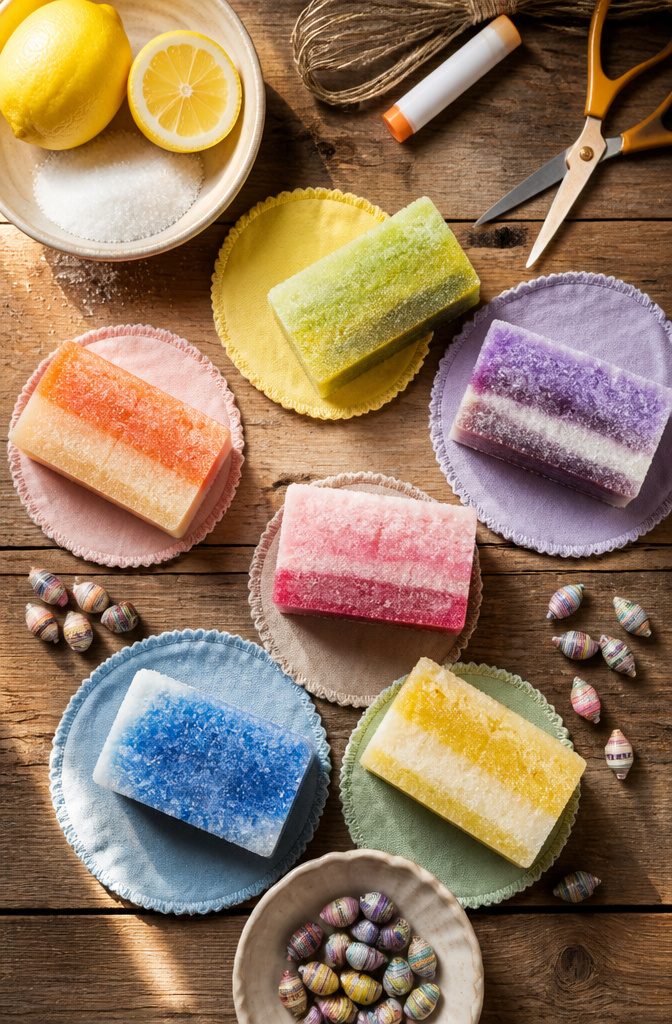
Paper bead jewelry, no-sew fabric coasters and cupcake liner flowers are the three I’d hand a first-timer, because each starts with something already in a junk drawer or recycling bin.
Paper scraps become beads, fabric remnants become coasters, and a pack of cupcake liners becomes a bouquet that never wilts. None needs a sewing machine, a kiln or a craft room.
The two projects worth a little more planning are DIY Sugar Scrub Bars and DIY Sea Glass Bottles.
A loose lemon sugar scrub turns to a wet mess in the shower, and a solid bar fixes that, so I’d pick the bar. Sugar scrub in bar form is the one that works as a gift.
2. Seasonal Crafts
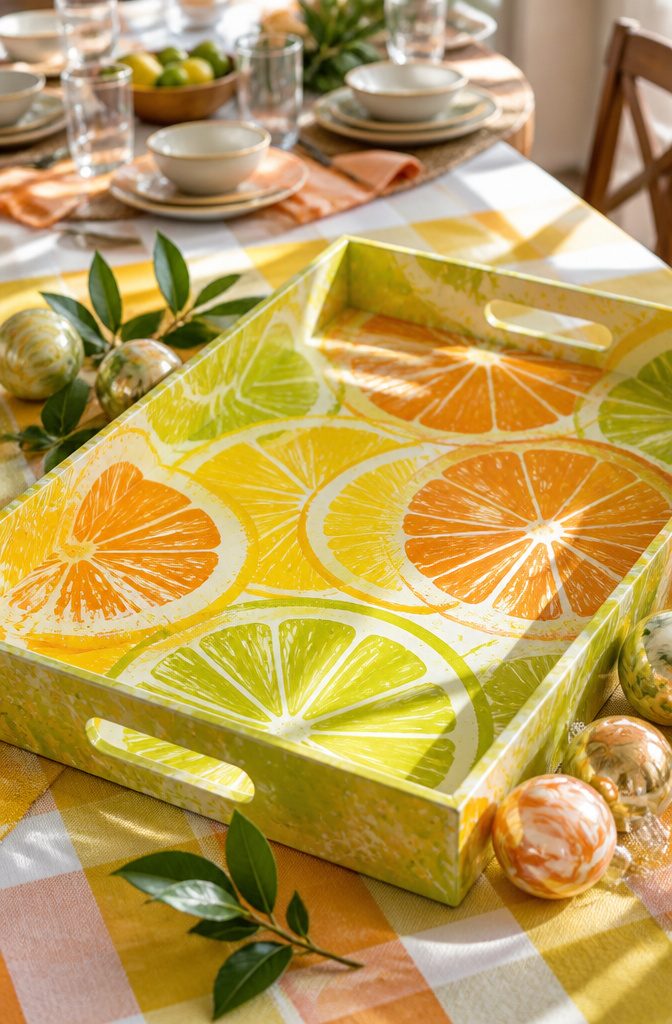
The Painted Citrus Serving Tray is the summer project I’d start with.
Its bright, saturated colors suit a dining table, and the tray also works as a base for a summer vignette on a coffee table. Paint is the main material, so a plain tray and an afternoon cover it.
For cold months, Christmas decorations give you the most options.
Marbled ornaments need just 4 materials, and you can customize them for the tree. An old sweater can become a pillow, a small Christmas tree or a wine bottle holder.
The painted tray and the ornaments are the quickest to finish in an afternoon. Sweater projects take more cutting and sewing, so I’d save them for a slower day.
3. Kids Crafts
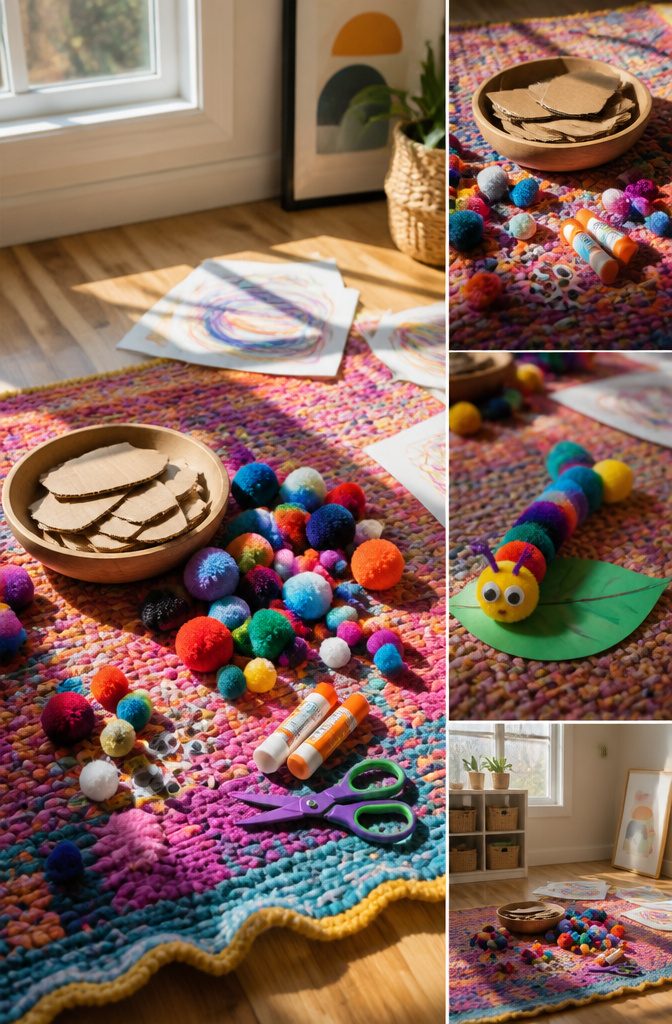
Pom Pom Caterpillars are the project I’d hand a child first, because the whole build is small, soft pieces that need pinching, threading and gluing.
That is fine motor practice disguised as play, and it uses what’s already in a craft drawer: pom poms, and a bit of glue.
Paper crafts work the same way.
Scrap paper, cardboard and recyclables become paper dolls, folded boats or simple puppets, with nothing bought. Pick activities with minimal setup, since a project that needs ten minutes of prep rarely survives a kid’s attention span.
Sit down and make one alongside the child. Working side by side turns an afternoon craft into bonding time, and a child who picks the colors and decides the caterpillar’s face is practicing creativity, not copying yours.
4. Upcycled Crafts
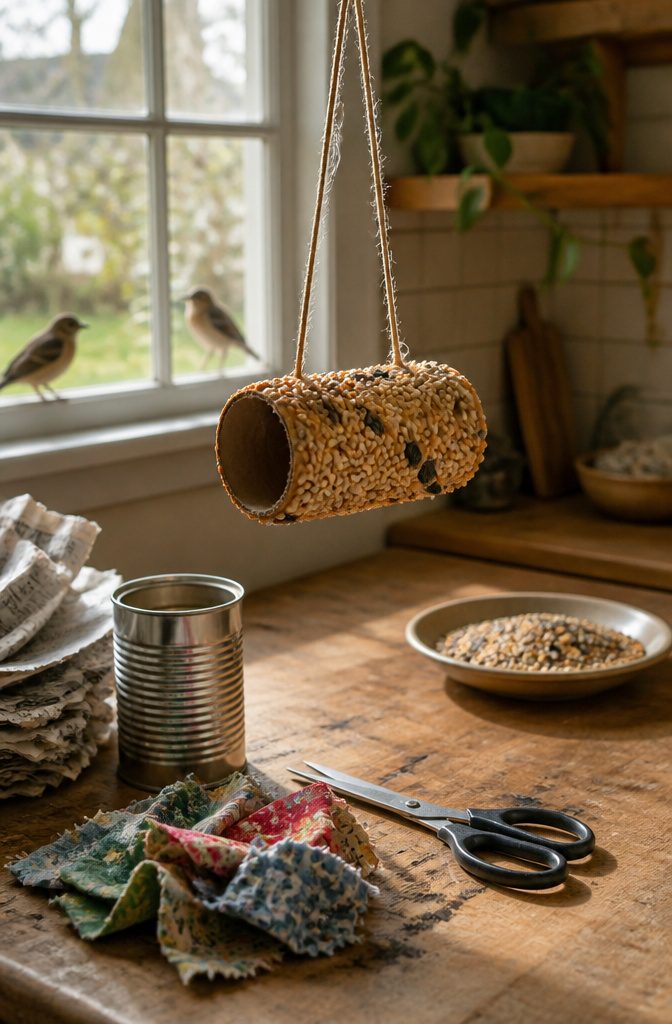
A toilet paper roll bird feeder is the project I’d start with, because the whole build is peanut butter, seed and a piece of string.
Spread the peanut butter over the cardboard tube, roll it in birdseed, then thread the string through the middle and hang it where backyard visitors will find it.
It’s a 15-minute job and the cardboard would otherwise go in the bin.
Substitutions are where upcycling earns its keep. Tin cans stand in for jars in most organizer and planter projects, and old magazines or wrapping paper work anywhere a tutorial asks for craft paper.
Clothes you no longer wear supply fabric and embellishments, and buttons from them make a good cardboard train. I’d check the closet and recycling bin before buying anything.
5. Home Decor Crafts
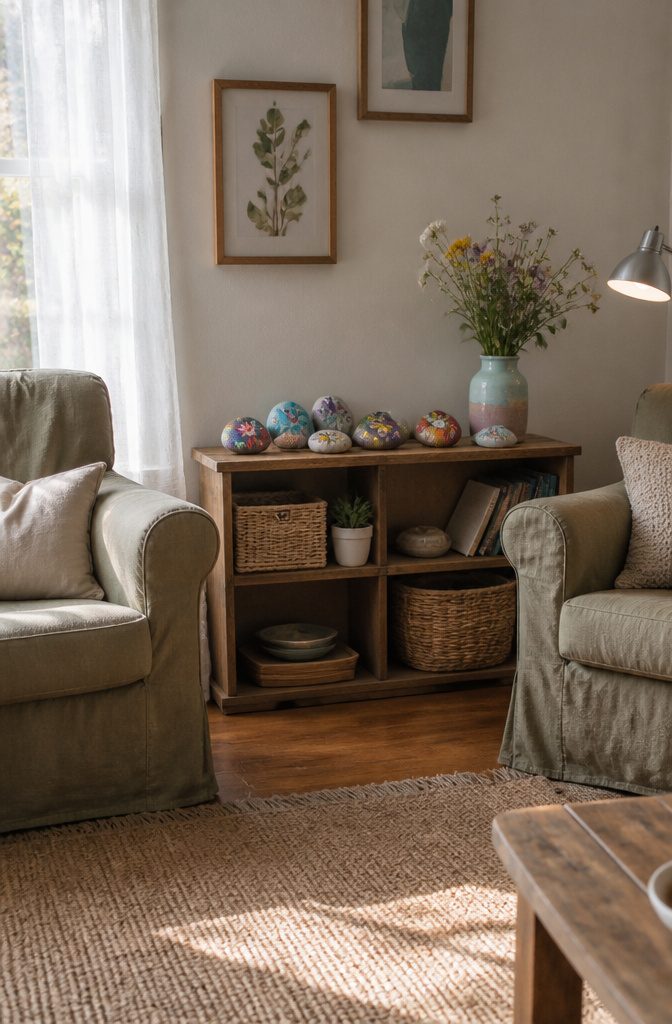
Painted rocks win for the least effort. Craft stores and dollar stores sell rocks for crafting, and a river walk will turn up free ones.
One rock, a few paint colors and an afternoon give you a hand-painted piece, and simple subjects like hearts, strawberries or a single word are enough.
Painted jars and wall art both ask for a bit more setup, though a jar can hold a candle or a bunch of stems the moment the paint dries.
For wall art, copy a photo-print look you have seen in a store; a printed picture on a plain jar candle is one example, and it costs far less to duplicate than to buy.
DIY Sea Glass Bottles are the shelf piece I would save for a slower weekend. They look good lined up, but they take more steps than a rock does.
6. Functional Crafts
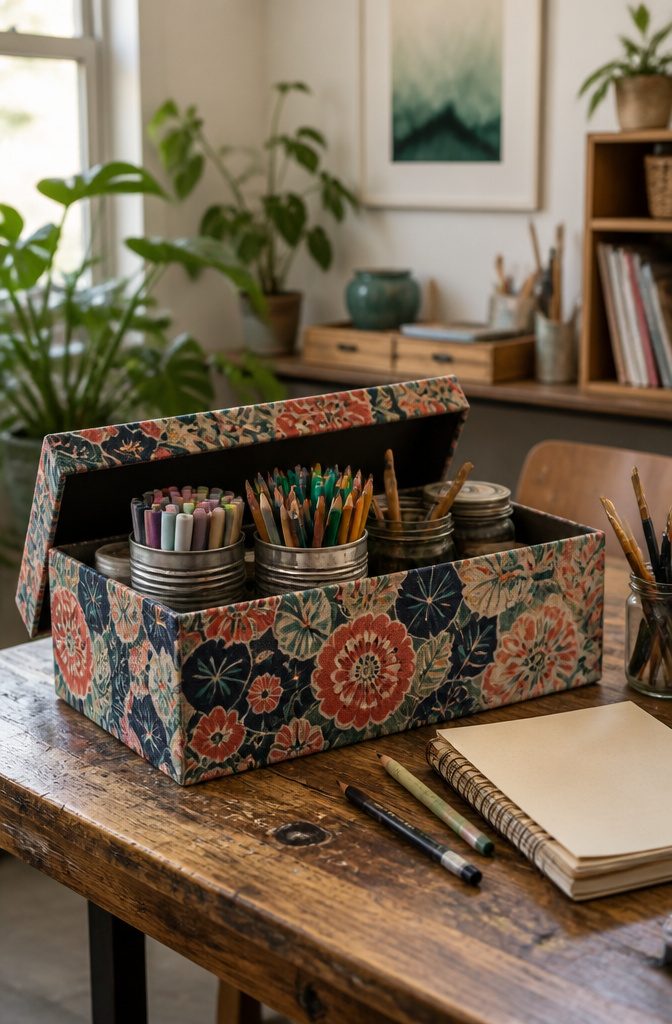
Shoeboxes make the best first storage project because they cost nothing and cover easily.
Wrap one in fabric and it stops looking like packaging and starts looking like furniture. Jars, cans and cardboard tubes work the same way for desk clutter: pencils, scissors and brushes stand upright where you can see them.
Grouping matters more than the container. Put all the tape in one jar, all the ribbon in one box, and stop mixing categories, because a drawer that holds "misc" is a drawer you dig through.
Label every container on the front, since a stack of identical boxes hides what’s inside. Masking tape and a marker are enough, and a label can be redone when the contents change.
Cord keepers are a small win. A fabric-wrapped clip or decorated pin ends the tangle at the outlet.
7. Therapeutic Crafts
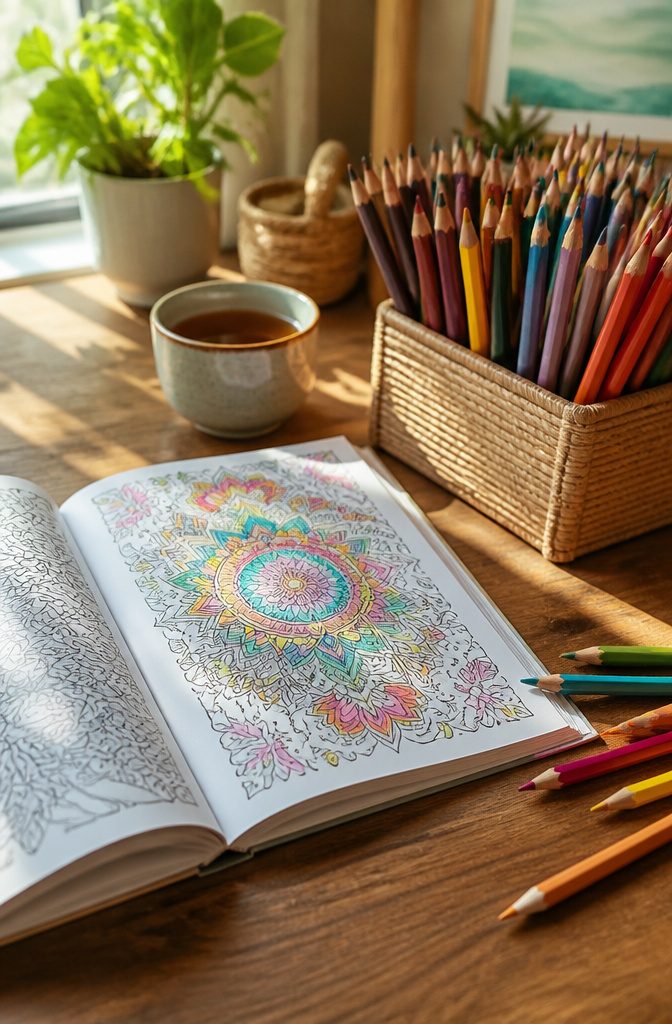
Coloring works for me because the motion is repetitive and the rules are few: pick a page, pick a pencil, stay inside or outside the lines as you please.
Knitting does something similar. The steady rhythm of the stitches can settle you into a meditative state, and a simple stitching project asks even less of a beginner.
Bubble painting is the playful option, and it suits anyone who wants a sensory craft with no skill barrier.
Only a couple of sources tie art-making to lower stress and better emotional regulation, so I keep my claims small.
I can say these crafts quiet my own racing thoughts. Pay attention to the process, not the finished piece, and the calm tends to follow.
Crafting With Kids
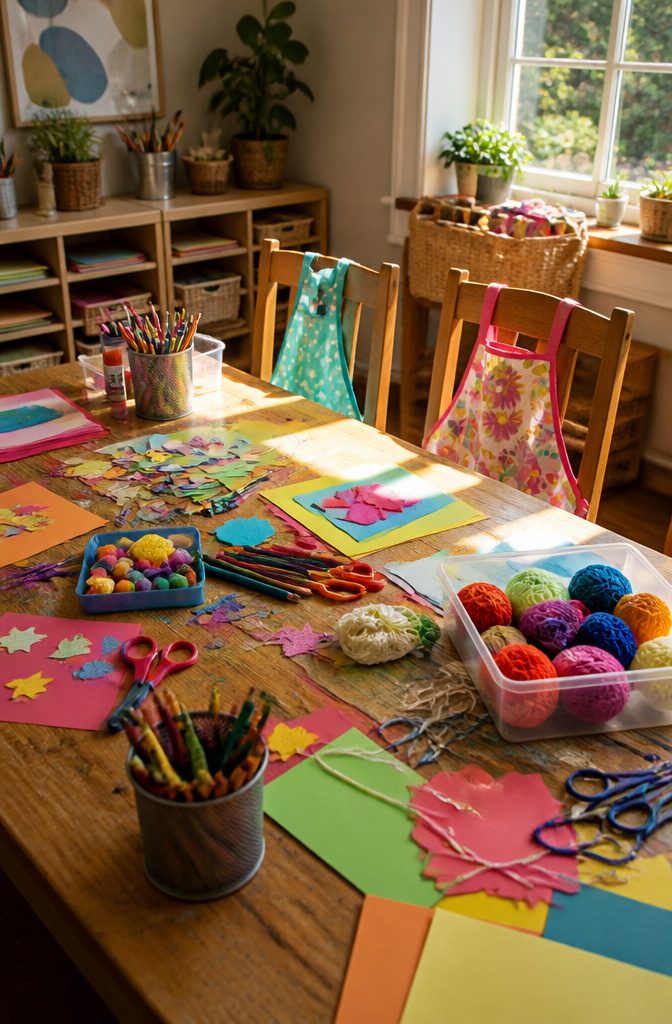
Cutting, gluing, folding and threading all work the small muscles in a child’s hands, and the practice sticks because it feels like play. Open-ended steps, like choosing which color goes where, do the same for creativity.
For a shared afternoon, pick a project with two jobs: one a young child can do alone, and one an adult handles.
Choose something with no wrong answer, so nobody hovers over a crooked line. Keep the prep under ten minutes, or the patience runs out before the glue comes out.
I’d skip anything that needs a long drying time before the fun part.
Kids lose interest, and you end up finishing it yourself. Cover the table first, set out everything in reach, and let the mess happen.
Seasonal Planning
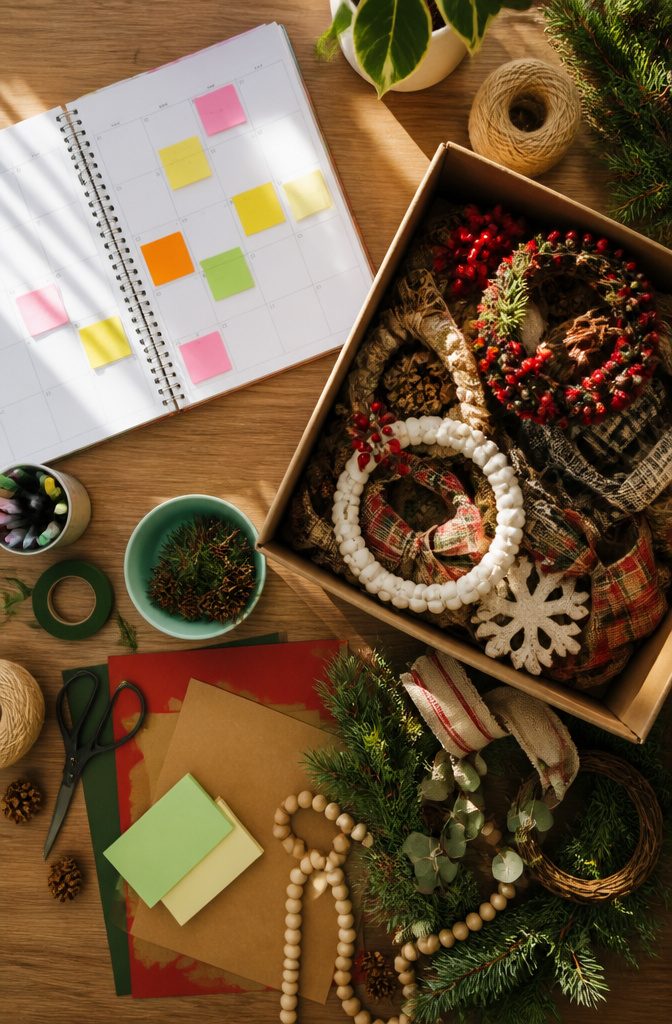
Start seasonal crafts about four to six weeks before the holiday, and pick the projects that need drying, curing or a second coat first.
Paper pieces can wait until the last week; anything painted or glued in layers cannot. Buy supplies at the same time, because the shelf of one good color disappears fast once stores switch seasons.
Storage decides whether you reuse anything next year. Layer fragile pieces in a shoebox with tissue or plain paper between them, and keep glitter and wet-glue items apart from the rest.
Label each box with the holiday and the year you made it, so the next round starts with a quick look instead of a full dig through the closet.
I would keep the basic shapes and swap the surface. Repaint a wreath form or re-cover a paper garland, and the same base serves three holidays.
Why Upcycling Works
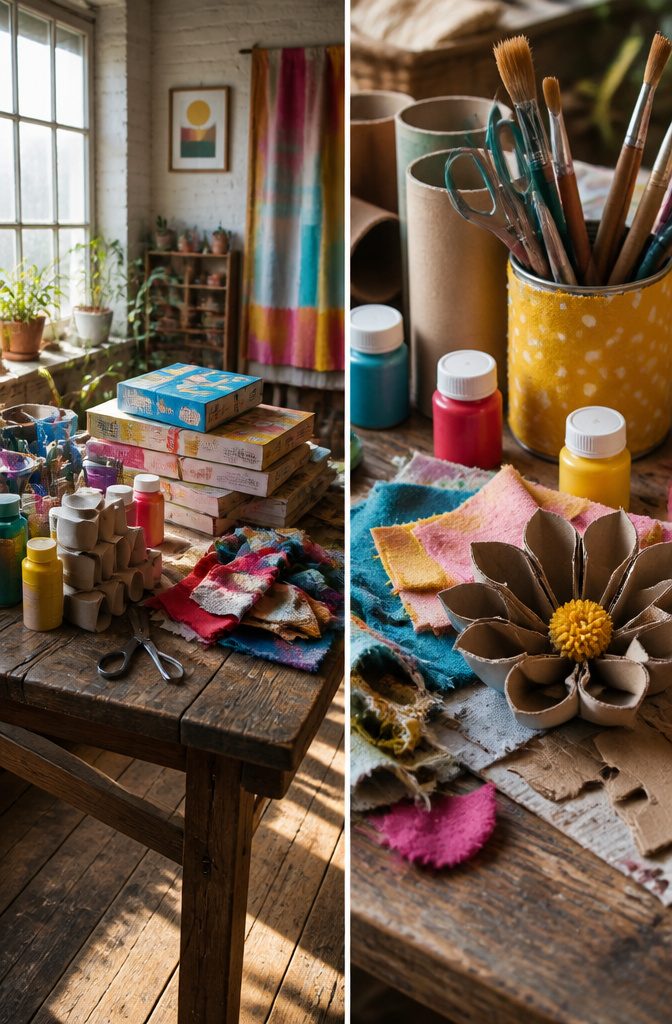
Paper, fabric scraps and recyclables are already in most kitchens and junk drawers, which makes them the cheapest craft supplies you will ever buy: nothing.
A toilet paper roll that would hit the bin is a tube, a stamp, a bead or a small container, depending on how you look at it.
I sort by shape and texture before I think about a project.
A tube is a tube, a flat scrap is a surface, and a cardboard box is a stack of sturdy panels. Seeing materials that way is what turns a pile of clutter into a starting point.
Reusing also lowers the pressure. Nobody agonizes over a cereal box the way they do over a $12 sheet of specialty paper, so kids and beginners try bolder ideas when the material is free.
Scraps come in uneven sizes and colors, so plan the project around what you have rather than the reverse.
Frequently Asked Questions
What are the easiest crafts for a total beginner?
Paper bead jewelry, no-sew fabric coasters, cupcake liner flowers and painted rocks are the easiest starting points.
Each uses scraps or supplies you likely already have, and none needs a sewing machine, a kiln or a craft room. Painted rocks take the least effort of the group.
How can I substitute materials if I don’t have what a tutorial calls for?
Swap tin cans in for jars in most organizer and planter projects, and use old magazines or wrapping paper wherever a tutorial asks for craft paper.
Clothes you no longer wear can supply fabric and embellishments. Check the closet and recycling bin before buying anything.
What is a good way to organize and store craft supplies at home?
Reuse shoeboxes, jars, cans and cardboard tubes as containers, then group like items together, such as all the tape in one jar and all the ribbon in one box.
Label the front of every container with masking tape and a marker so identical boxes don’t hide what’s inside. Avoid a catch-all "misc" drawer, since it just becomes something you dig through.
What are some fun summer crafts for adults?
A painted citrus serving tray is a good summer project.
Its bright colors suit a dining table, and it can also anchor a summer display on a coffee table. Paint is the main material, so a plain tray and an afternoon are enough.
What are fun crafts to make?
Good picks include painted rocks, pom pom caterpillars, marbled ornaments, and a toilet paper roll bird feeder made with peanut butter, birdseed and string.
Sugar scrub bars make a nice gift. Most of these can be finished in an afternoon with materials from around the house.