
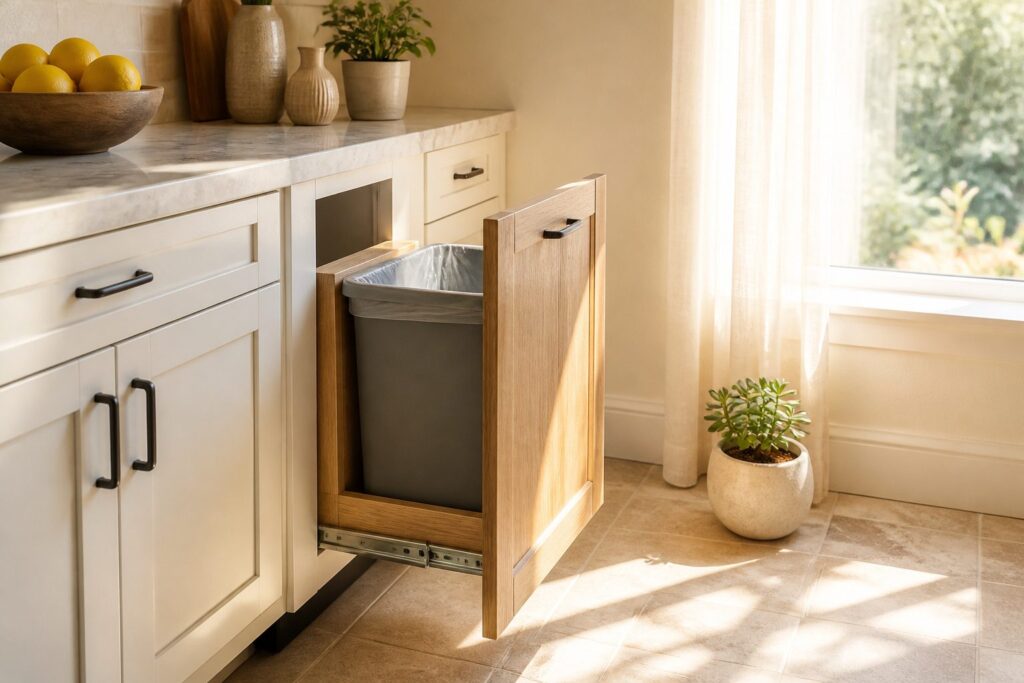
The options run from a $145 wicker basket to a $999 food recycler, but floor space decides which one is yours.
Small kitchens do best with a pull-out or tilt-out cabinet bin, which takes no floor at all. The catch: most kitchens already have a pull-out cabinet, and any hidden bin still needs a plywood platform on drawer slides.
1. Stainless Steel Kitchen Trash Cans
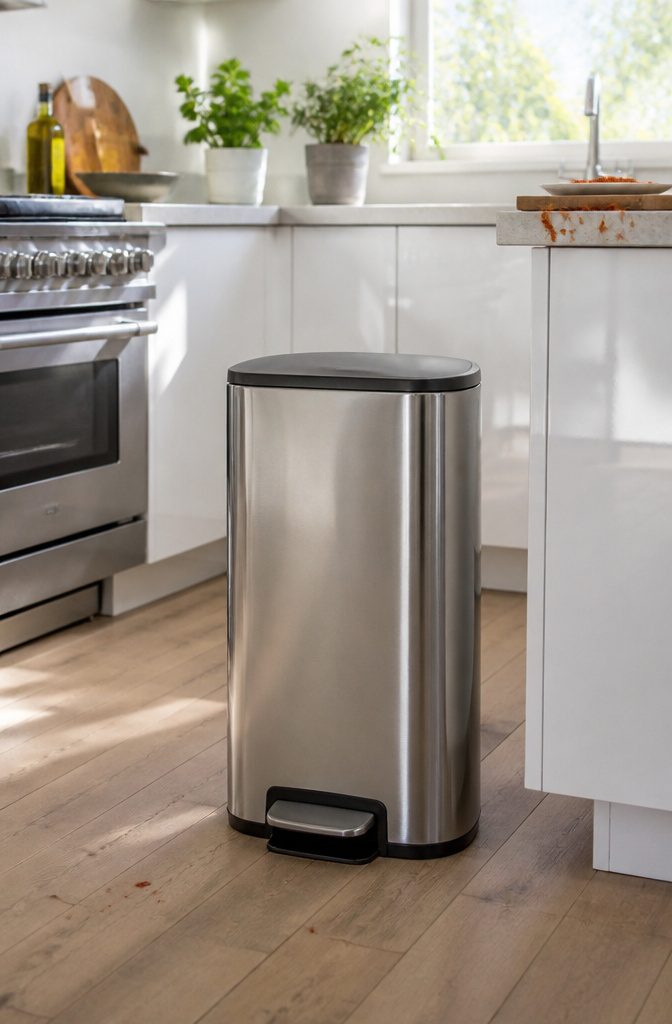
Stainless steel suits a modern kitchen because it takes daily abuse, wipes clean with a damp cloth, and reads as sleek next to appliances.
It also comes in a range of sizes, so a small apartment and a busy family kitchen can both find a fit.
The Brabantia New Icon Step Trash Can is the one I’d point to first. The 8-gallon step version is sold in 20 colorways, so you can keep the metal look or pick something bolder, and it runs $148 at Amazon.
Fingerprints are the cost.
Stainless shows every smudge, so expect to wipe the lid more often than you’d like, especially with kids around. Some finishes resist marks better than others, and I’d choose one of those.
2. Pull-Out Drawer Trash Cans
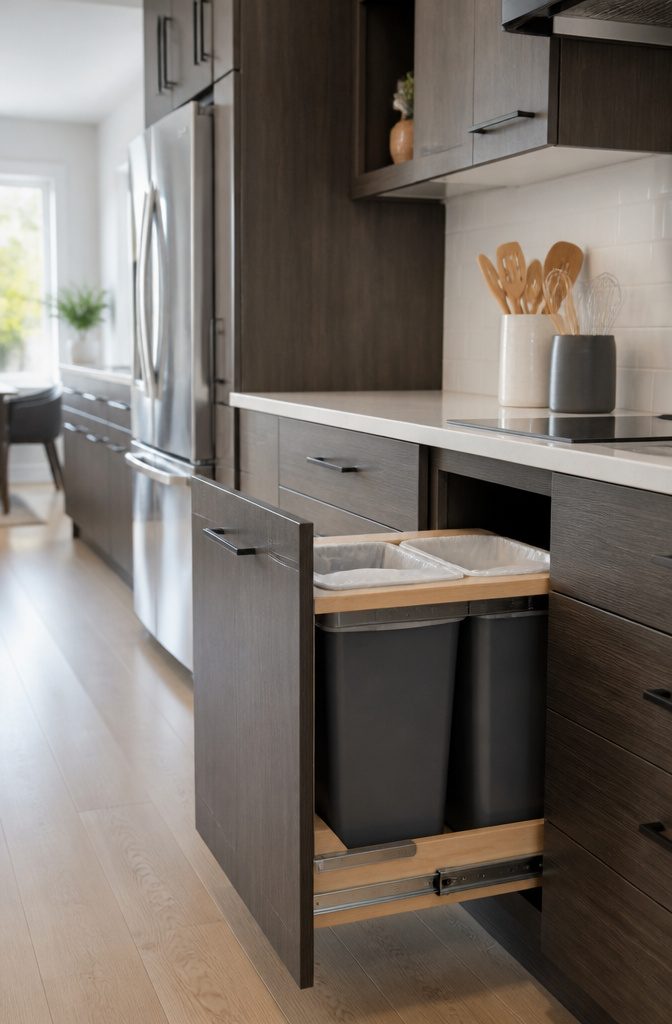
A pull-out drawer puts the bin behind a cabinet door, so the kitchen reads as clean cabinetry instead of a trash corner.
Most kitchens already have at least one pull-out cabinet, which makes this the easiest hidden option to add. It suits small kitchens best, since it takes no floor space at all.
Hiding the can is simpler than readers expect: a bin sits on a hanging platform made from plywood, mounted on drawer slides inside an existing cabinet. The door covers it completely.
I’d go with a drawer wide enough for two bins, one for trash and one for recycling. Better still, put one drawer near the sink and another by your prep space so you aren’t crossing the room with scraps.
3. Tilt-Out Cabinet Trash Bins
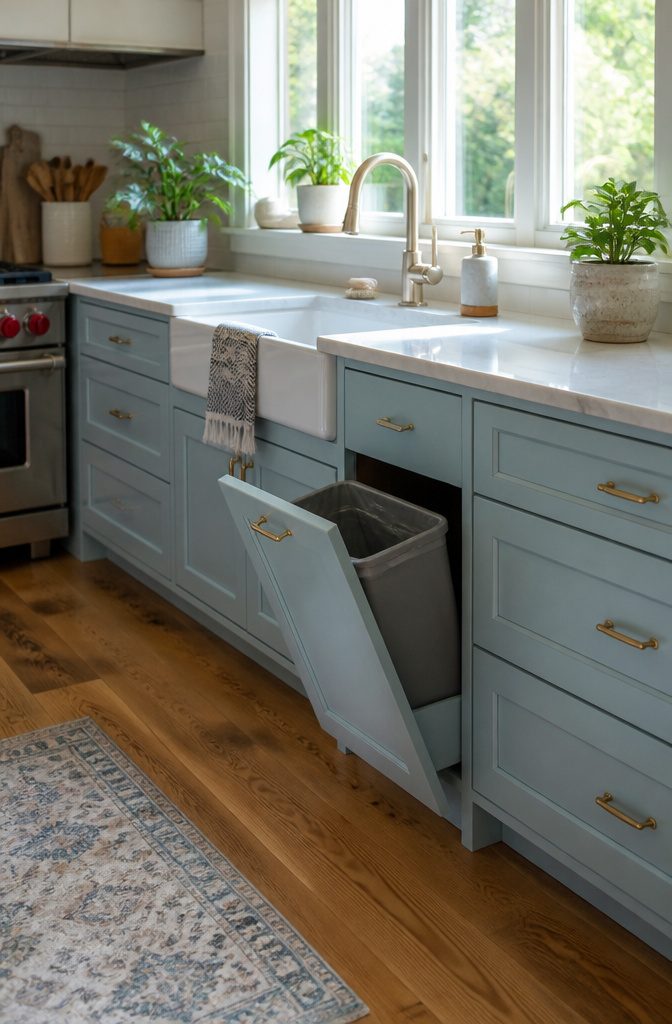
A tilt-out bin hides behind an ordinary cabinet door, usually the one under the sink.
The front panel is hinged, so the whole thing swings toward you at an angle and the trash receptacle sits right there behind it. Nothing in the room looks like a trash can.
A full pull-out drawer slides straight out on runners, which suits a kitchen that already has a pull-out cabinet to adapt.
Pick the tilt-out if you want the smallest footprint and a clean cabinet front; pick the drawer if you want the bin to travel fully into the room. Small kitchens do well with either.
Building one is realistic for a handy weekend maker. One approach holds the can in place with an angled side brace cut from plywood.
4. Garbage Disposal Units
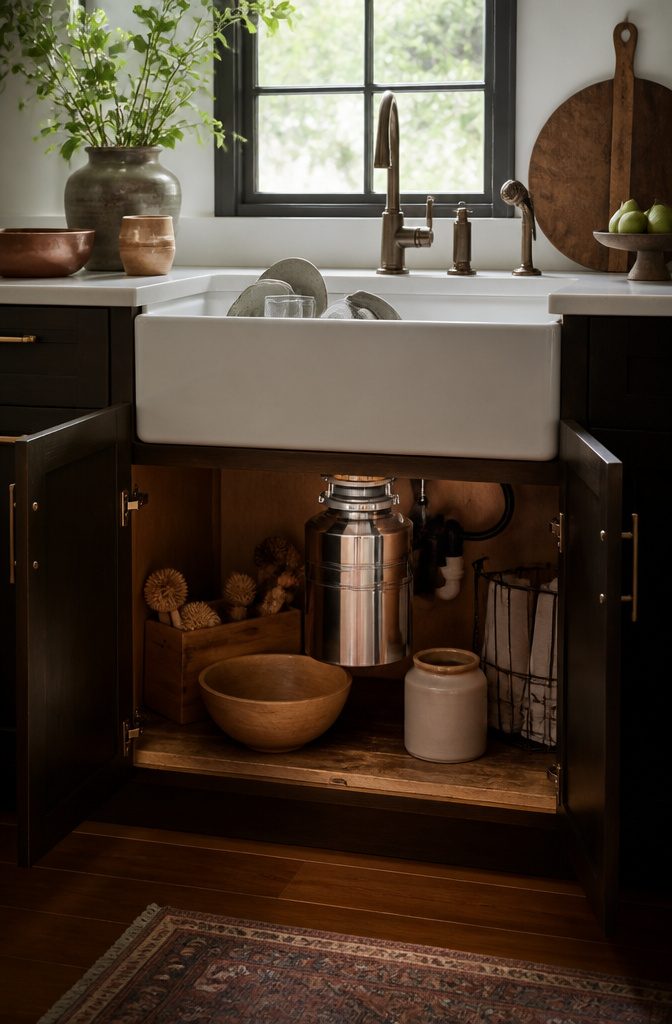
A garbage disposal sits under the sink and grinds food scraps into tiny particles that rinse away with water. That means less wet waste lands in your can, so fewer odors, less clutter and fewer trash bags to buy.
It is not a replacement for a trash can. Packaging, paper, plastic and everything else that isn’t food still needs a bin, so plan on keeping a can even with a disposal installed.
I’d treat the unit as a way to keep the can drier and cleaner, not as a way to shrink the cabinet footprint.
Less food in the bin also means fewer reasons for pests or bacteria to settle in. For a busy kitchen where scraps pile up fast, that is the strongest argument for adding one.
5. Trash Compactors
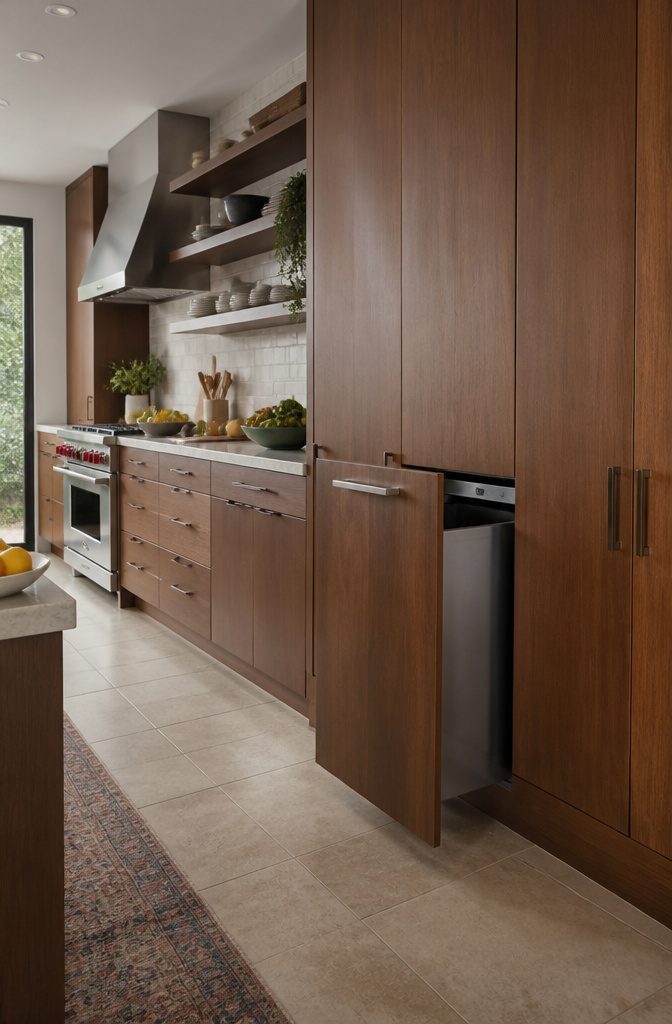
A trash compactor presses waste into dense bundles, so the bag fills more slowly and goes out less often.
That matters most in a household that hauls out a full bag every day or two. The compression also helps hold odors in, which is a real plus in a small kitchen.
The cost is floor space and a commitment to the look.
Built-in units slide into a cabinet opening, so you have to plan the cutout before you pick the machine. Standalone units skip the remodel but stand out as a large appliance.
I’d skip a compactor in a tight galley layout, where it eats the room a slim bin would never take. In a bigger kitchen with a spot already set aside, it wins.
6. Stand-Alone Kitchen Trash Cans
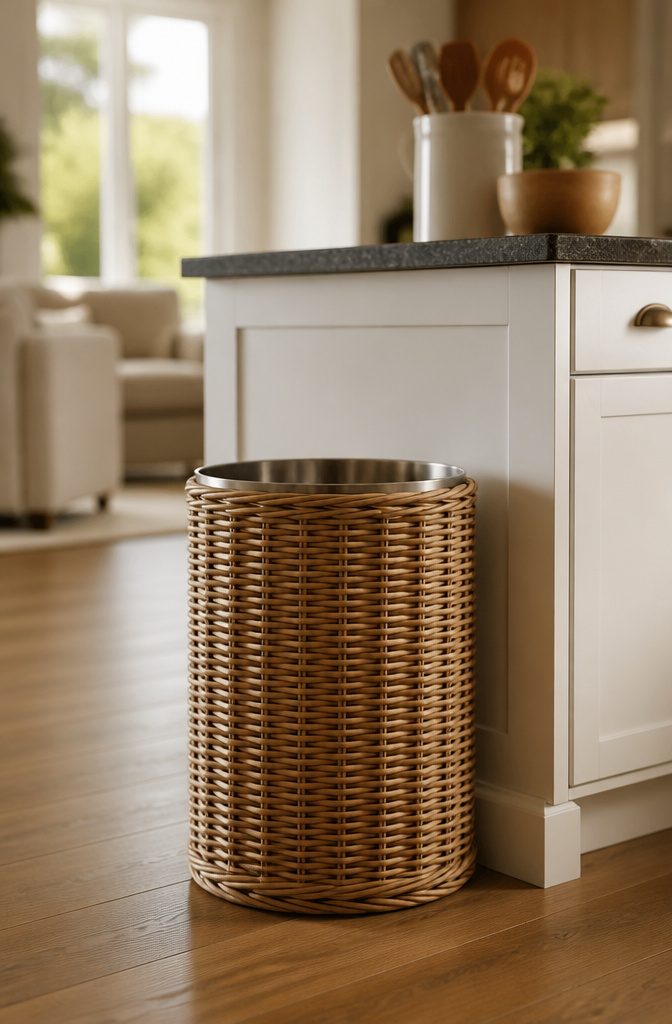
The Basket Lady Wicker Kitchen Trash Basket with Metal Liner costs $145 and hides a 13-gallon stainless steel bin inside a rattan-style shell.
In a kitchen that opens onto the living room, that’s the point: from the couch you see woven texture, not a bare steel can.
A trash can that blends in takes on the room’s materials instead of fighting them.
Wicker, wood, marble-look finishes and scalloped or block-print designs all read as decor, while a plain bin reads as a bin. The metal liner is what makes wicker practical, since the weave stays dry and the liner takes the mess.
Stand-alone cans also suit kitchens with an island, where the bin can sit right beside it. I’d choose one over a cabinet bin only if you like the look, because the $145 buys style first and convenience second.
7. DIY Trash Can Projects
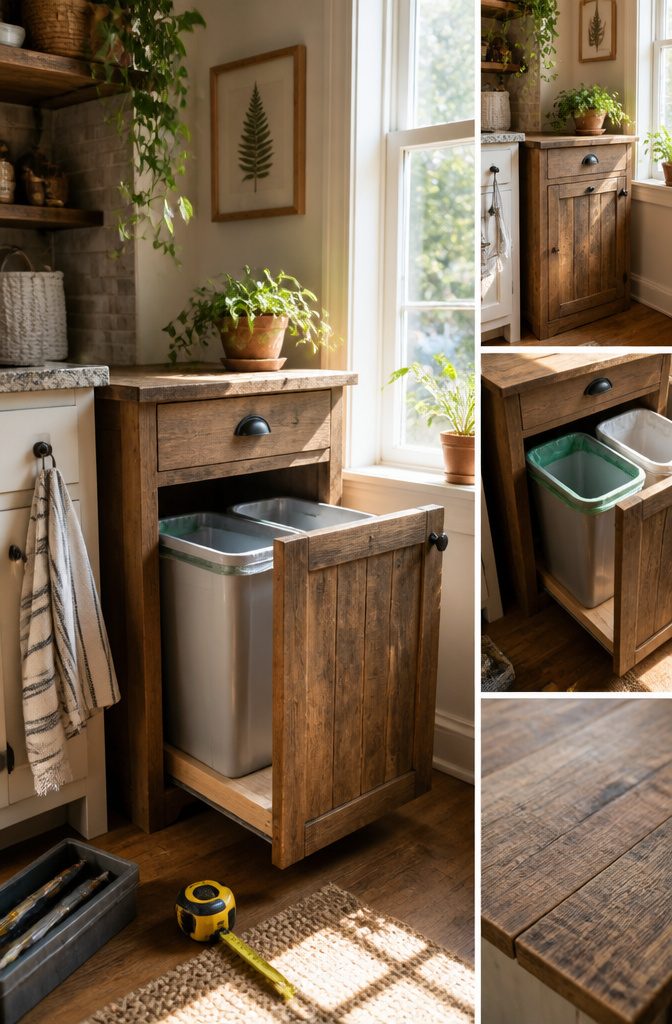
The easiest afternoon build is converting a cabinet you already own.
Drawer slides plus a hanging platform cut from plywood hold the can, and the cabinet door hides it. Because you’re reusing the existing box, the work is mostly measuring and screwing.
If you’d rather build from scratch, a cabinet with two pull-out bins lets you split trash from recycling, with a wide drawer above for bags.
It’s a bigger weekend job, and I’d only take it on if you have wall space for a new piece.
For a quicker fix, repurpose a sturdy container you already own and give it a lid or a coat of paint. A plain can takes personalizing well, and it costs almost nothing.
8. Compact Bins for Small Kitchens
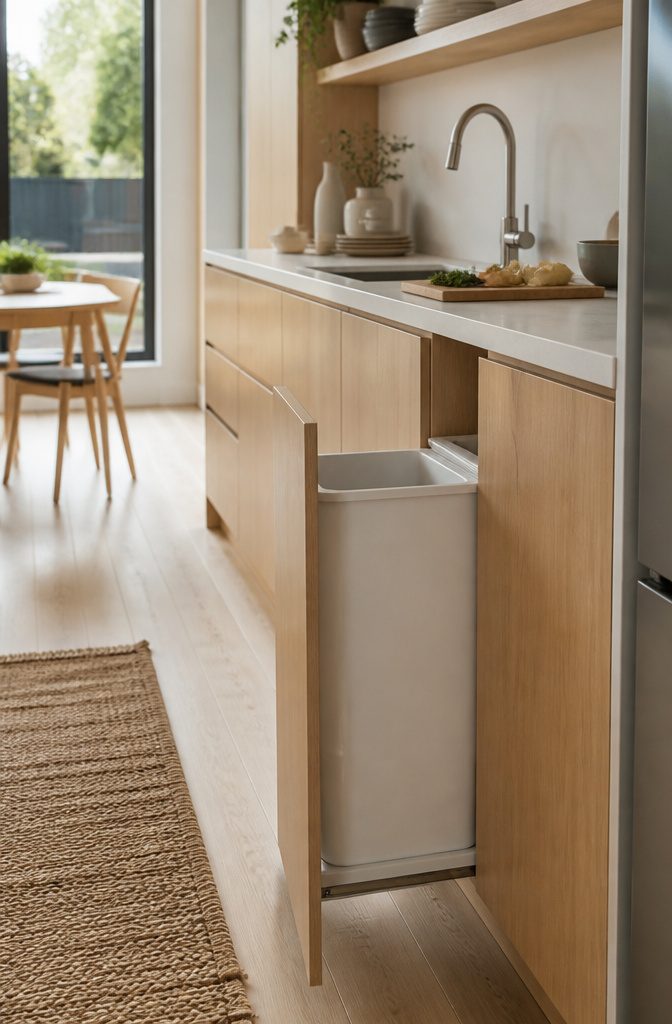
In a small kitchen, a bulky can eats floor space you don’t have, so slim wins every time.
Look for a slimline profile that tucks into a narrow gap or slides under a counter, and pick one with built-in handles or wheels so you can pull it out without wrestling it.
If you have an older kitchen with no designated spot, a slim step bin with a soft-close lid is a solid stand-in. Simplehuman’s are pricey, and their custom bags cost more than most, but they fit snugly.
When even a slim bin is too much floor, move it inside a cabinet with a pull-out drawer or a tilt-out front. Most kitchens already have a pull-out cabinet, which makes that the easier swap.
9. Trash Bins for Kitchen Islands
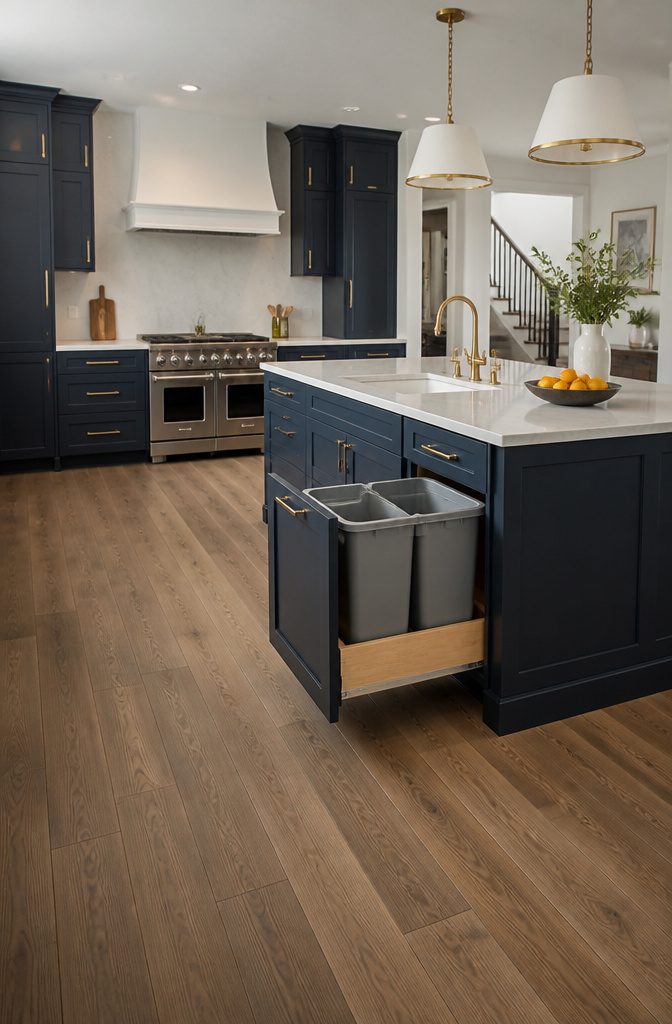
An island is where most of the chopping happens, so the bin belongs in the island itself.
A pull-out drawer in the side panel opens onto one or two bins, and you can work at the counter with the drawer left open.
If one drawer isn’t enough, put a second one near the sink and a third near the oven or your usual prep spot, so you never cross the kitchen with a handful of peelings.
For tight islands, a tilt-out bin set into the side does the same job without needing room for a drawer to slide.
A standalone bin parked beside the island, in a finish that matches it, is the easy option, and it’s the only one that needs no cabinet work.
For a busy cook, the built-in pull-out wins: the bin stays within one step of the cutting board and the floor stays clear.
Features Worth Paying For
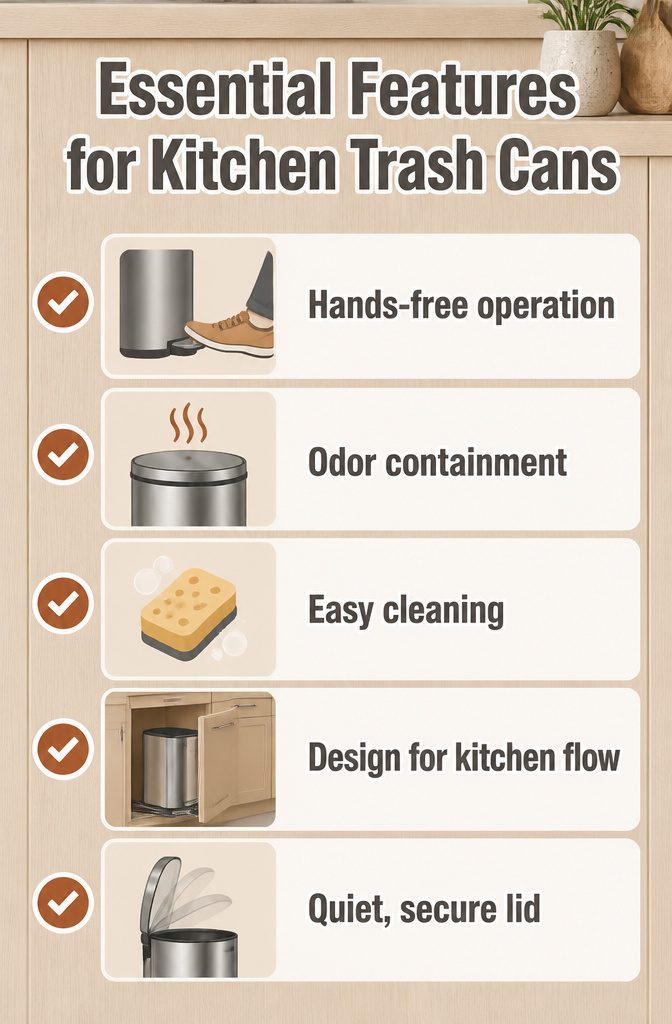
Four features earn their price in a kitchen can, and one of them matters more than the rest.
- Hands-free operation comes as a step pedal or a sensor lid. Owners on Reddit swear by sensor lids, and a step can with a soft-close lid keeps the lid from banging.
- Odor containment comes from a tight lid. Stainless steel cans are often sold with it built in. A can inside a cabinet stays smell-free for one owner, though a small space meant emptying it often.
- Easy cleaning favors a fingerprint-resistant finish and a removable interior bin you can carry to the sink.
- Kitchen flow improves when the can has a home: a pull-out base cabinet, or a slim bin in a small room.
If I had to pick one, it’s the lid.
A closed, quiet lid handles smell and keeps the can from taking over the room, and you’ll use it every day. Skip sensors if your budget is tight; a good step pedal does the job.
Matching Your Kitchen Style
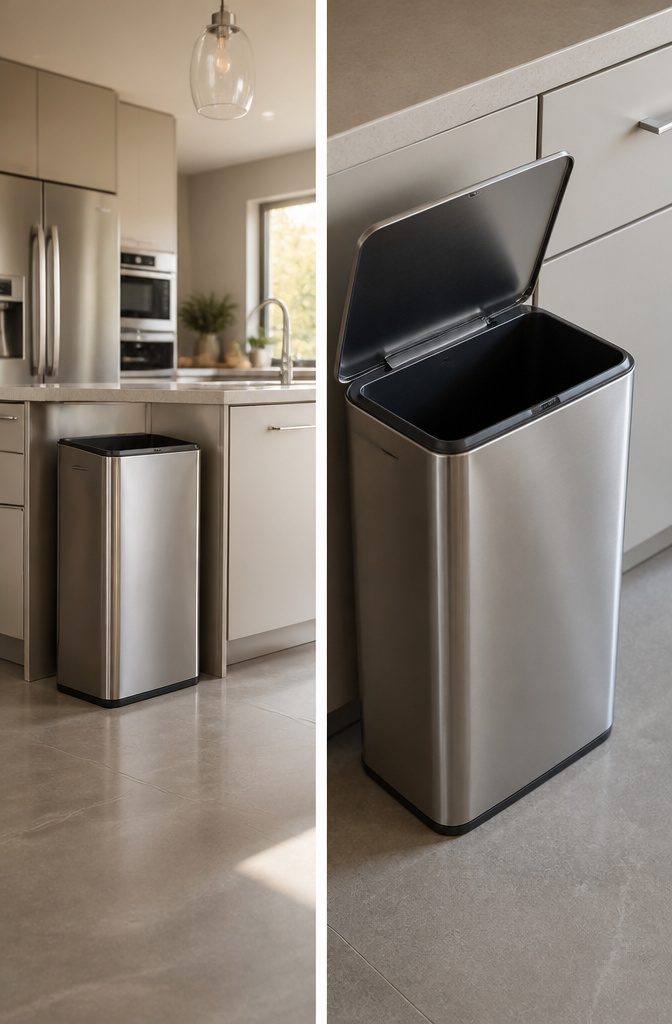
Finish matters more than shape when you pick a look. Brushed stainless steel suits a modern kitchen, and its fingerprint-resistant versions keep the front from looking smudged by dinnertime.
If your cabinets and appliances are already steel, a stainless bin disappears into the room, which is usually what you want from a trash can.
A patterned or textured bin works the other way.
It becomes an accent, so it earns its spot in a kitchen with plain surfaces and little else going on. In a busy room, I’d skip it.
In an older kitchen with no built-in spot, pick the slimmest bin that handles your daily trash, since a bulky one makes a small room feel crowded. Sleek and plain beats decorative there.
Food Recyclers for Eco-Friendly Kitchens
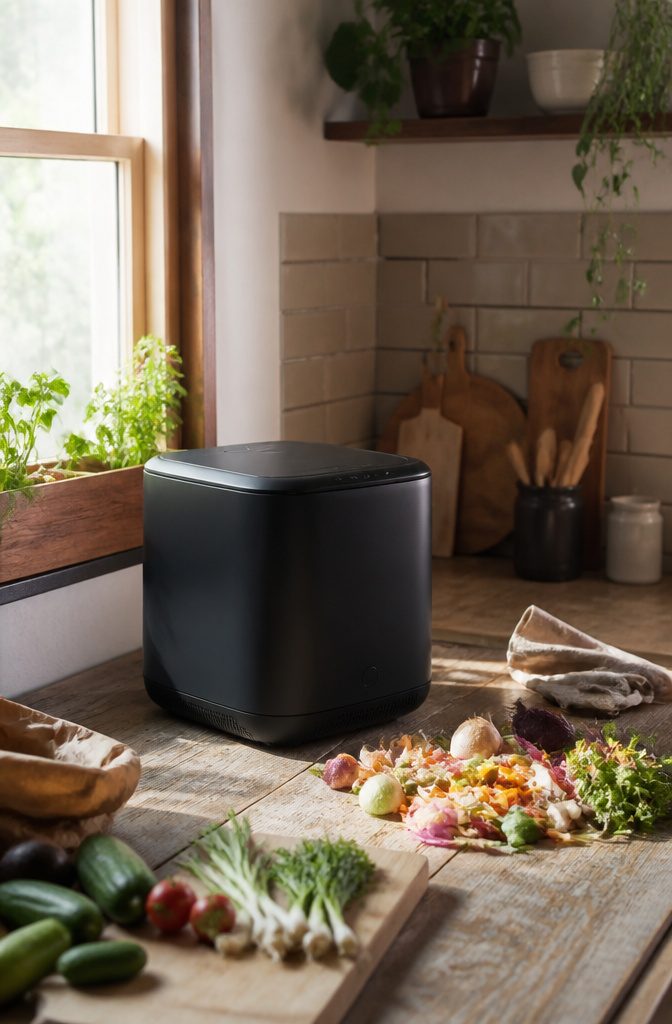
The Zera Food Recycler turns kitchen scraps into fertilizer in 24 hours, and that makes it a different kind of purchase than a bin.
A bin holds trash. This machine processes a slice of it, so you still need a can for everything else.
Eater’s take on the Mill, a similar countertop recycler, puts the cost question plainly:
The Mill will dry and grind your food while you sleep… At nearly the cost of my monthly rent it’s one hell of an investment, but a serious environmental (and time-saving) payoff, too.
— Eater
Mill’s price is $999, so I’d treat any food recycler as an appliance budget line, not a bin budget line.
Frequently Asked Questions
How can I hide my trash can in the kitchen?
Put it inside a cabinet with a pull-out drawer or a tilt-out front.
Both keep the bin behind a regular cabinet door, and most kitchens already have a pull-out cabinet to adapt. The drawer suits small kitchens best because it takes no floor space.
What are the best aesthetic trash cans?
The best ones blend into the room instead of standing out as a bin.
Brushed stainless steel suits a modern kitchen, while wicker with a metal liner, like the $145 Basket Lady, reads as decor in an open-plan space. Fingerprint-resistant finishes keep stainless looking clean.
What are some DIY trash can ideas?
The easiest is converting a cabinet you already own with drawer slides and a plywood hanging platform.
You can also build a cabinet with two pull-out bins to split trash from recycling, or repurpose a sturdy container with a lid or a coat of paint. The conversion is mostly measuring and screwing.
What are some cool ideas for trash cans?
Try a pull-out drawer in your island, a tilt-out bin under the sink, or a wicker basket with a hidden metal liner.
A food recycler is another option for scraps, though it costs far more than a bin and you still need a can for everything else.
What can I use instead of a trash can?
A garbage disposal handles food scraps, but it can’t take packaging, paper or plastic, so you still need a bin.
A food recycler or compactor also reduces what goes in the can without replacing it. The closest swap is a hidden bin inside a cabinet, which removes the visible can.
What is the best affordable trash can?
A sturdy container you already own, given a lid or a coat of paint, costs almost nothing.
For a bought option, a good step-pedal can does the job without the added cost of a sensor lid. Pick one with a tight, quiet lid, since that feature gets used every day.