Easy spring crafts are low-prep projects made mostly from things already in the house: paper plates, egg cartons, coffee filters, cupcake cases.
Age fit is where most of these projects stumble, since a craft that works for a 7-year-old can frustrate a 3-year-old.
Cutting and sawing, as with the 18 projects here, belong to an adult, while toddlers do the painting, stamping and handprints. Wooden eggs, kept year to year, outlast plastic ones.
Paper Plate Rainbow
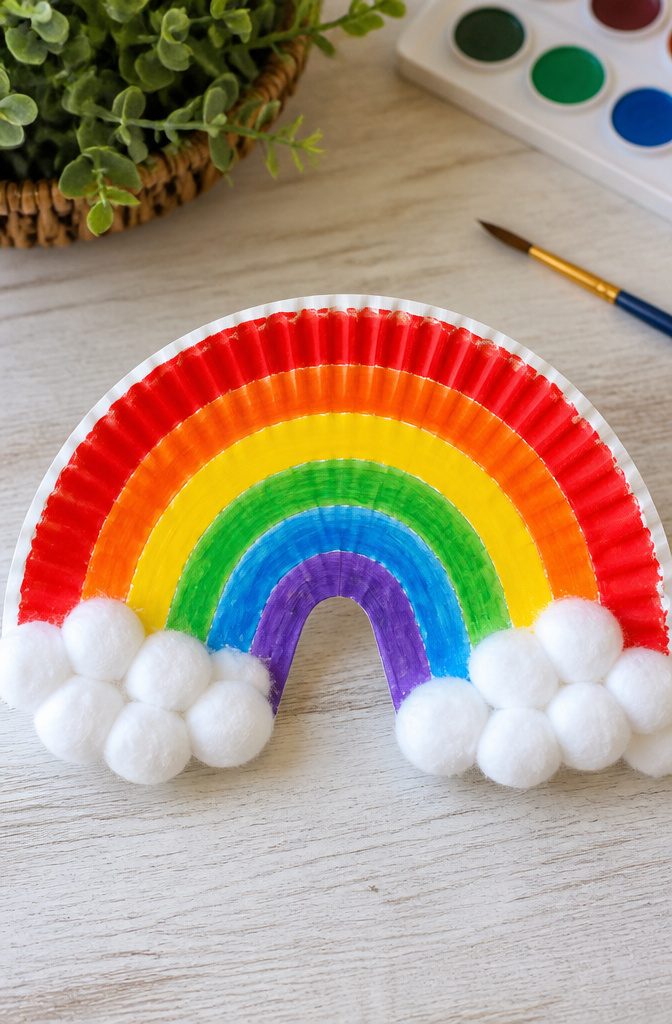
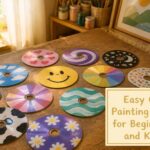
Paper plates make the best base for a rainbow because the rim is already curved, so half a plate becomes an arch with one cut.
Fold a plate in half, cut along the crease, and each half gives you a rainbow. Washable tempera or kids’ poster paint covers the coated white surface best; watercolor tends to bead up and pool.
Paint the stripes from the outer edge inward, leaving the plate’s own ridge as a natural border between bands.
Let each color dry before painting the one beside it, or the neighboring stripes bleed into a muddy brown. Cotton balls glued along the bottom make clouds.
Young kids can handle the painting with a wide brush, while an adult does the cutting. Plan on an afternoon, with drying time included.
Cherry Blossom Trees
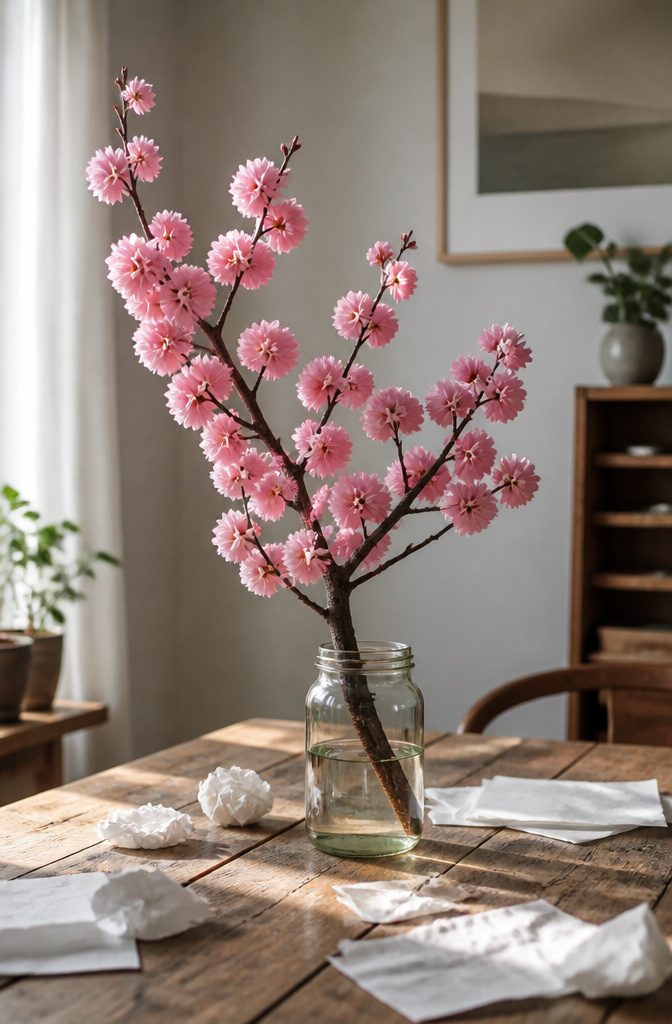
Pink tissue paper does most of the work here, but the branch is what makes the tree look finished.
Drawn or printed trunks work fine on white paper, and a real twig standing in a jar turns the same craft into a small centerpiece.
Cut the tissue into small squares, crumple each one into a loose ball, and dab glue on the branch where you want a cluster.
Press the balls on and keep going until the branch is covered in puffy, uneven blossoms. The crumpling matters, since flat squares look like confetti while scrunched ones read as petals.
On paper, glue only the branches you’ve drawn, so the blossoms stay on the tree. I’d choose a real branch every time, because the bark and crooked angles look better than any crayon trunk.
DIY Egg Decorating
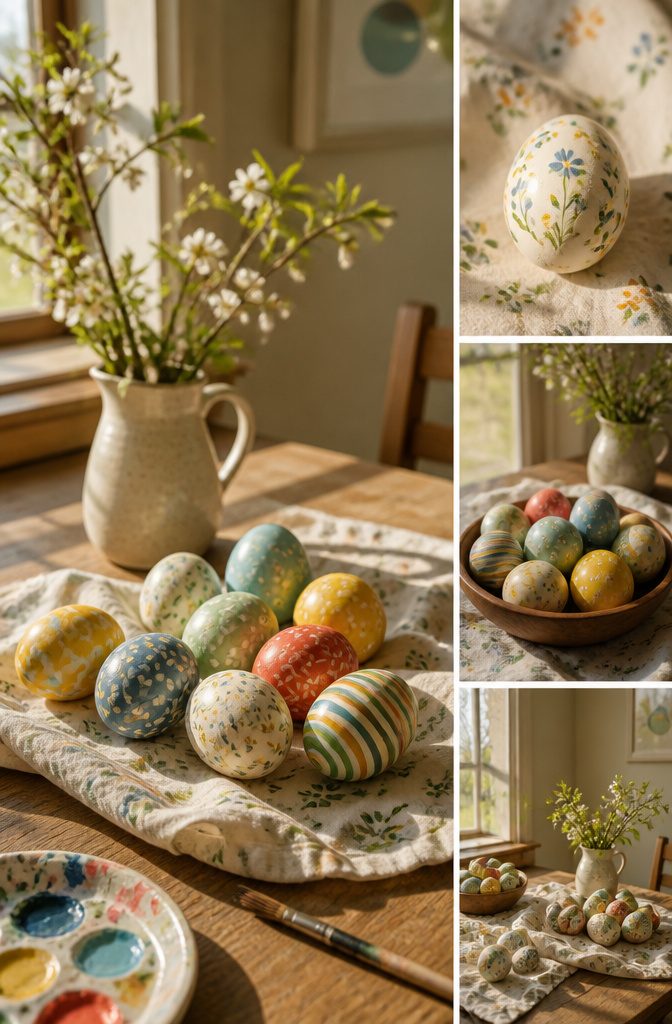
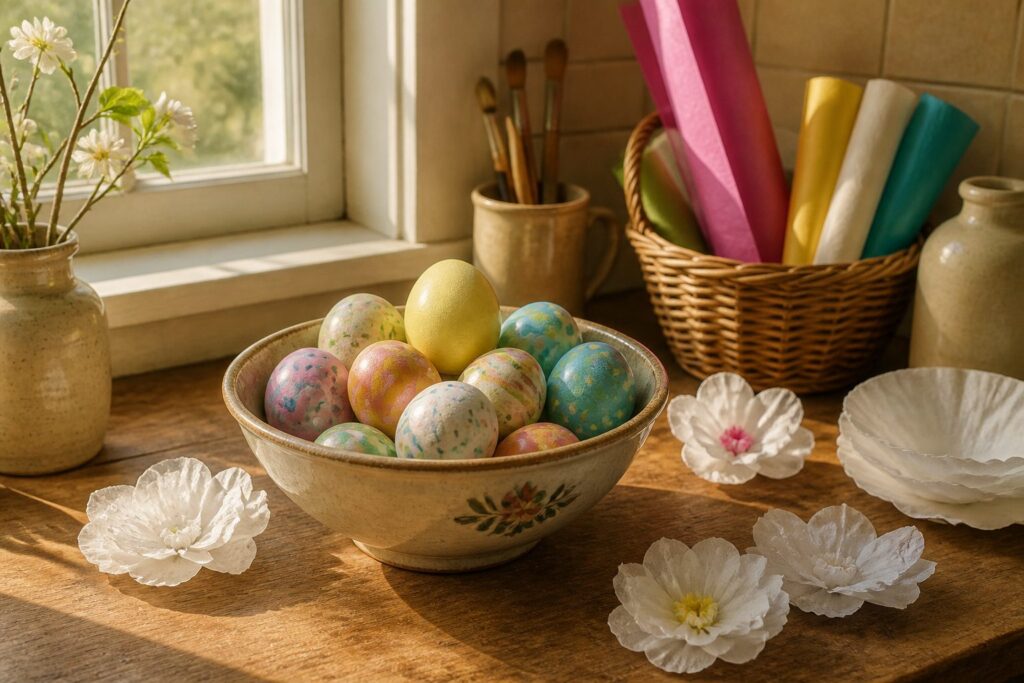
Wooden eggs win for anyone who wants to keep the result. Hollow wooden eggs survive a drop and a toddler’s grip, and they come out again every spring.
One idea worth borrowing: let each kid paint one egg per year, and the collection becomes a record of how their painting grows. It also keeps plastic eggs out of the basket.
Real eggs, dyed and blown out, give you that thin, glowing shell that wood can’t match, but one hard squeeze ends the project. I’d give them to older kids and adults, and hand younger ones the wood.
Either kind can hang on an egg tree.
Loop ribbon around the egg and hold it with a wooden craft bead, then hang it from blooming branches stuck in floral foam inside a vase. Set it on the mantel for Easter.
Paper Flowers
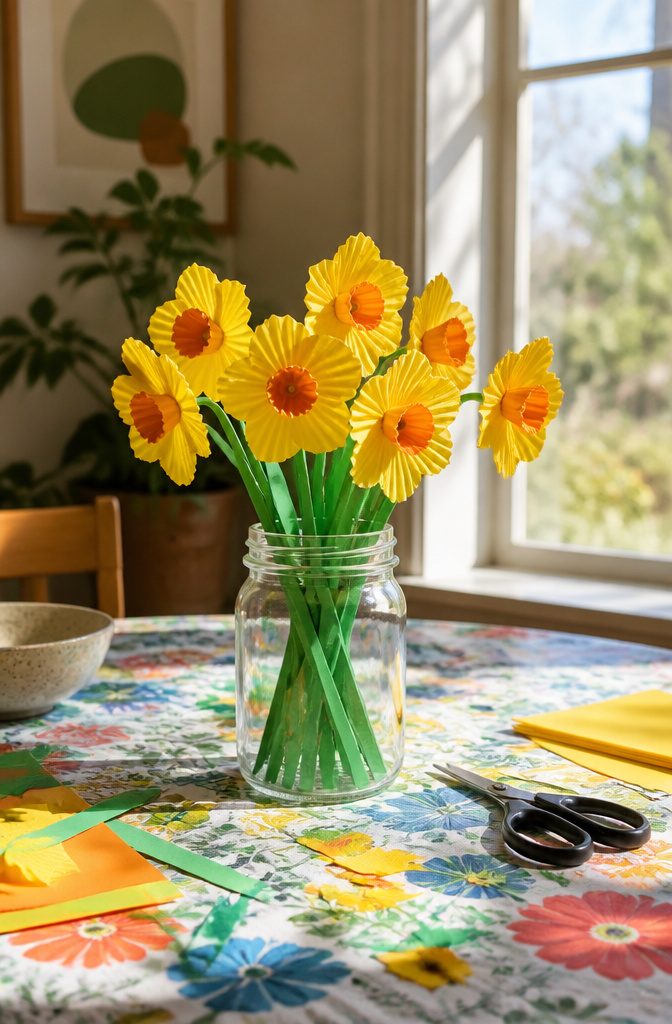
Colored paper, a pair of scissors and glue cover nearly every paper flower, and a drinking straw makes a stem that stands up in a jar.
Paper cupcake cases work well for daffodils: yellow and green card supply the trumpet and leaves, and the cases are already sitting in a kitchen cupboard.
Kids who can handle scissors safely can make the 3D versions on their own, and adults will find the layered petals just as satisfying to build.
Paper flowers never wilt, so a bunch lasts well past the week a cut bouquet would. I’d pick daffodils first for younger kids, since the shapes are forgiving and the result looks like a flower right away.
Pom-Pom Bunnies
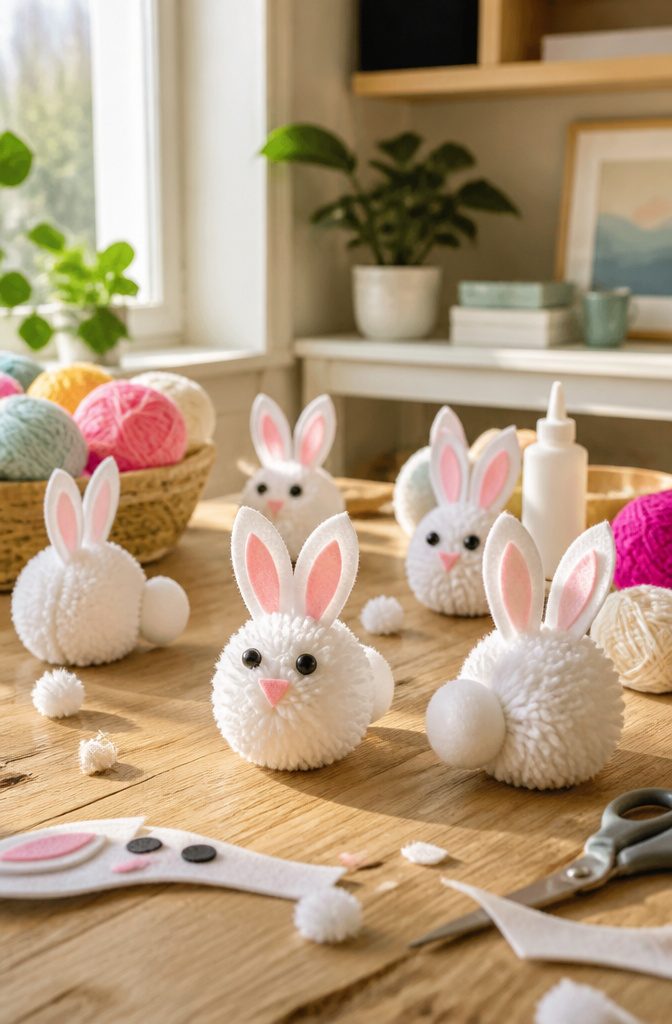
A pom-pom bunny starts with a fat, round pom-pom, and that one piece does most of the work.
Wrap the yarn thickly, since a thin wrap gives a patchy, see-through body that sheds fuzz. White or cream yarn reads as bunny at a glance, but gray and tan work just as well.
Trim the finished pom-pom into a tight ball, then cut the ears from felt: two long ovals, with smaller pink ovals glued on top for the inner ear.
Glue them to the top of the body with craft glue, not a glue stick, which won’t hold on yarn. For the face, cut a tiny felt nose and two small circles for eyes.
Glue the face low on the pom-pom so the bunny looks sweet instead of startled. A cotton ball makes a good tail.
Suncatchers
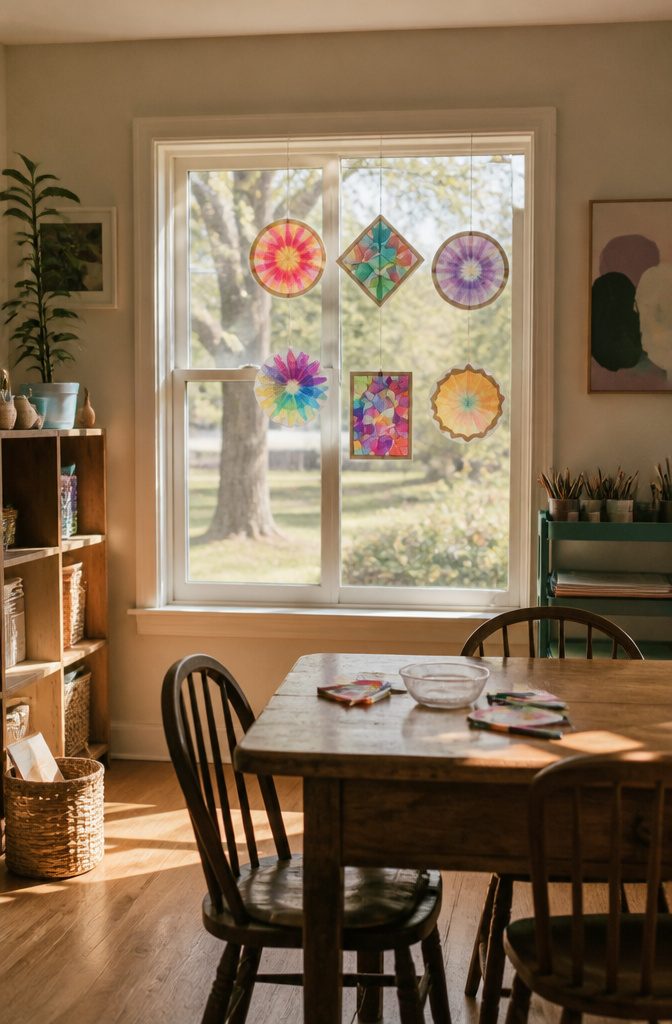
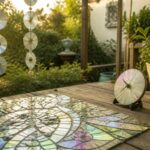
Coffee filters give the softer color. Marker ink spreads into the paper when it touches water, so the edges blur and blend into a pastel wash.
Draw a thick circle of washable marker in the center of a flat filter, fold it into a cone, and dip only the tip in water. The color climbs the paper and separates into its different pigments as it goes.
Colored cellophane gives the stronger, clearer color, and I’d pick it for a window you want to keep decorated.
Paper wilts with moisture and sags, while cellophane stays flat and lets light flood through at different times of day. For a suncatcher that lasts, use cellophane; for the softest color, use coffee filters.
Pinch a dried filter in the middle with a clothespin or string and you get butterfly wings.
Sidewalk Chalk
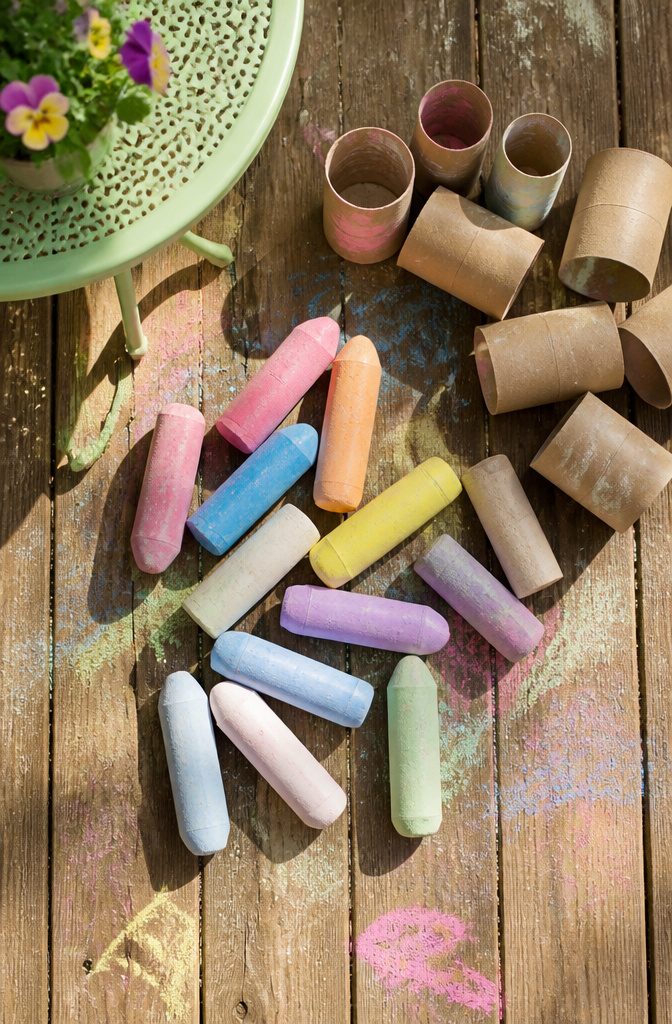
Homemade sidewalk chalk is a paste you pour into a mold and let harden, and the usual kitchen version leans on cornstarch, plaster of Paris, or a mix of the two with water and a little paint or food coloring.
Toilet paper rolls make good molds when you tape one end shut and stand them upright. Peel the tube away once the chalk sets, and you have fat sticks small hands can hold.
Patience is the real cost.
Let the sticks dry completely before using them, because damp chalk crumbles and skips across the pavement. A sunny porch speeds this up.
Cleanup is the reason I put this one on the list.
The mess stays outside, and a hose or the next rain clears the drawing. Mix plaster in a disposable cup, though, and never rinse it down a sink drain.
Butterfly Crafts
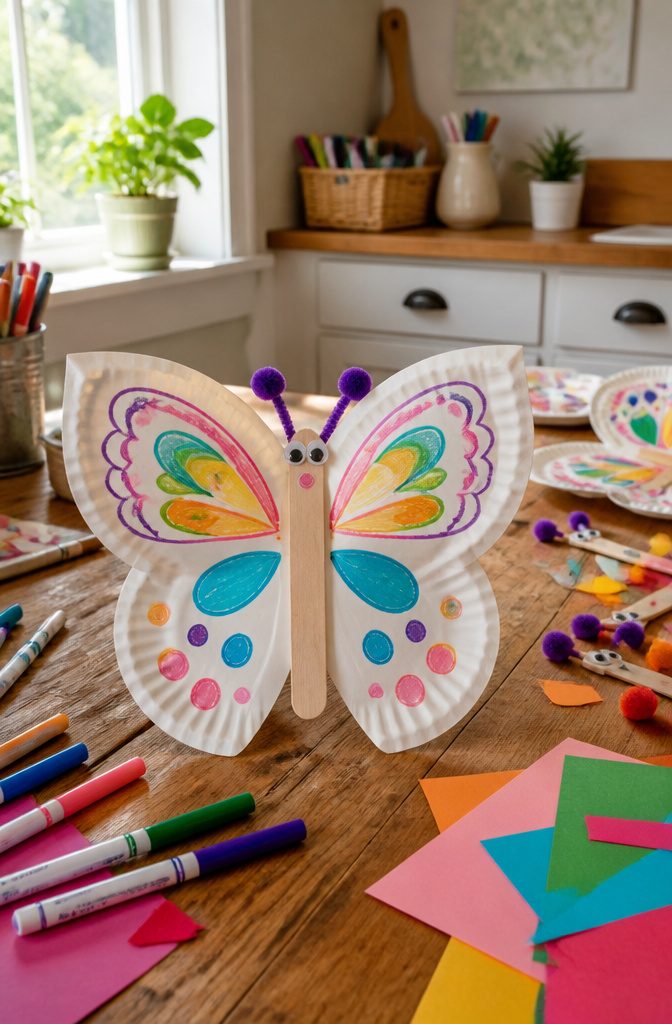
A paper plate makes the easiest butterfly wings, because the shape is already half done.
Draw patterns on the plate first, then fold it in quarters with the drawings facing in, and cut a curved line about an inch from the pointed side.
Open it, cut along the middle line to split the wings, and trim until the shape looks right to you.
For the body, glue pom poms in a row on a craft stick and put googly eyes on the top one.
Glue the wings to the back, then add a second craft stick below the first as a handle. Draw before you cut; patterns are much harder to add once the wings are folded and trimmed.
Coffee filters are my pick for a classroom or a crowded kitchen table. Kids color them and watch the colors mix, which doubles as a color theory lesson.
DIY Bird Feeders
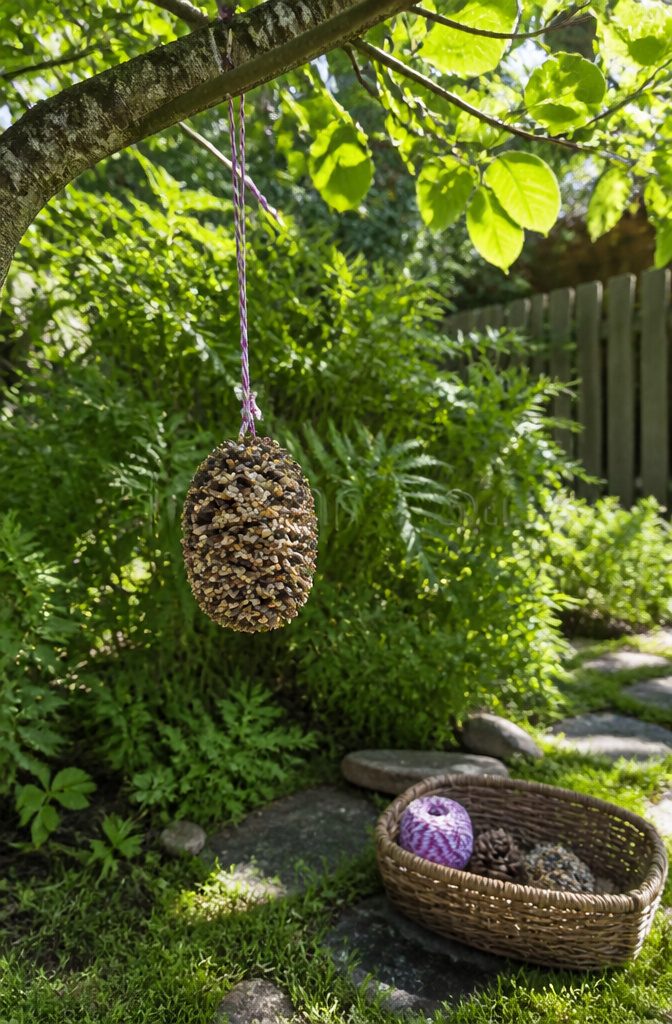
Pine cones and peanut butter make the simplest feeder I know of, and it uses nothing you have to buy new.
A cone from the yard or a local park is the base, and a loop of string around the top is the hanger.
Spread peanut butter into the scales with a butter knife, then roll the cone in birdseed until it’s coated.
Kids can have free rein over the decorating, which is half the fun for little ones. I’d tie the string on before any peanut butter goes near it, because sticky fingers make knots miserable.
Hang it on a branch you can see from a window. Birds start visiting the yard once they find it, so you get a front-row view of a craft that keeps working after the afternoon is over.
Flower Handprint Art
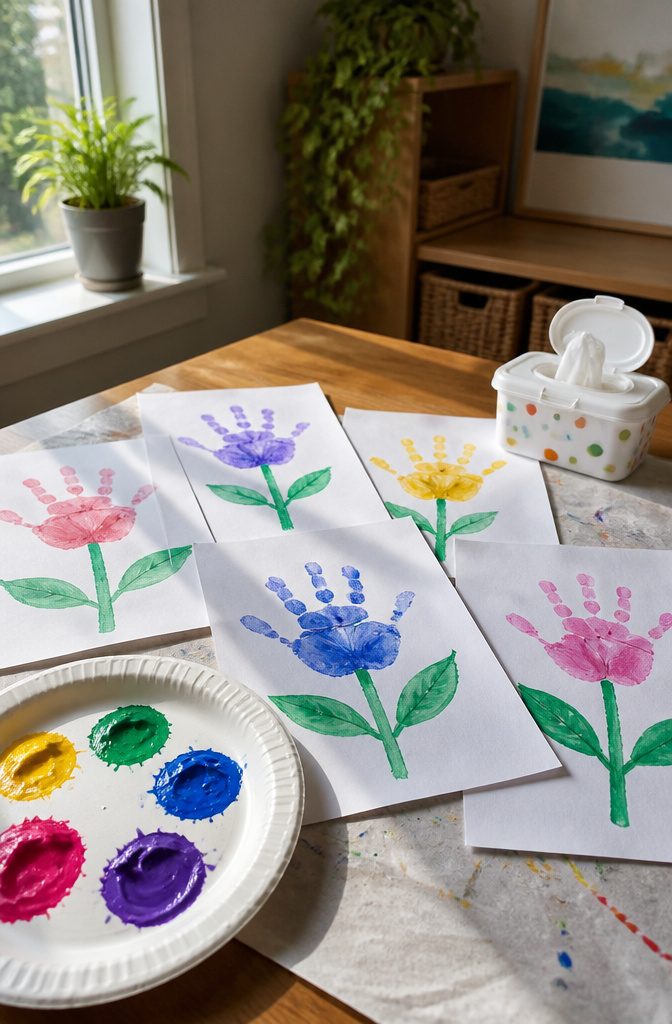
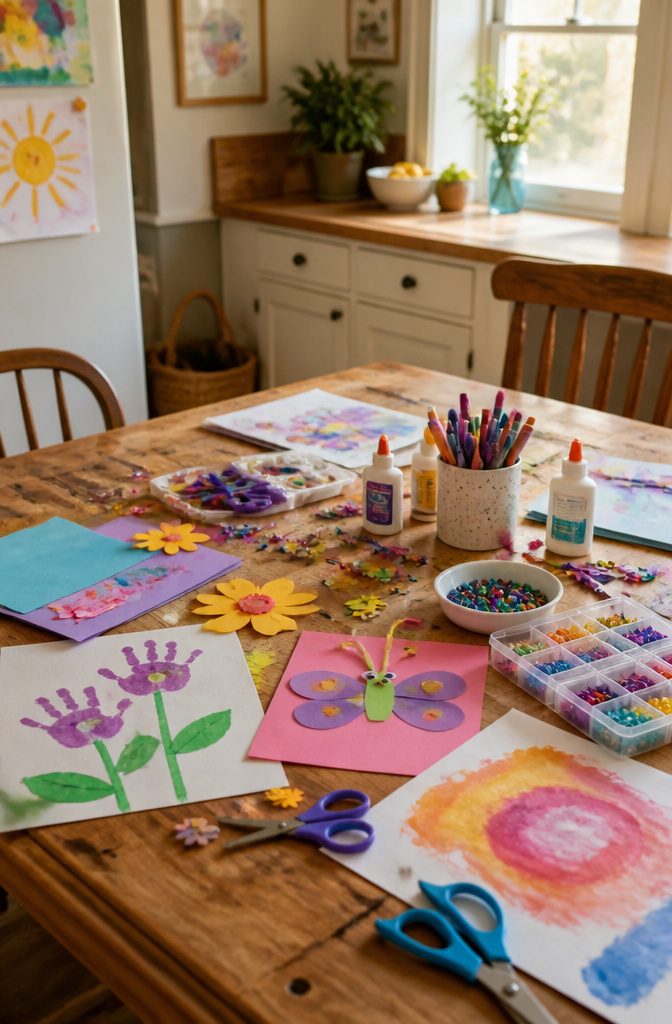
A handprint makes a better petal than almost anything you can cut from paper, because the fingers already fan out like one.
Press a painted palm down several times in a circle, thumbs tucked toward the center, and the overlapping hands read as a single big bloom.
Add a green stem and a couple of handprint leaves, or just paint a stem with a finger.
This suits toddlers and preschoolers best.
Little hands give a loose, blobby print, and that looseness is the charm. Use washable paint, and spread it on a paper plate so the whole palm gets an even coat before it touches the page.
Wipe the hands right away, since drying paint is hard to get off small fingers.
Write the child’s name and the date in the corner once it dries. A few years on, the size of those hands is the whole reason to keep it.
Egg Carton Flowers
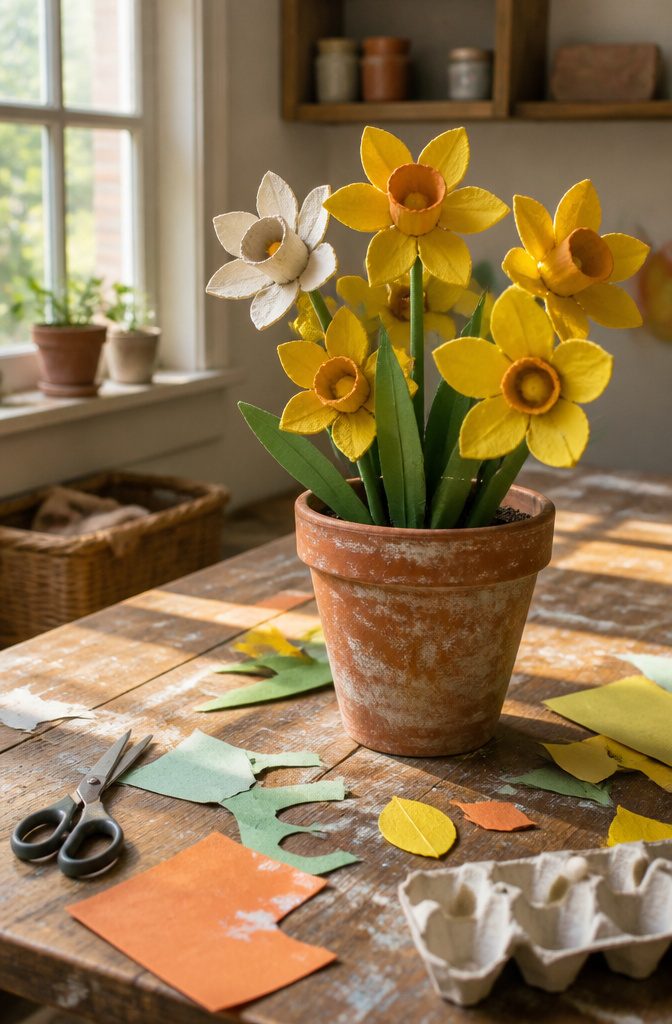
Each cup in a cardboard egg carton is already shaped like the bell of a flower, so most of the work is done before you pick up the scissors.
Cut the cups apart, then snip four small slits around the rim and fold the flaps outward. You get a daffodil trumpet with petals around it.
Paint the cups yellow or white with leftover paint or markers.
For stems, roll a strip of junk mail or grab a twig from the yard, and glue the cup on top. The whole project costs close to nothing because every part is something headed for the recycling bin.
I’d skip store-bought stems entirely.
Rolled paper bends, takes glue well, and keeps the craft honest to its recycled roots. Cups also look good threaded onto fairy lights as blossoms.
DIY Kites
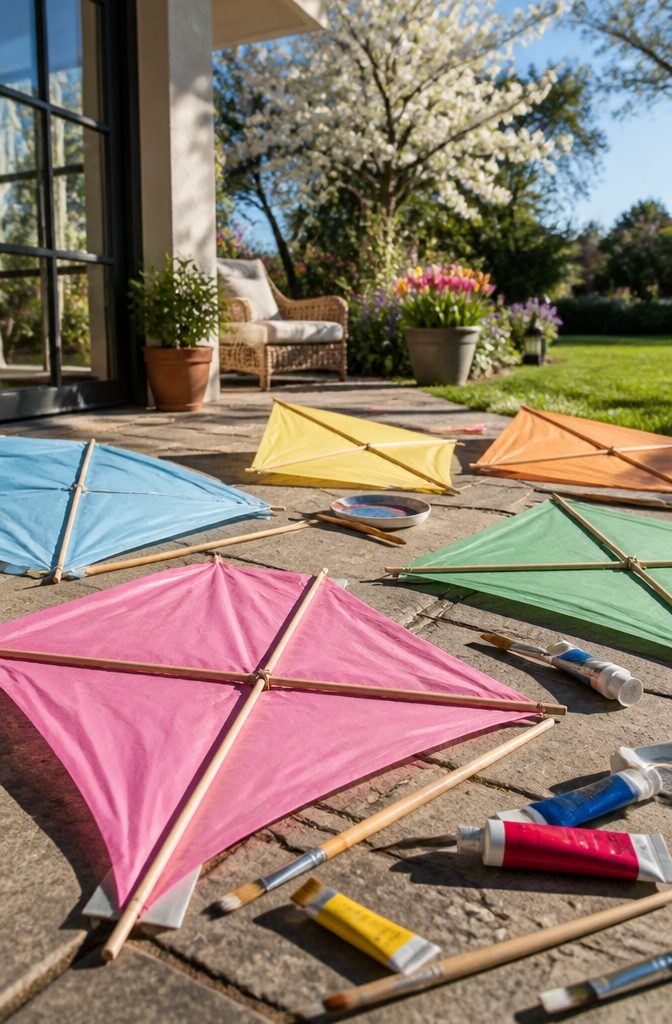
A kite frame made from wooden dowels means a handsaw and some patience, so I’d hand the cutting to an adult and save the fun part for the kids.
Let the children decorate the finished kite, because that is where they get to make it their own. It also makes a good weekend project for a crafty family, since the building and the decorating can happen in separate stretches.
A kite is an outdoor craft that only ends when it leaves the ground. Spring wind is the whole reason to make one now, so plan the flying before you start and pick a day with a breeze.
Sawing dowels is the one step I’d never give to a child, and it’s the only slow part.
Nature Mandalas
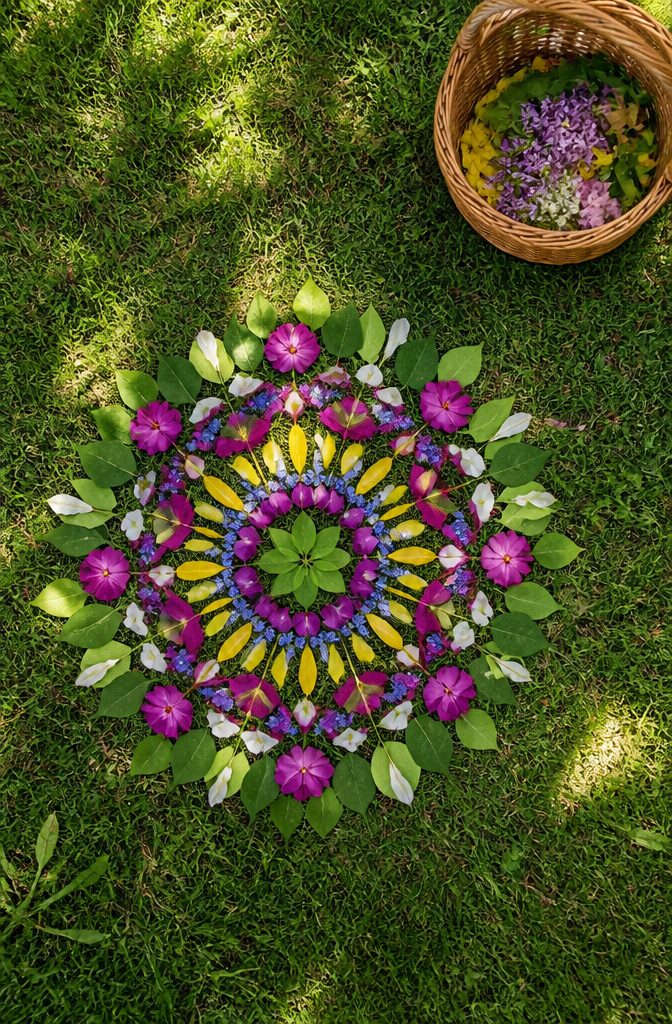
A nature mandala needs no glue, no tape and no supplies from a store. Everything comes from a backyard or a local park, and the materials change from one week to the next, so no two circles match.
Collect flowers, leaves and loose petals in a basket or bowl, then sort them by color and size before you place anything.
Start with one small object in the center and work outward in rings, repeating the same shape or color all the way around.
Keep each ring symmetrical, because that repetition is what makes the pattern read as a mandala. It also gives kids a hands-on way to practice symmetry.
Work on bare ground or a flat patch of lawn, and expect the wind to win eventually. I like that: take a photo, then let it blow away.
Beaded Pipe Cleaner Flowers
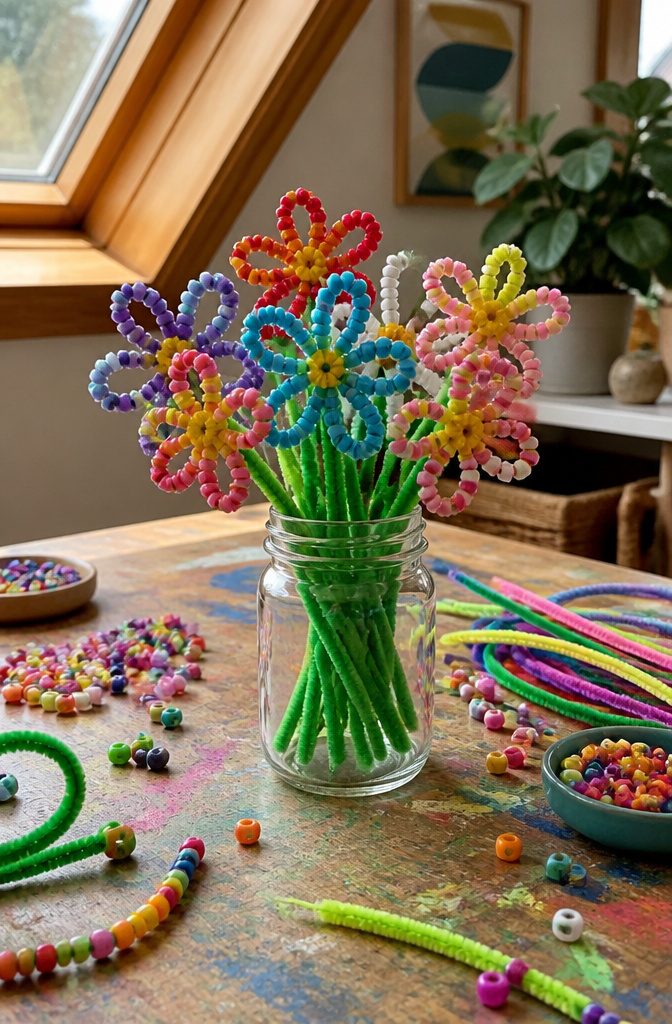
Threading beads onto a pipe cleaner is a small-muscle workout disguised as play.
The pinch, the aim and the slow push of each bead build the hand and wrist strength that handwriting and tool use depend on, and a pipe cleaner holds still better than string, so younger kids get the point across without frustration.
Make the flower by threading beads onto one stem, then bending the strand into a loop for each petal. Twist the loops together at the center and leave a long tail as the stem.
Unlike paper or real blossoms, these stems keep their shape and color for years, so a handful in a jar works as a bouquet that never wilts. Big-hole beads suit small hands; save the tiny ones for older kids.
DIY Birdhouses
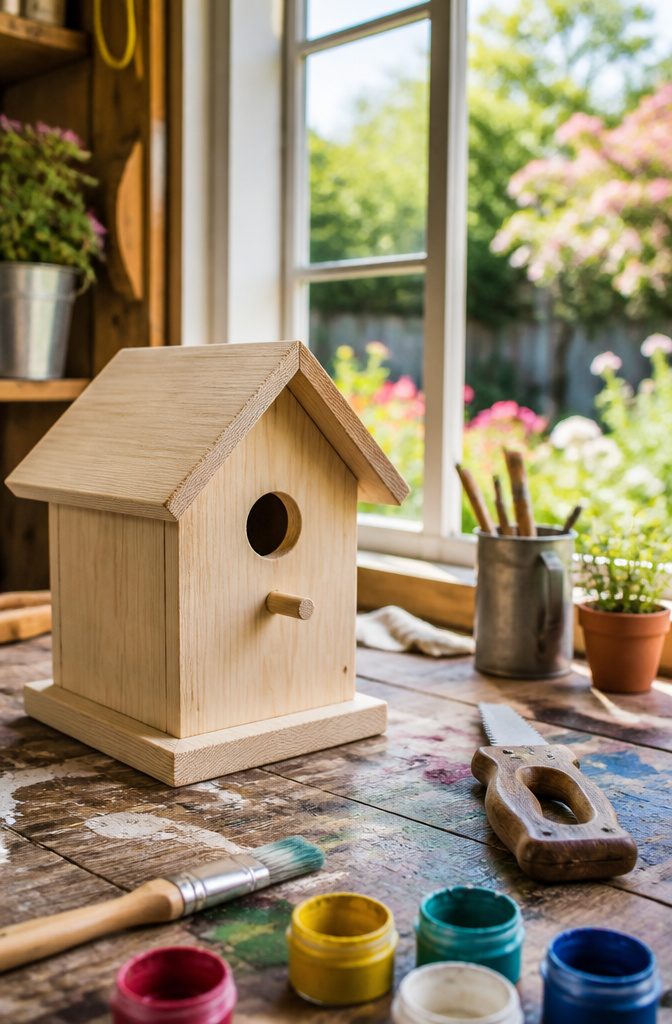
A birdhouse is the one project on this list that won’t fit into a lunch break.
Paper crafts finish while the glue is still tacky, but a birdhouse means cutting, fastening and usually painting, and the paint needs time to dry before anyone hangs it outside.
Plan on a full afternoon, and on a second day if you want a sealed finish.
That extra effort suits teens, adults and kids who have an adult beside them.
Younger children can paint and decorate, but the sawing and nailing belong to the grown-up. I’d skip it for a class of restless 5-year-olds.
Pick unfinished, untreated wood for the walls, and keep paint to the outside only. Birds will be living inside, so the interior should stay bare.
Materials You Already Own
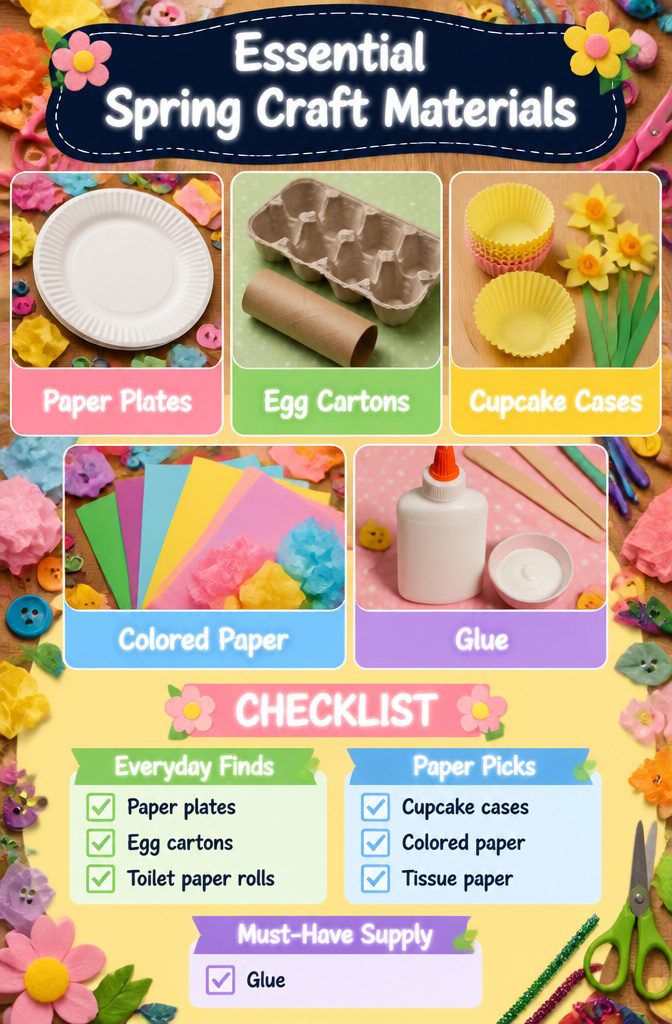
Most spring projects start in the recycling bin and the kitchen drawer. Here is what I’d gather first:
- Paper plates are the best blank canvas in the house. One plate becomes a rainbow, a flower, or a whole spring scene when you add buttons, craft sticks, and tissue paper.
- Egg cartons and toilet paper rolls belong in a "before you toss it" pile. They build 3D shapes, which helps kids learn how objects fit in space.
- Paper cupcake cases make daffodil petals. Pair them with yellow and green card and glue.
- Colored paper and tissue paper add color for pennies, so a full craft stash can come from what you’d otherwise throw out.
- Glue is the one supply I’d restock; the rest is free.
Matching Crafts to Ages
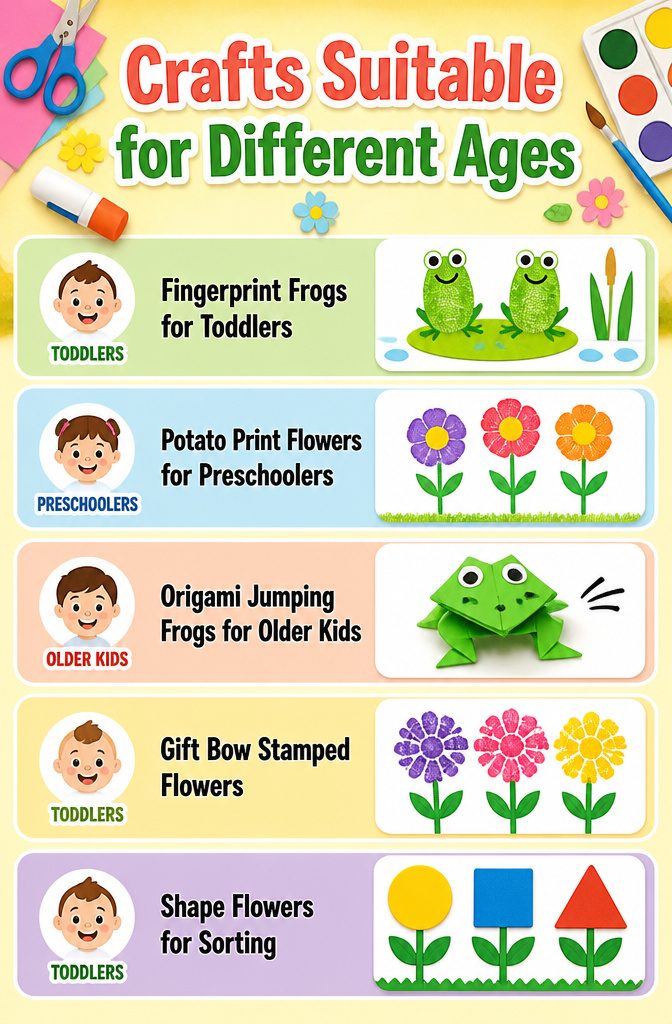
Fingerprint and potato print frogs suit toddlers and preschoolers best, because the work is pressing and stamping with no scissors involved. Gift bow stamped flowers work the same way: a toddler stamps leftover bows, and you paint the simple stems.
Shape flowers are another good pick for the youngest, since kids sort colors and shapes, and a glue stick keeps the pieces from sliding around.
For older kids, I’d hand over origami jumping frogs.
The fold is easy to learn, and the frog still jumps well, which keeps a 7-year-old from giving up halfway. Toddlers can still decorate the frog cards you make beside them, so one table can hold both ages.
Spring Themes in Every Craft
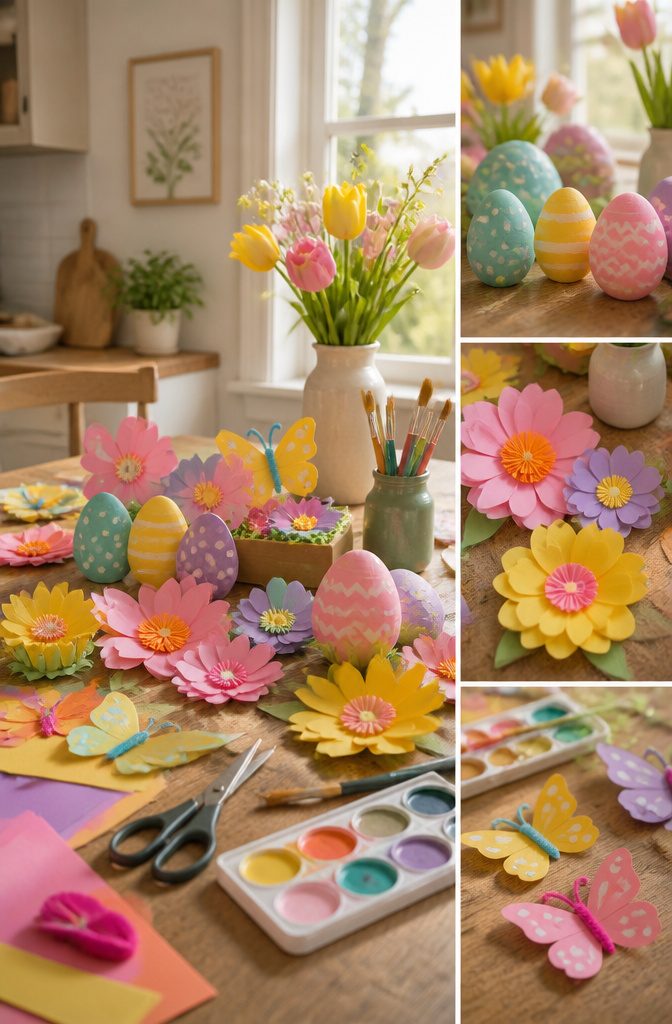
Spring crafts lean on three things: flowers, rainbows and animals.
Flowers and blossoms carry most of the season, and the pastel colors do the rest of the work. Chicks and bunnies sit at the overlap with Easter, which is why a pom-pom bunny can pass for either one.
Easter is only one thread, though. Plenty of households don’t celebrate it, and in Australia spring falls in what the Northern Hemisphere calls autumn.
I’d keep the theme general: butterflies and ladybugs, bird nests, a paper tree. Skip the Easter label and the craft works for the whole season, April included.
If Easter is on your calendar, hollow wooden eggs are worth a look. Painting one per child each year builds a keepsake collection that shows their art skills growing, and it replaces plastic eggs.
What Kids Gain From Crafting
Cutting, pasting and lacing a paper plate bird scene gives small hands plenty of fine motor practice, and that is the most concrete gain I can point to.
Each step asks the fingers to do something different, so the work stays varied.
Crafting also slows a child down. Glue has to dry, paint has to be mixed, and a structure has to balance before it stands, so patience and persistence get practiced on every project.
A child who turns an old egg carton into a daffodil sees herself as a creator, not just a viewer of someone else’s screen.
Free materials add a quiet lesson in resourcefulness and caring for the environment, and they keep the cost near zero. I’d start there.
Frequently Asked Questions
What are some easy spring crafts for kids?
Paper plate rainbows, cherry blossom trees, paper flowers, pom-pom bunnies and pine cone bird feeders are all simple starting points.
Most take an afternoon or less and use supplies from around the house. Handprint flowers and egg carton daffodils are good picks for the youngest kids.
Are easy spring crafts suitable for toddlers?
Yes, if you choose projects built around pressing, stamping and painting instead of cutting.
Handprint flowers, fingerprint and potato print frogs, gift bow flowers and shape flowers suit toddlers and preschoolers well. An adult should handle any scissors work, and washable paint keeps cleanup easy.
What spring crafts work for older kids and adults?
Origami jumping frogs, 3D paper flowers, real-branch cherry blossom trees and blown-out dyed eggs suit older kids and adults.
Birdhouses also fit teens and adults, though they take a full afternoon and sometimes a second day for a sealed finish. Kids who work with an adult beside them can help with the painting and decorating.