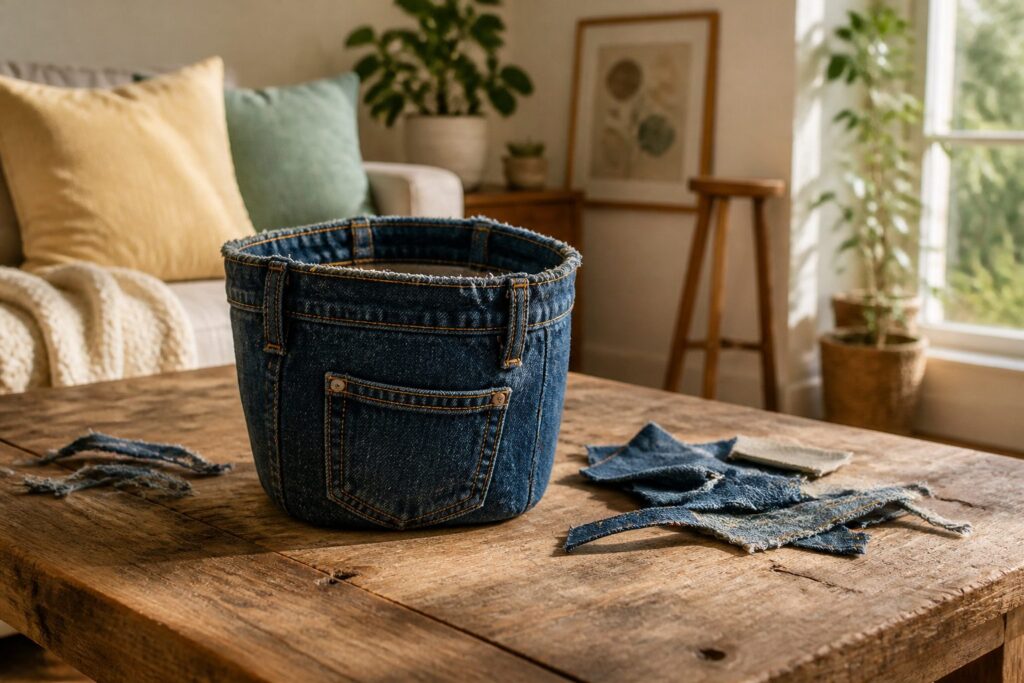
One pant leg becomes a freestanding denim basket in an afternoon, using a sewing machine, a needle and thread, or even safety pins.
Most people go wrong at the cut: stretch denim sags under any load, so choose rigid, non-stretch jeans and cut 8–12 inches up from the hem, with the top and bottom the same width.
1. Cut the Denim
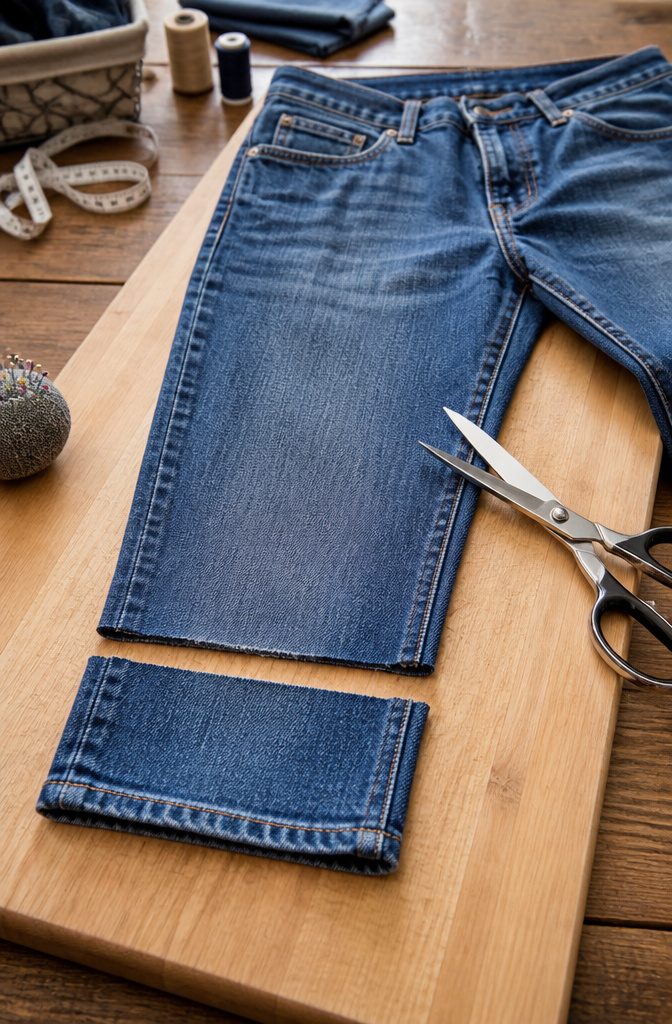
Pick a pair of sturdy, non-stretch denim. A basket has to carry weight without sagging, and stretchy jeans give way the first time you load them.
Cut the leg 8–12 inches up from the hem, and choose a stretch of leg where the top and bottom of the piece are the same width.
If your jeans are shaped and you can’t find that, unpick one seam and cut the fabric flat.
Take your time with the scissors.
A clean, even cut gives you a straight rim and square sides, so the basket stands up instead of leaning. A wavy edge shows once the sides are sewn.
For a small basket, the outer piece runs about 7.5 x 8 inches, so measure and mark before you cut.
2. Sew the Bottom
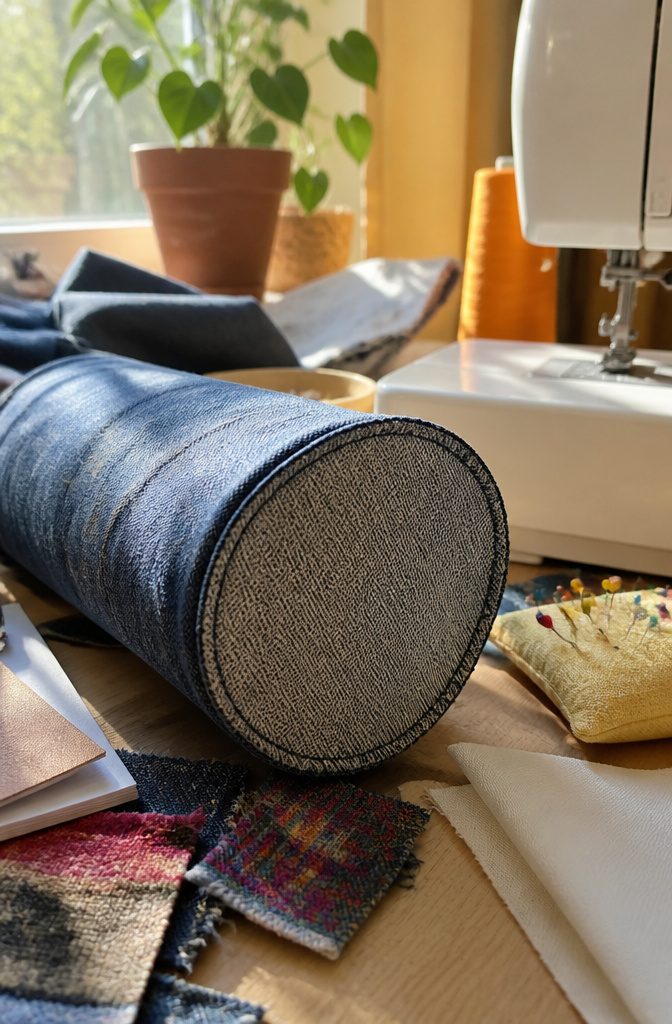
Turn the leg inside out and close the cut end, not the hemmed cuff.
The cuff end is narrower and stiffer, so it makes a poor opening for the basket. Smooth the denim flat first, then run one straight seam across the cut edge.
A sewing machine finishes this in under a minute, and a straight stitch on the wrong side keeps the seam hidden.
By hand, a simple running stitch or back stitch works fine. Back stitch is the stronger choice if the basket will hold anything heavy.
For no-sew makers, pin a row of safety pins across the end, spaced close together. Fabric glue is the weaker option; I’d pick pins or a few hand stitches over it.
3. Create Boxed Corners
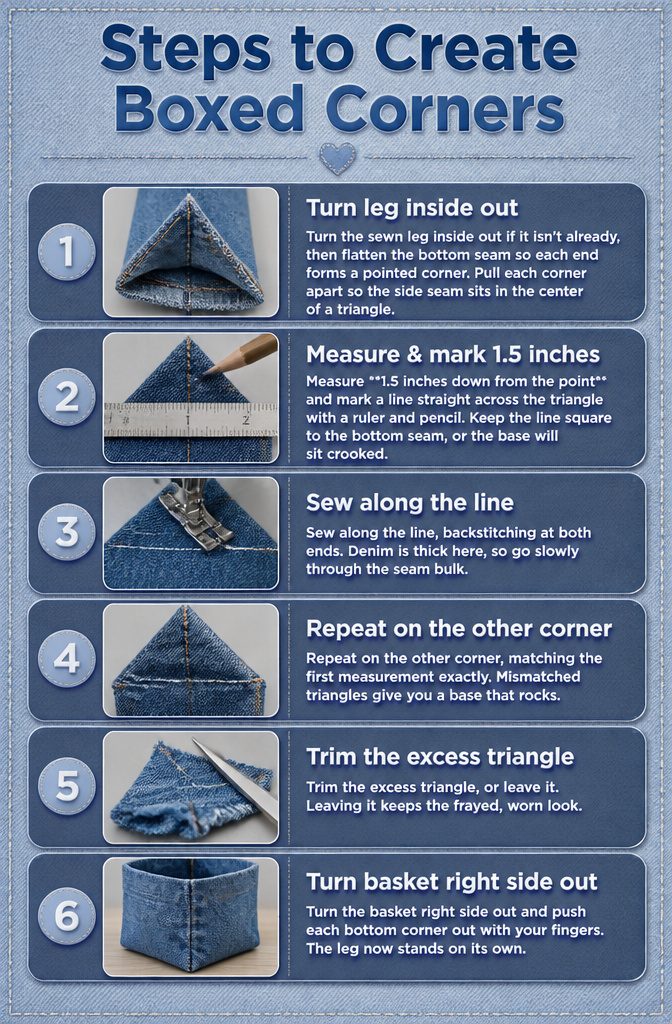
- Turn the sewn leg inside out if it isn’t already, then flatten the bottom seam so each end forms a pointed corner. Pull each corner apart so the side seam sits in the center of a triangle.
- Measure 1.5 inches down from the point and mark a line straight across the triangle with a ruler and pencil. Keep the line square to the bottom seam, or the base will sit crooked.
- Sew along the line, backstitching at both ends. Denim is thick here, so go slowly through the seam bulk.
- Repeat on the other corner, matching the first measurement exactly. Mismatched triangles give you a base that rocks.
- Trim the excess triangle, or leave it. Leaving it keeps the frayed, worn look.
- Turn the basket right side out and push each bottom corner out with your fingers. The leg now stands on its own.
4. Turn It Right Side Out
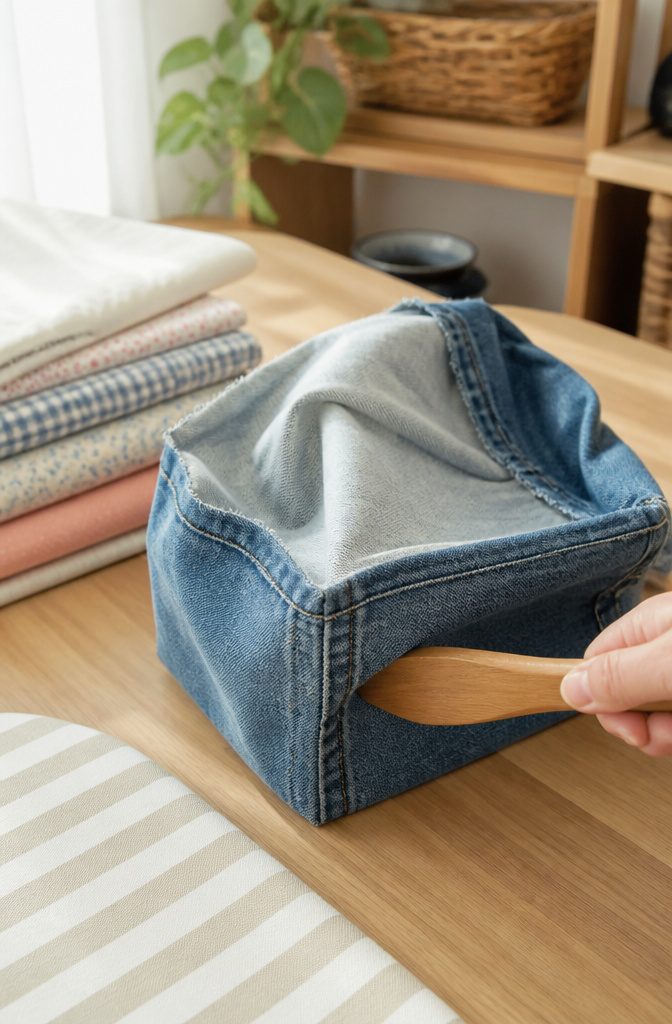
Reach inside through the top opening and pull the bottom through until the whole basket flips right side out. Go gently, because the seams at the bottom are bulky and denim doesn’t forgive a hard yank.
Push a finger or the blunt end of a wooden spoon into each bottom corner so the boxed points sit square.
Then press the seams flat with an iron. Once the corners are crisp, fold the top edge over about 1.5 inches to see how the basket stands.
A fold that size gives a cuff that holds its own, and if the basket looks too short or floppy, you can still adjust the fold before you commit to any topstitching.
5. Add Embellishments
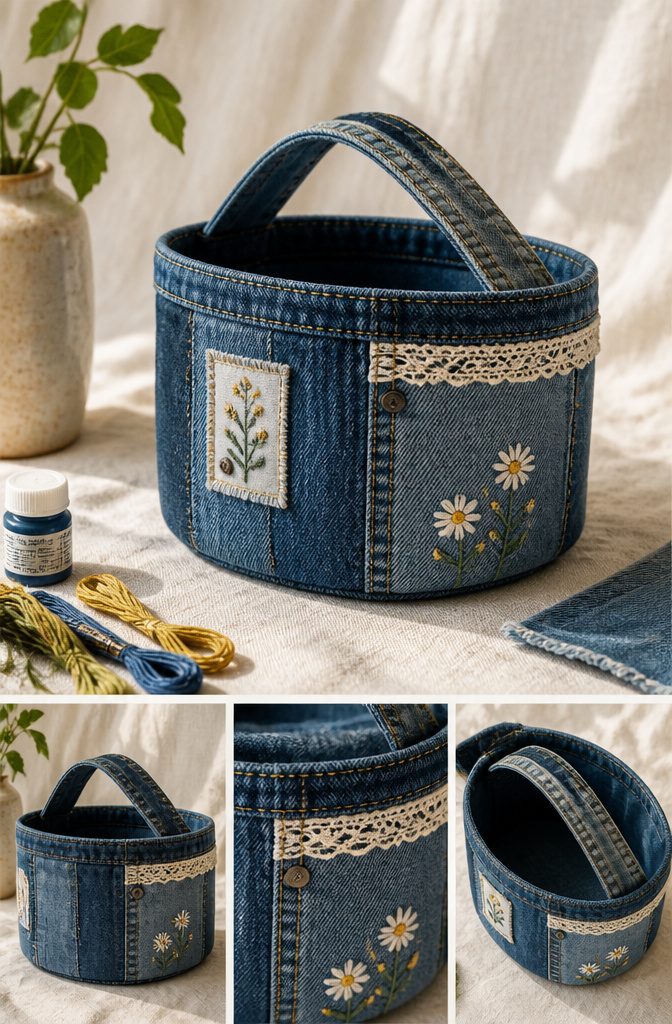
Everything here is optional, and I would pick only two or three. Here is what each extra adds:
- Leftover outside seam as a handle. It costs nothing, since you cut the seam off anyway, and it gives the basket a grip. This is my first pick.
- Belt loop section tacked to the top. It adds a small detail that reads as intentional, and it uses scrap from the same jeans.
- Pockets, inside or outside. A pocket holds scissors or a sewing kit, so the basket doubles as a portable organizer. I would keep a back pocket in place and build the basket around it.
- Embroidery or fabric paint. Florals, geometric patterns or a name give the plain denim a personal look. Paint is faster, and embroidery wins if the basket is a gift.
- Patches, a brooch, a bandana or a raffia bow. These suit gift baskets, and you can swap them out later.
I would skip anything heavy near the rim, because it pulls the sides inward.
6. Finish the Edges
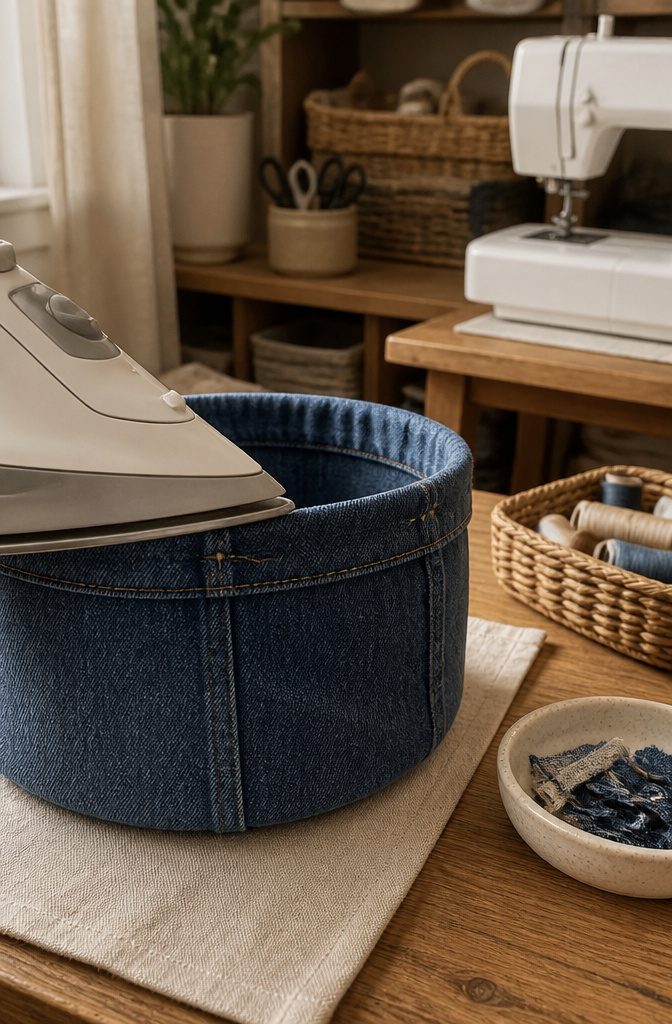
Press the top edge flat with an iron before you sew anything, then topstitch 1/8 inch (3 mm) from the edge all the way around.
That narrow gap looks crisp and holds the lining and outer layer together so the rim doesn’t roll or gape with use.
The bulkiest spots are where the side seams cross the rim, and I’d slow way down there.
Turn the handwheel by hand over each seam if your machine balks. If it still won’t go through, stitch the front and stop short of the seam, then do the back and stop before the second seam.
Skipping the topstitching entirely is an option, but the rim will look softer and wear sooner.
For thread, I’d pick a heavier topstitching weight in a contrasting color, since the stitch line becomes a design detail on denim.
Materials You Need
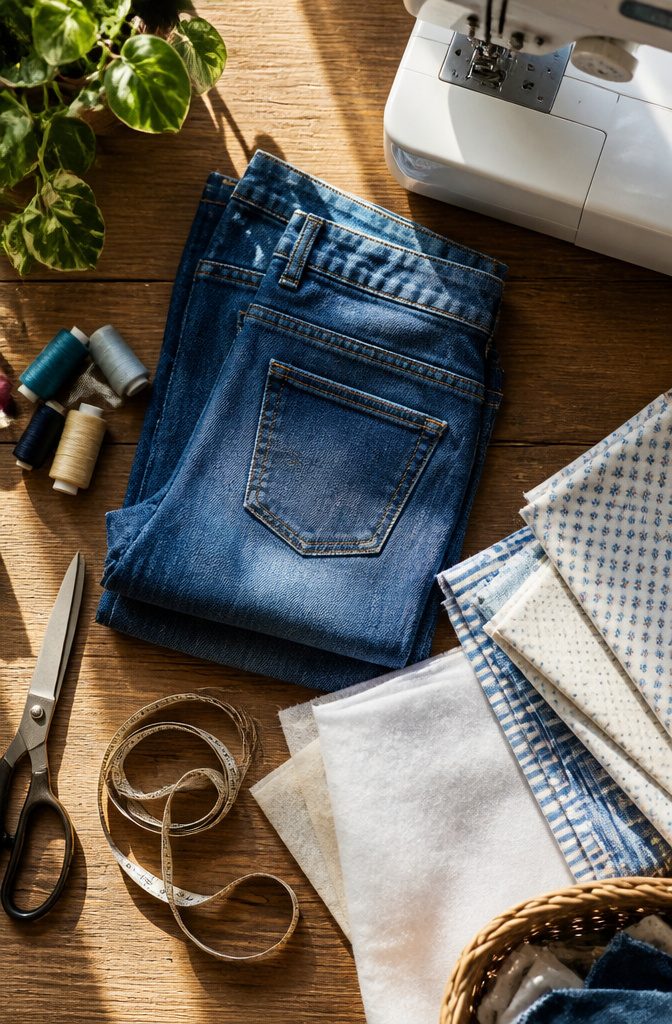
Gather these before you cut anything:
- Old jeans: Pick a sturdy pair with no stretch. Rigid denim holds weight; stretchy denim sags and warps once the basket is loaded, so skip anything with spandex or a soft, clingy feel.
- Lining fabric: A contrast cotton works well and gives the inside a finished look.
- Interfacing: Iron it onto the wrong side of the lining pieces for extra structure. I’d call it worth the extra step if you want sides that stand up on their own.
- Sewing machine, or a needle and thread: A machine is faster, but hand stitching works if you take your time.
- Optional embellishments: Labels, embroidery or decorative patches add a personal touch.
Sewing vs. No-Sew
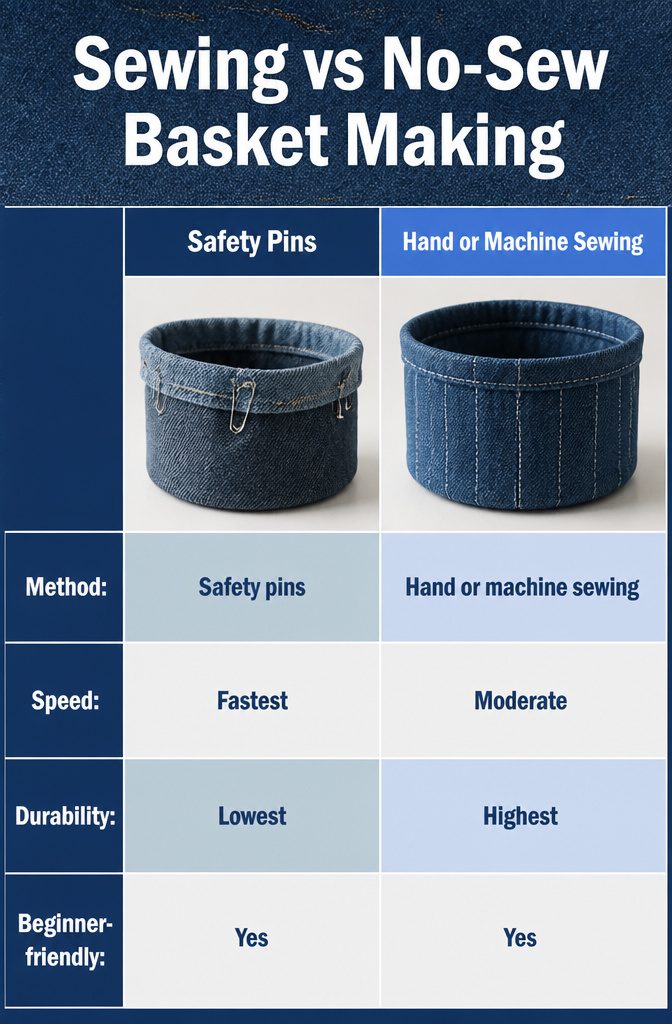
Safety pins win for a first basket, and sewing wins for one you plan to keep. Pins take minutes, need no machine, and come out again if the shape looks wrong.
Fabric glue is the option I would skip, since it is the one the tutorials hedge on. A running stitch or back stitch by hand is easy enough for beginners and holds up far better than a pin.
Weaving is a third route: denim strips about 1″ wide, sewn end to end into a long ribbon, woven over and under a base of strips. It makes a sturdier basket, but it needs a machine and the most fabric.
| Method | Speed | Durability | Beginner-friendly |
|---|---|---|---|
| Safety pins | Fastest | Lowest | Yes |
| Hand or machine sewing | Moderate | Highest for a sewn basket | Yes |
| Fabric glue | Fast | n/a | Yes |
| Woven strips | Slowest | High | Less so |
Small, Medium, and Large Sizes
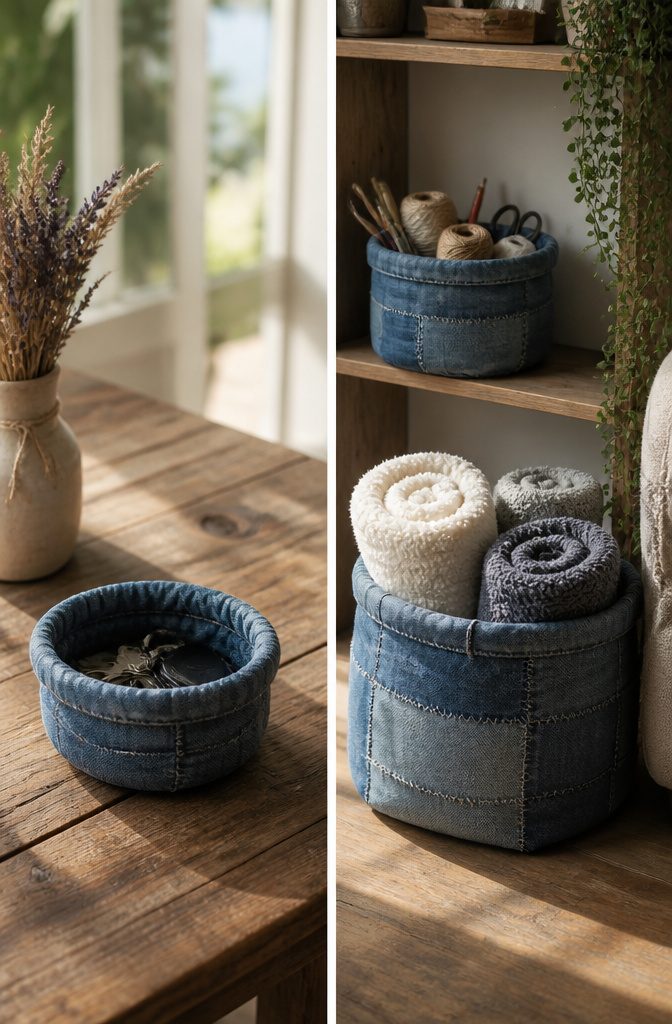
A small basket starts from a 7.5 x 8 inch piece of jeans leg, which is just right for a desk caddy, a spot for keys by the door, or a catch-all for hair ties.
Pair it with two 8 x 8 inch lining pieces and two 8 x 8 inch pieces of interfacing.
Medium and large baskets use bigger pieces, and the size follows whatever part of the jeans you cut. A medium basket suits a bathroom shelf or a stack of kids’ craft supplies.
A large one holds yarn, toys or rolled towels. I would start with small, since one pant leg gives you plenty of denim and a mistake costs you very little.
Why Upcycle Old Jeans
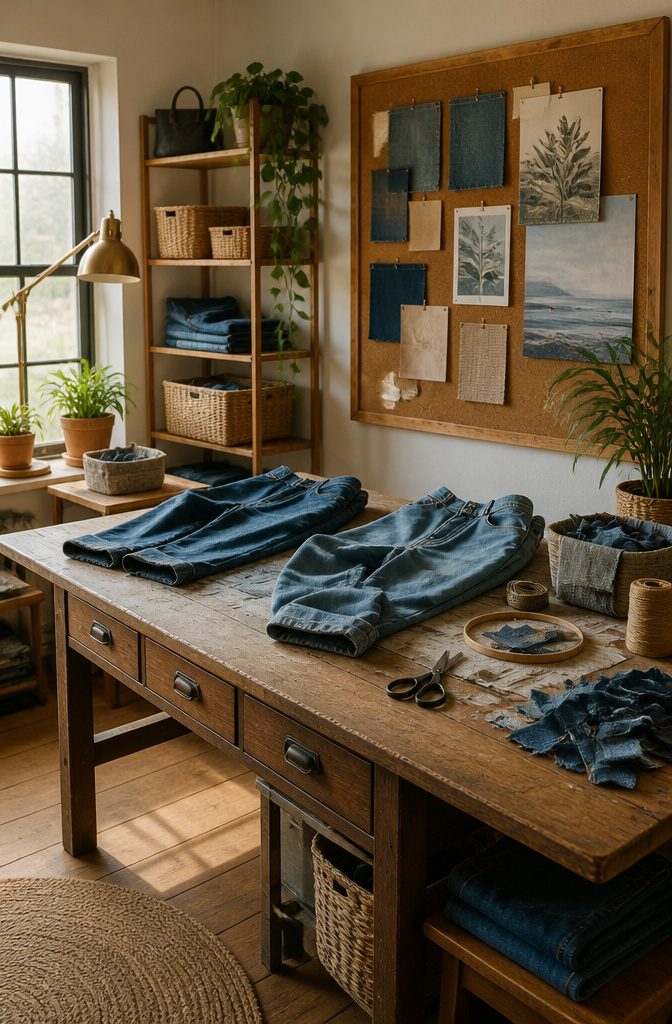
Worn-out jeans are headed for the landfill unless someone finds a use for them, and a basket is one of the easiest uses I know.
Denim that is too thin at the knees or torn at the seat still has plenty of sturdy fabric in the legs, so the material does real work a second time.
Reusing what you already own also saves money, since the fabric costs nothing.
If your own closet is empty, ask family and friends for jeans or check local thrift stores, which keeps even more denim out of the trash and cuts demand for new raw materials.
I like that the scraps stay useful too. Small leftover pieces can become patches or appliques, and the rest can be saved for later projects or used as stuffing for cushions and toys.
Frequently Asked Questions
How do you make a denim basket from old jeans?
Cut a leg of sturdy, non-stretch jeans 8–12 inches up from the hem, then sew or pin the cut end shut.
Box the corners by sewing a line 1.5 inches down from each point, then turn the leg right side out. Fold the top over about 1.5 inches and topstitch to finish the rim.
What materials do I need to make a denim basket?
You need a pair of old, non-stretch jeans and either a sewing machine or a needle and thread.
A contrast cotton lining and iron-on interfacing are useful if you want a finished inside and sides that stand up on their own. Embellishments like patches or embroidery are optional.
Can I make a denim basket without sewing?
Yes. A row of closely spaced safety pins across the cut end closes the bottom in minutes and can be undone if the shape looks off.
Fabric glue also works, but it is the weaker option, so pins or a few hand stitches are the better pick.
How big should the denim piece be for a small basket?
A small basket starts from a piece of jeans leg about 7.5 x 8 inches.
Pair it with two 8 x 8 inch lining pieces and two 8 x 8 inch pieces of interfacing. That size suits a desk caddy or a catch-all for keys.
What kind of jeans work best for a DIY fabric basket?
Pick rigid, non-stretch denim, since it holds weight without sagging.
Stretchy jeans with spandex warp once the basket is loaded. Choose a stretch of leg where the top and bottom of the cut piece are the same width.