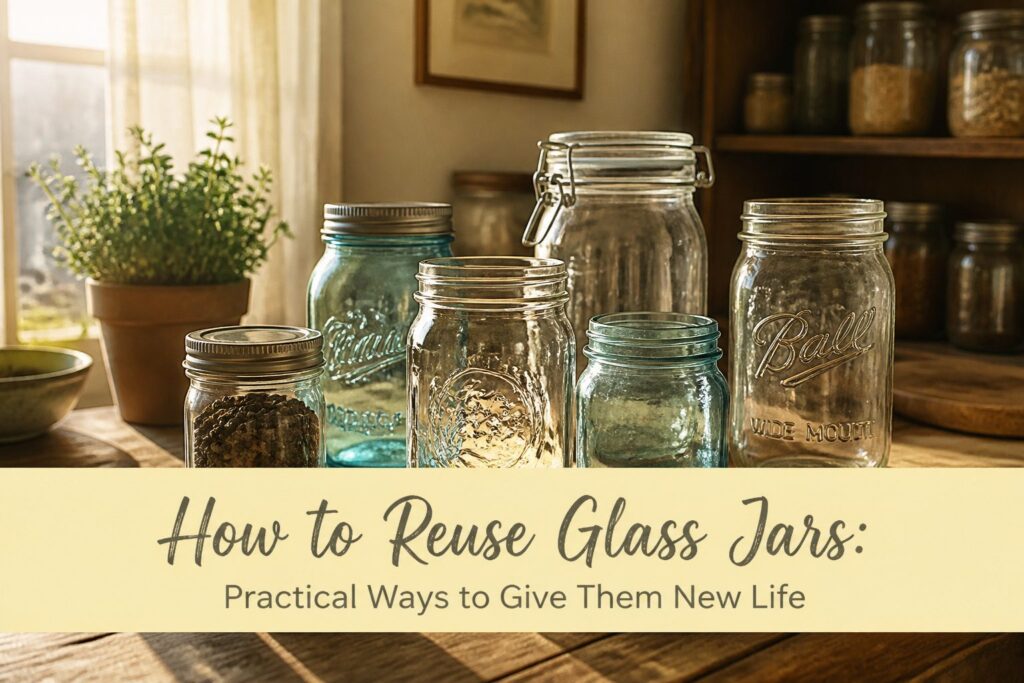
A used jar becomes a pantry canister, vase, candle holder or piggy bank for the price of a tray and a bottle of rubbing alcohol.
The step people get wrong is the label: scraping or soaking in plain water leaves glue and stamped sell-by dates behind. Run the jar through the dishwasher first, then let the alcohol finish it.
1. Science Experiments for Kids
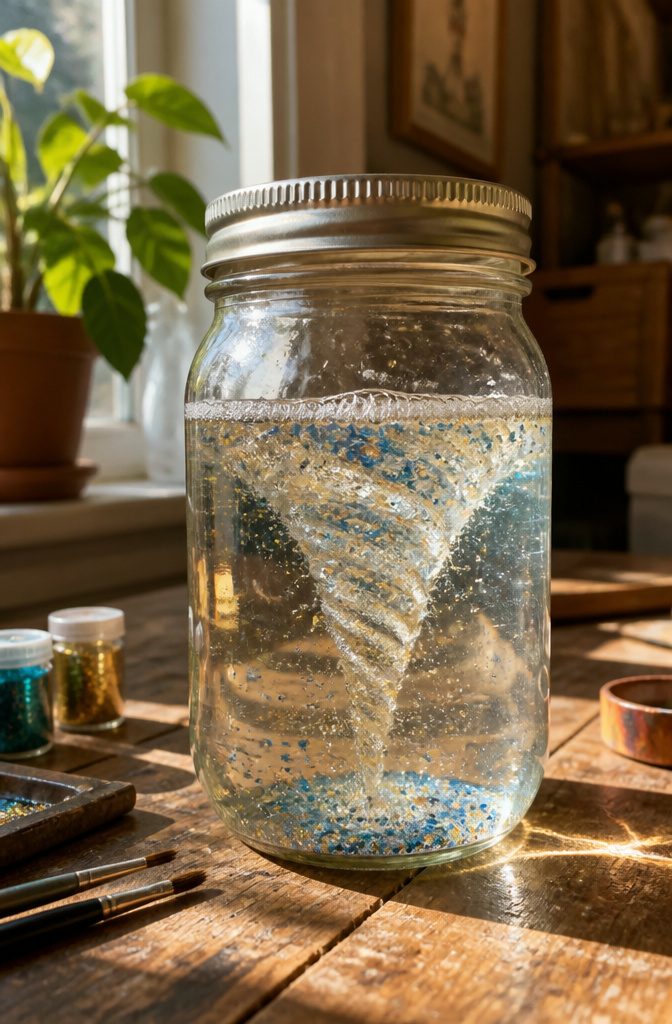
A tornado in a jar needs only a clear jar with a tight lid, water, a squirt of dish soap, and a spoonful of glitter so the spin shows up.
Fill the jar about three-quarters full, add the soap and glitter, screw the lid on tight, then swirl it in a circle for a few seconds and stop.
The child watches the vortex form in the middle and slowly wind down.
For beans, tuck a damp paper towel against the inside of the glass, drop a soaked bean between towel and jar, and keep an inch of water in the bottom.
Put the jar on a sunny windowsill and the child can watch the root come out first, then the shoot. I prefer beans to seeds from a packet because they sprout fast enough to hold a kid’s attention.
2. Arts and Crafts Projects
Halloween ghosts are the project I’d hand to younger kids first. A jar becomes a ghost with a few simple touches, and once it’s finished it doubles as a candy dish, so the kids get a prize for finishing.
Everything needed is already in a craft drawer, and there are no flames or sharp tools involved.
The snowman luminary is the one I’d save for older kids or an adult helper. It takes more steps, but the glow on a winter night earns the extra effort.
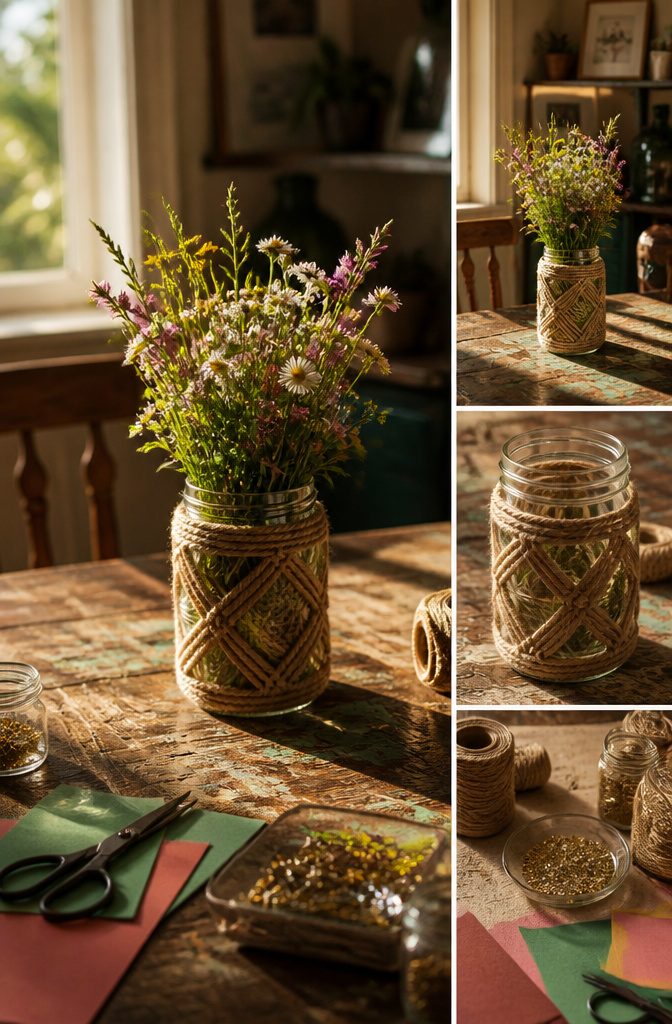
For a centerpiece, wrap a jar in string or add raised letters.
String wrapping is the quickest of the three, since there’s nothing to paint or dry. Wrap, tuck the end, and set it on the table.
3. Food Storage
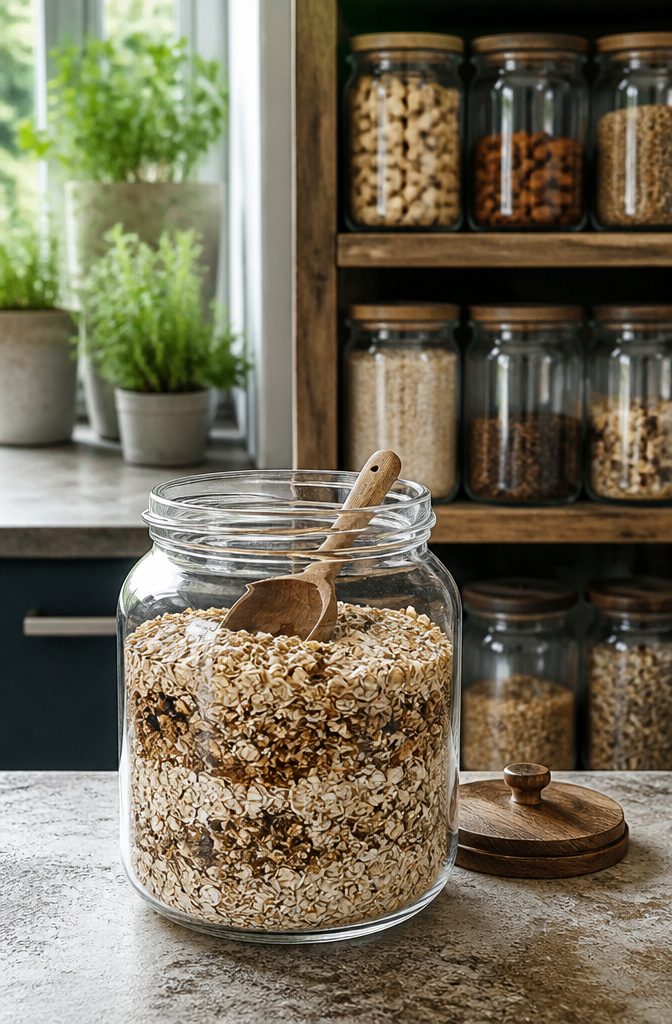
Glass is a good choice for food storage: you can see what’s inside, nothing leaches into the food, and it sterilizes easily.
A 680ml wide mouth pasta sauce jar with no shoulders holds Milo powder, oatmeal or granola well, and a scoop fits right in. Cover the lid with a beeswax wrap if you want to test how well it molds.
For bulk buys, nuts, seeds, grains and baking basics look tidier lined up in matching jars. Leftovers and overnight oats go straight into a jar, and a salad layered with its toppings makes an easy lunch to carry.
4. Home Decor

Fill a clean jar with an inch or two of sand, beads or tiny pebbles, then set a tealight on top.
The filler keeps the candle steady and lifts the flame closer to the rim. I like it best on a table, and a loop of wire or twine around the neck turns it into a hanger.
For a rustic vase, wrap the jar in jute string and add fresh flowers.
Peel the label first, since leftover paper shows through the twine. Painting the outside works too.
Peeled jars also take battery fairy lights for a lantern that works indoors or out. An LED candle is safer on a mantle.
5. Gardening
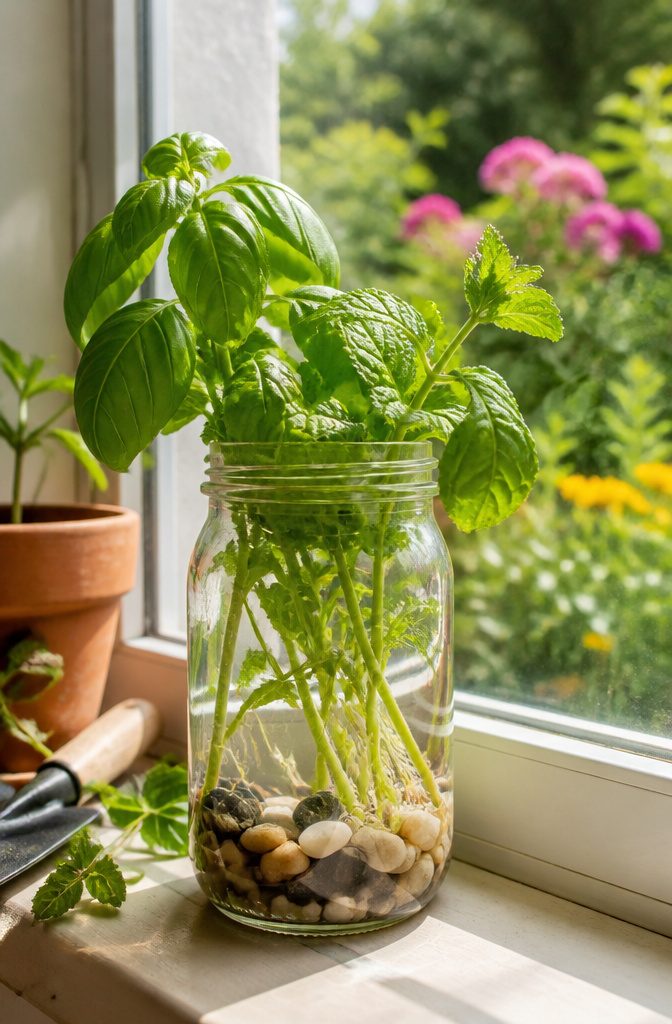
A jar with no drainage hole rules out most potted plants, because roots sitting in standing water rot. Herbs like mint and basil forgive more than most, so I’d start there.
Put an inch of pebbles or broken pottery in the bottom, add potting mix, and water a little at a time. Pour in only what the soil can hold, then let the top feel dry before the next drink.
Cuttings are the easier match, since a jar is built to hold water.
Pothos, coleus and basil stems root in a clear jar, and you can watch the roots form. Strip the lower leaves so none sit underwater, set the jar in bright light, and swap the water every week or so.
6. Gift Ideas
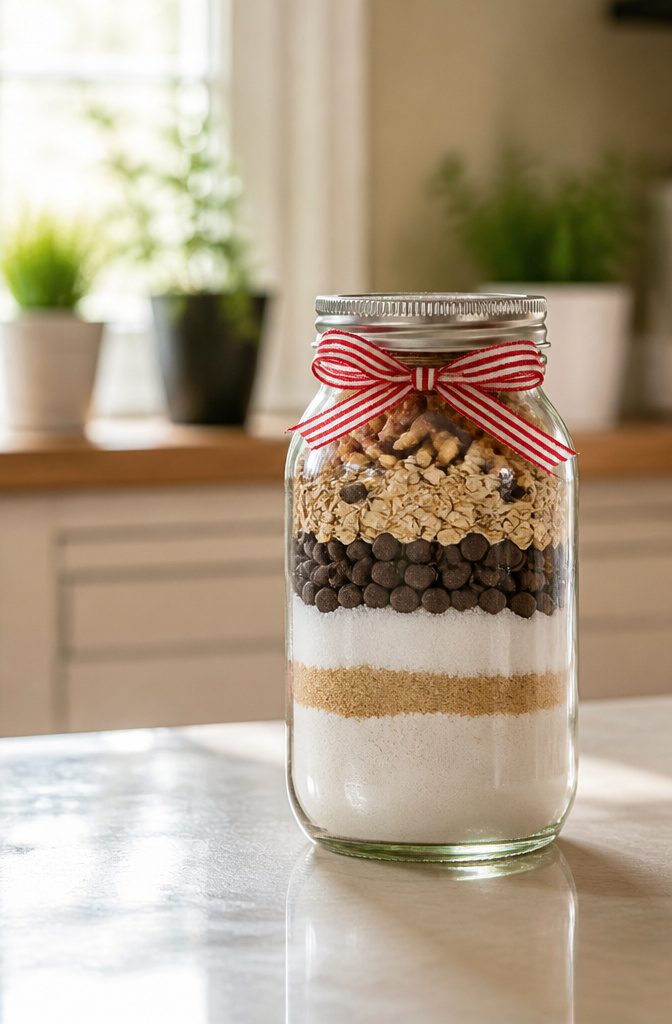
A jar of layered dry ingredients is the gift I’d make for neighbors, because it costs little and the jar is part of the present.
Spoon in the cookie or brownie mix one ingredient at a time, pressing each layer flat so the stripes stay clean through the glass. Put the finer powders at the bottom and the chunkier pieces on top.
Finish with a bow and a tag carrying the baking instructions, since the recipient needs the wet ingredients and oven directions to finish the job. Write those instructions on the tag before you fill the jar, so nothing gets forgotten.
For winter, swap in hot chocolate powder topped with marshmallows. It needs no baking, so it suits people who don’t cook.
7. Storage Solutions
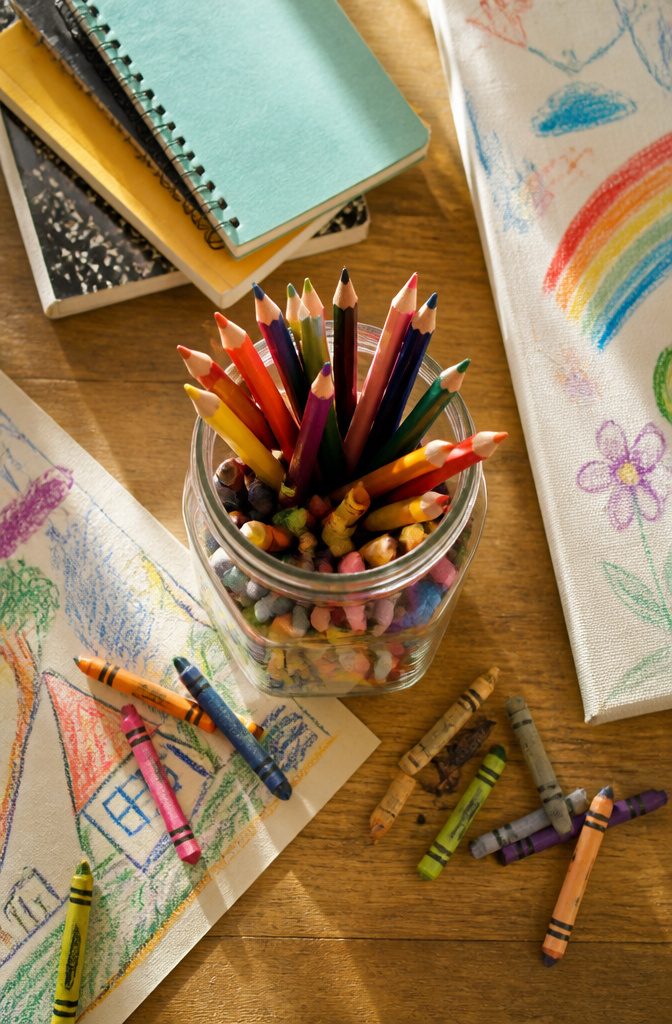
Small things that get lost in drawers are what jars do best. Here is what I would put in them:
- Pens and pencils: A rinsed honey jar on the desk is the right size for a pen holder, and it keeps scattered pens in one spot.
- Cotton swabs and makeup: Clear glass lets you see what is inside, so a vanity or bathroom shelf stays tidy without labels.
- Office supplies: Paper clips, rubber bands and the like sit well in jars on a desk or shelf.
- Playroom odds and ends: Crayons, hair ties and doll shoes fit nicely. Keep the lids, since they stop a spilled jar from becoming a floor-wide mess.
- Dressing it up: Paint, markers or ribbon turn a plain jar into something worth displaying.
The desk and the bathroom benefit most, and the playroom comes close behind.
8. DIY Projects
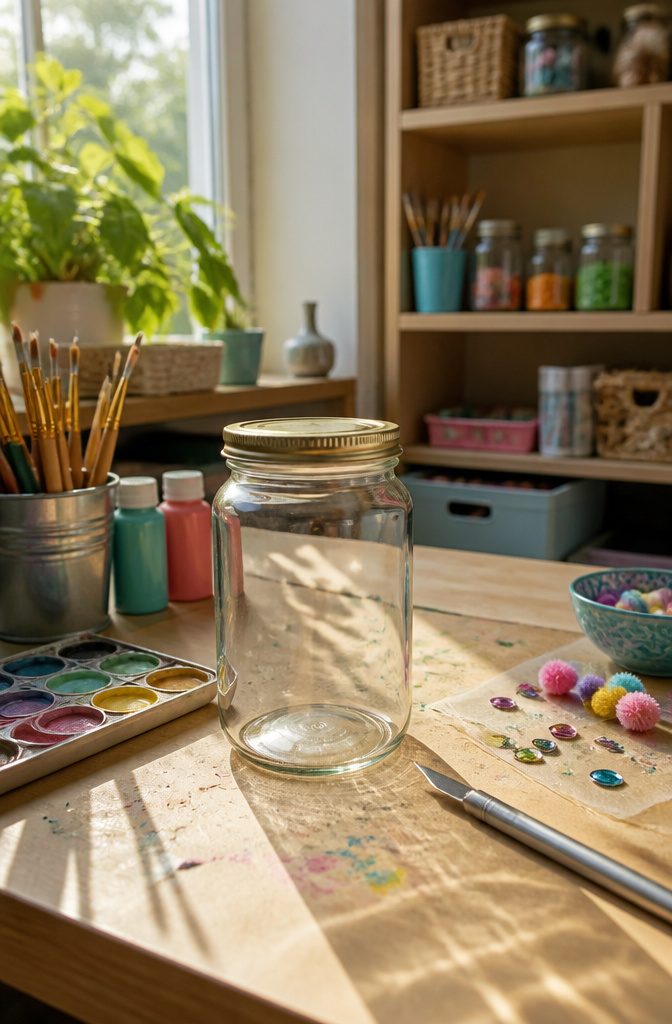
Terrariums are the easiest of the three, and the materials are about what the name suggests: soil, pebbles, bark, and dried flowers or whatever else you like.
Layer pebbles on the bottom, add soil, then arrange the rest. Nothing has to be cut, melted, or sealed.
Homemade candles take more steps, but a jar suits them well, and the glow makes them a natural gift or a shelf piece. I’d start here only if you already own wax and wicks.
The Nutella jar piggy bank is the one to hand a kid.
Start with a clean, dry jar so the paint and decorations stick, then add ears and a snout as you like. Coins and bills drop in through the lid, so cut the slot with an adult’s help.
9. Savings Jars
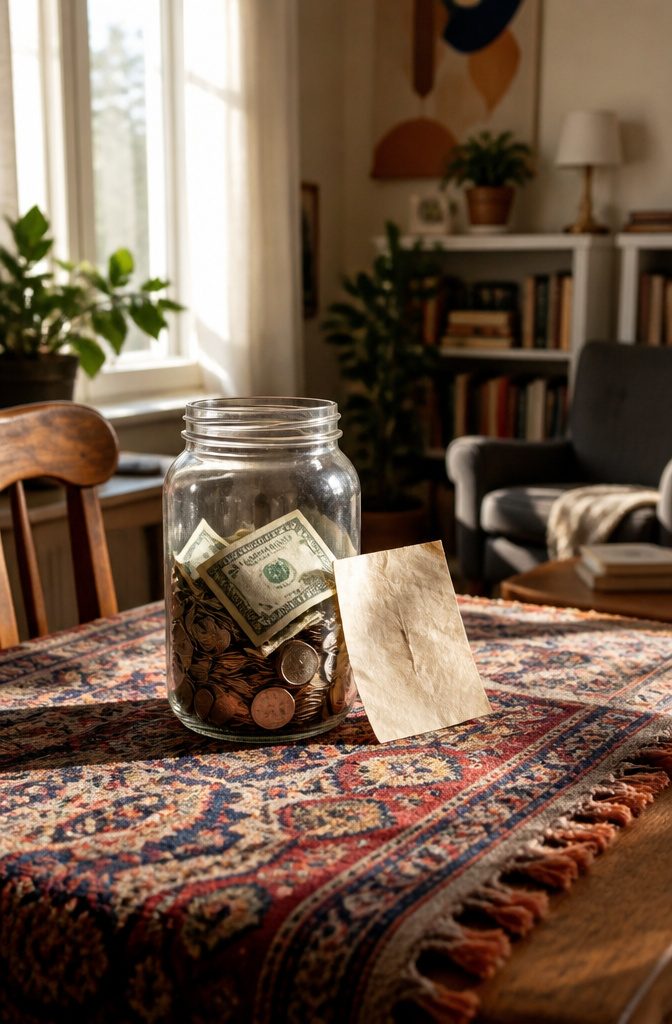
A clear glass jar does one thing a ceramic piggy bank can’t: it shows the pile growing, so the goal stays in front of you.
Pick a single target, like a trip or a new bike, and write it on a strip of paper taped to the outside.
Then drop in every loose coin and spare bill at the end of the day, since a habit tied to your pockets is easier to keep than a promise to transfer money later.
Kids take to this quickly, and it works as a modern piggy bank.
Let them decorate the lid and slot, then watch the level rise. I’d skip a tiny jar for bills; a wide-mouth one takes folded cash without jamming.
10. Beverage Containers
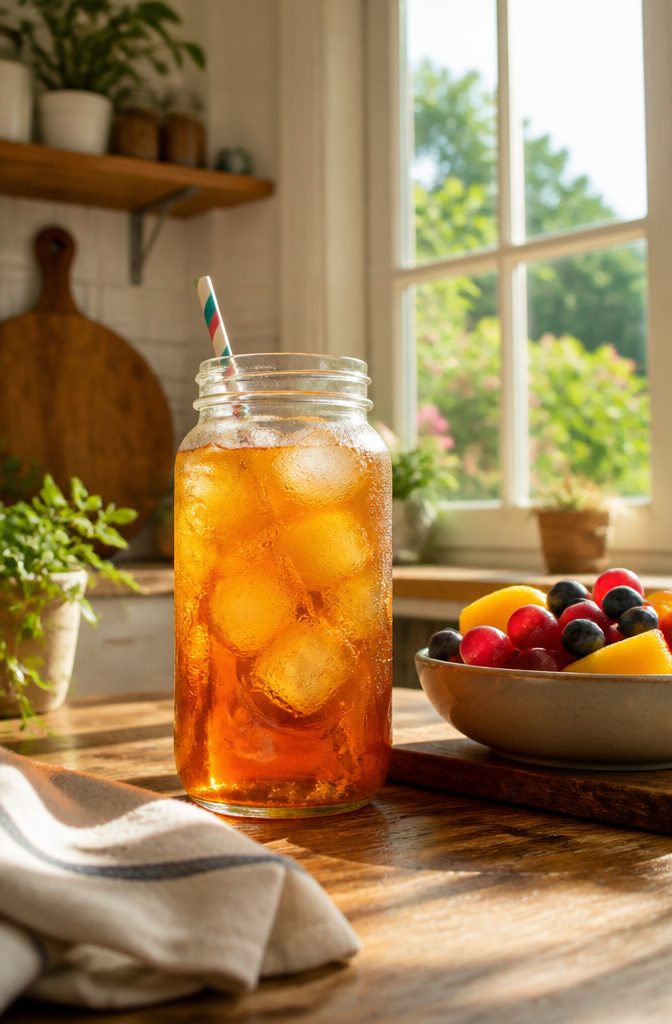
A 946ml Bragg apple cider vinegar bottle makes a good water carafe. Fill it daily and set it on the table with a glass beside it, and you’ll drink more simply because it’s in front of you.
Soak off the label and the vinegar smell goes with it, though a rinse with baking soda helps if any lingers.
Wide-mouth jars work as tumblers for iced lattes and smoothies. They’re sturdy, and the wide opening fits a spoon or a fat straw.
Pour hot drinks into them only after warming the glass first, because a cold jar hit with boiling liquid can crack. Without a handle, a jar also gets hot fast, so I keep mine for cold drinks.
Clean Jars Before Reuse
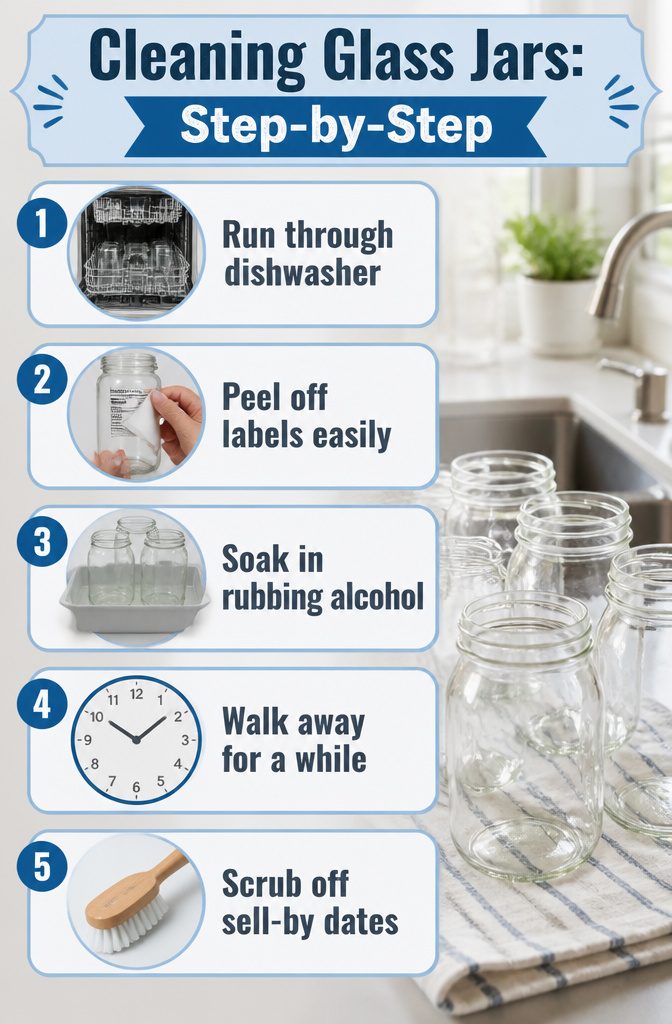
- Run the jars through the dishwasher first. The heat loosens the label and clears away whatever the jar held.
- Peel off as much of the label as comes away easily, and don’t fight the stubborn corners.
- Pour a little rubbing alcohol into the bottom of a tray and stand the jars in it. Turn them every so often until every side has soaked.
- Walk away for a while. The alcohol dissolves the glue, and whatever is left of the label wipes right off.
- Scrub any stamped sell-by date with rubbing alcohol. It comes clean in about a minute.
Dishwasher plus alcohol wins over scraping or soaking in plain water, because the alcohol handles the glue and the printed dates, which are the two things that usually survive a wash.
The only cost is a tray and a bottle of rubbing alcohol, and the soak does the work while you do something else.
Why Reusing Jars Helps
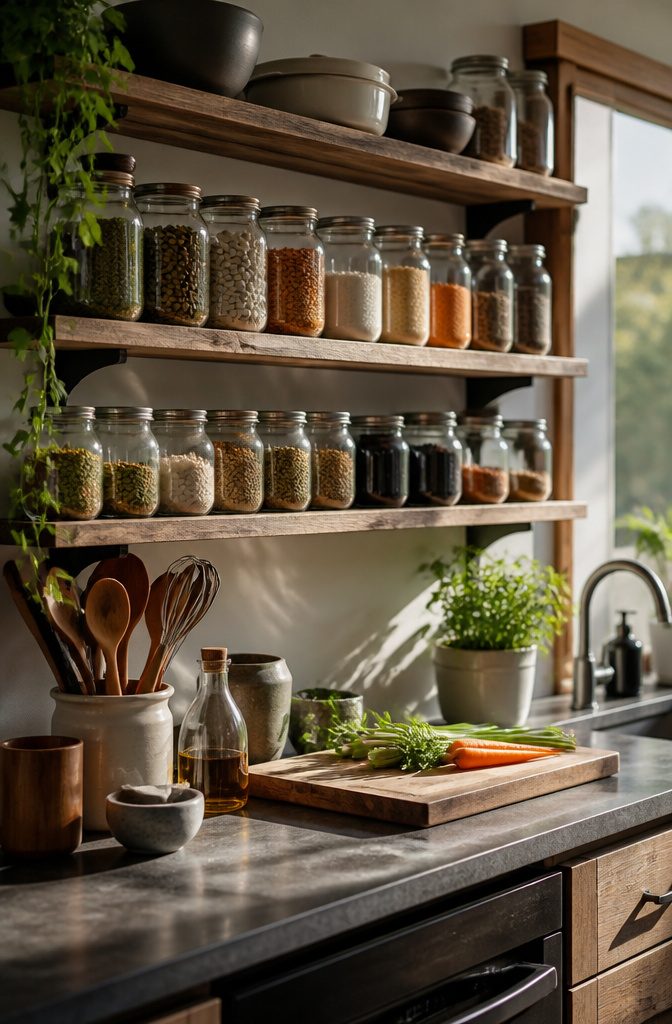
Glass is already the container for spaghetti sauce, olive oil, pickles, salad dressing, yogurt and some milk, so the jars pile up in a kitchen without any effort.
Every one you wash and refill is one you aren’t buying new, whether that new container is glass or plastic.
A wide-mouth pasta sauce jar with the label soaked off does the same job as a store-bought canister in the pantry, and it holds oatmeal or granola just as well.
Recycling access matters too. Some counties, Gwinnett County in Georgia among them, no longer accept glass in curbside bins, so a jar you reuse is a jar that stays out of the landfill.
I’d call that the strongest reason of all. Reuse won’t fix a waste problem by itself, but it trims what you throw out and what you buy.
Why Jars Work So Many Ways
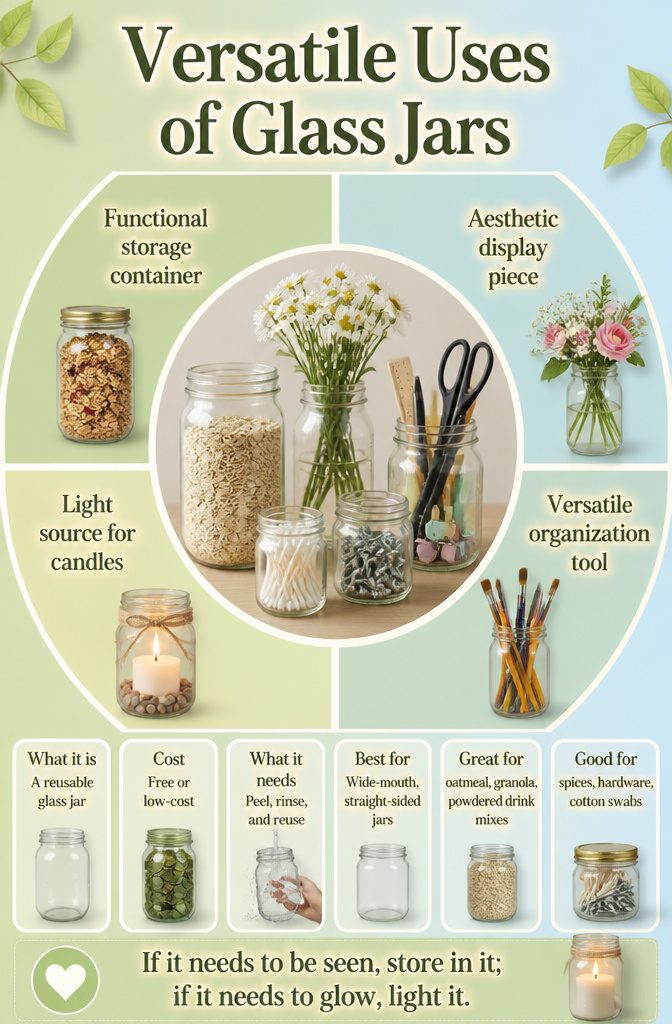
A clear glass jar does three jobs at once: it holds things, shows what’s inside, and looks decent on a shelf.
That is why one empty pasta sauce or honey jar can end up as a vase, a candle holder, a pantry canister or a desk organizer without any real modification.
Wide-mouth jars with straight sides and no shoulders are the easiest to fill and scoop, so I save those first for oatmeal, granola and powdered drink mixes.
Small baby food jars suit hardware, spices and cotton swabs, and their lids can screw under a cabinet for a hanging rack.
Peel the label, rinse, and ask what the jar will hold. If it needs to be seen, store in it; if it needs to glow, light it.
Frequently Asked Questions
What can I do with empty glass jars?
Empty jars work as food containers, desk and bathroom organizers, vases, candle holders, planters for herbs or cuttings, gift jars, savings jars and kids’ craft projects.
Clear glass lets you see what’s inside and looks decent on a shelf, so one jar can fill most of those roles with little change beyond peeling the label.
How do I clean glass jars for reuse?
Run the jars through the dishwasher, peel off whatever label comes away easily, then stand them in a tray with a little rubbing alcohol, turning them now and then until every side has soaked.
The alcohol dissolves the glue, so leftover label wipes off. Scrub any stamped sell-by date with rubbing alcohol too, and it comes clean in about a minute.
Can I use glass jars for food storage?
Yes. Glass lets you see the contents, nothing leaches into the food, and it sterilizes easily.
Jars hold bulk nuts, seeds, grains and baking basics, and leftovers, overnight oats or a layered salad for lunch can go straight into one. Wide-mouth jars with straight sides are the easiest to scoop from.
Is reusing glass jars safe?
For food storage, yes, as long as the jar is washed well and the label glue is gone.
Heat is the main risk: a cold jar hit with boiling liquid can crack, so warm the glass first before pouring in a hot drink.
A jar with no handle also gets hot fast, so cold drinks are the better use.