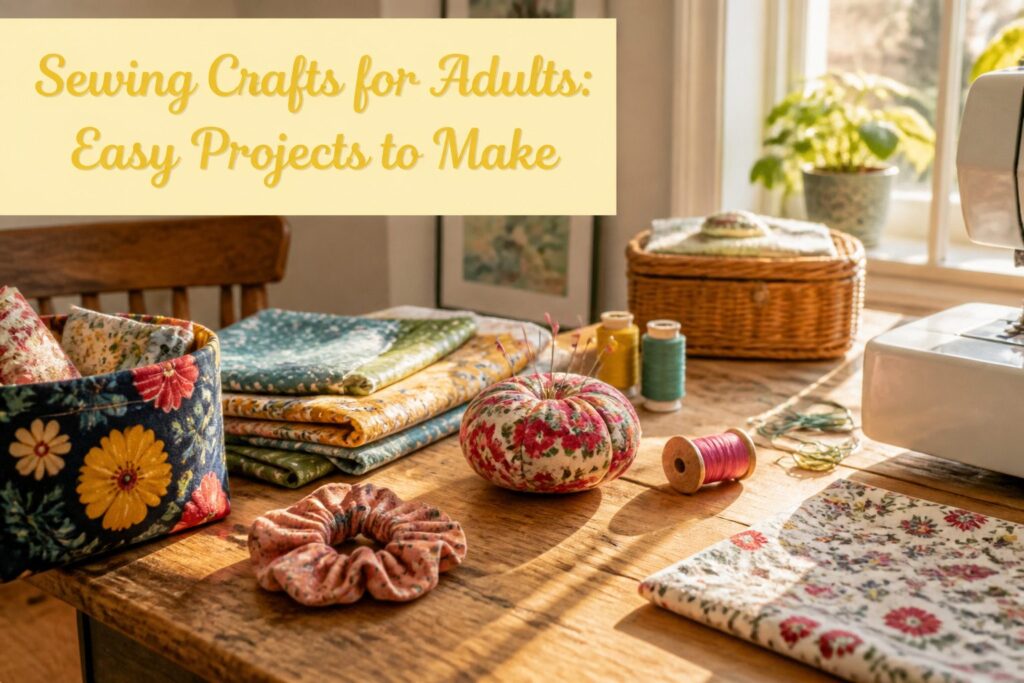
These projects run from a 5–30 minute scrunchie or pincushion to a basket that takes a couple of hours, and the fewer seams a project has, the better a first pick it is.
The exception is fabric: laminated cotton for sandwich bags feels stiff and sticky under the presser foot, so go slowly.
1. Bowl Cozy
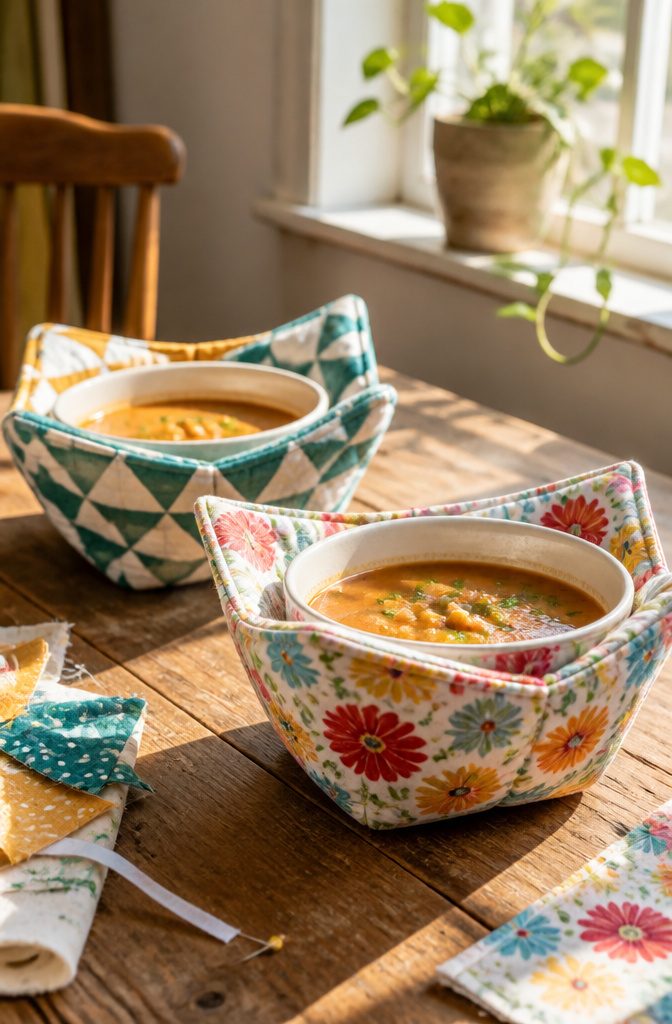
A bowl cozy keeps your hands off the hot ceramic when a bowl of soup, oatmeal or microwaved leftovers comes out of the microwave.
It also protects the table from the heat. A bowl of ice cream on your lap can leave you chilly, and the cozy handles that too.
For fabric, I’d put quilting cotton on the outside and plain cotton batting inside.
The cotton gives you a print you actually like, and the batting is the layer that does the insulating. Scraps work fine, so this is a good way to use up leftovers from other projects.
It is a quick, beginner-friendly project: a few straight seams, no zippers, no fitting. Make a few at once and you have gifts ready, since bowl cozies are an easy handmade present for anyone who eats soup.
2. Zipper Bag
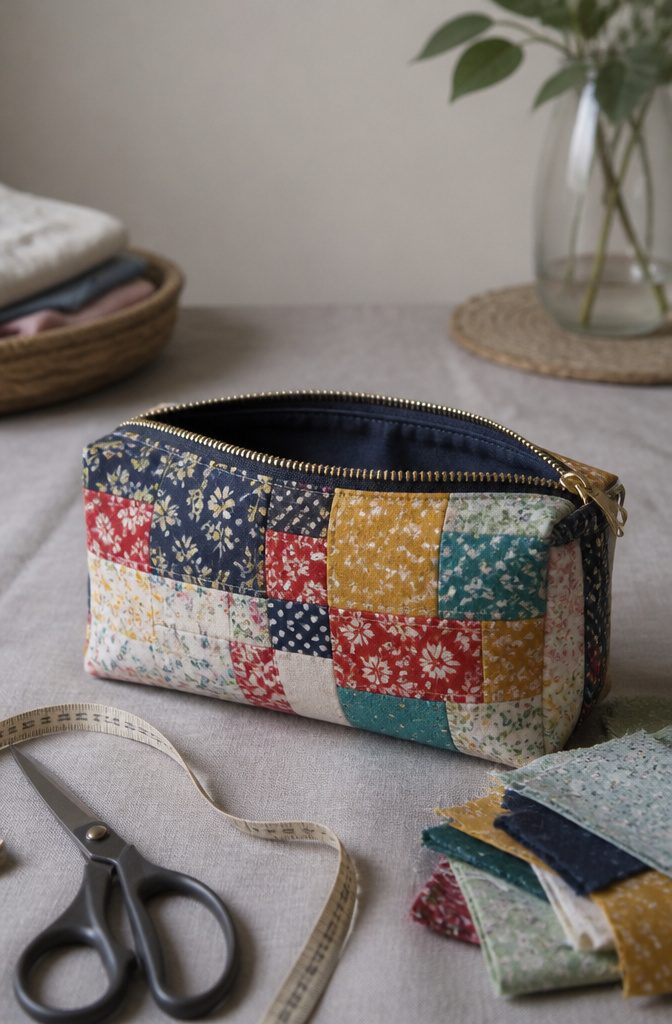
A zipper bag is the project I’d start with, and it’s the one most often recommended for beginners.
The fear is mostly about the zipper itself: a foot that crowds the teeth, a pull that gets in the way, and a part that looks like it needs special skill.
It doesn’t. A pouch needs only straight seams, and you can finish a small one in 30 minutes or less.
Scraps are enough for a tiny bag, so a first attempt costs very little.
Once the zipper goes in cleanly, you can add one to a pencil case, a makeup bag, or a pocket on a larger bag. Learn it on a small pouch where a crooked seam costs you almost nothing.
Zipper pouches make good gifts, and they’re easy to repeat in batches for a craft fair table.
3. Grocery Bag Holder
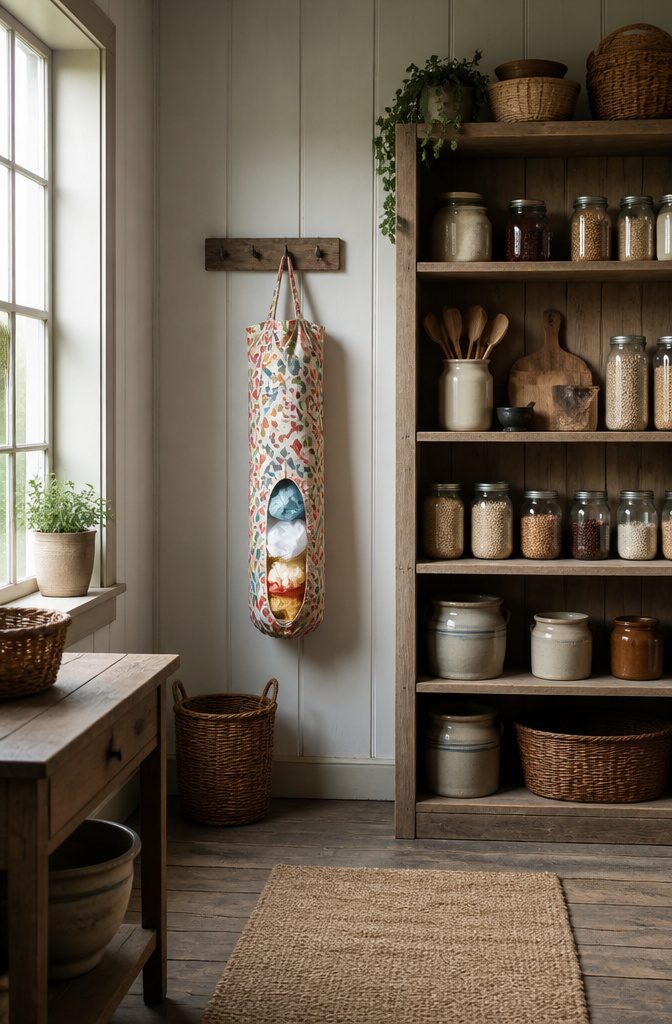
A grocery bag holder is a fabric tube, open at both ends, that hangs in a pantry or closet.
You stuff bags in the top and pull them out the bottom one at a time, so the pile stops living in a drawer.
It’s one of the lowest-stakes projects on this list, because it hangs out of sight and nobody inspects the seams.
One fat quarter is enough to make it. That makes it a scrap project, and a cotton print left over from something else works fine.
A tight weave holds its shape better than anything stretchy. Expect it to take about 20 minutes once the fabric is cut, so even with a slow start it fits in a short afternoon.
4. Rice Heat Wrap
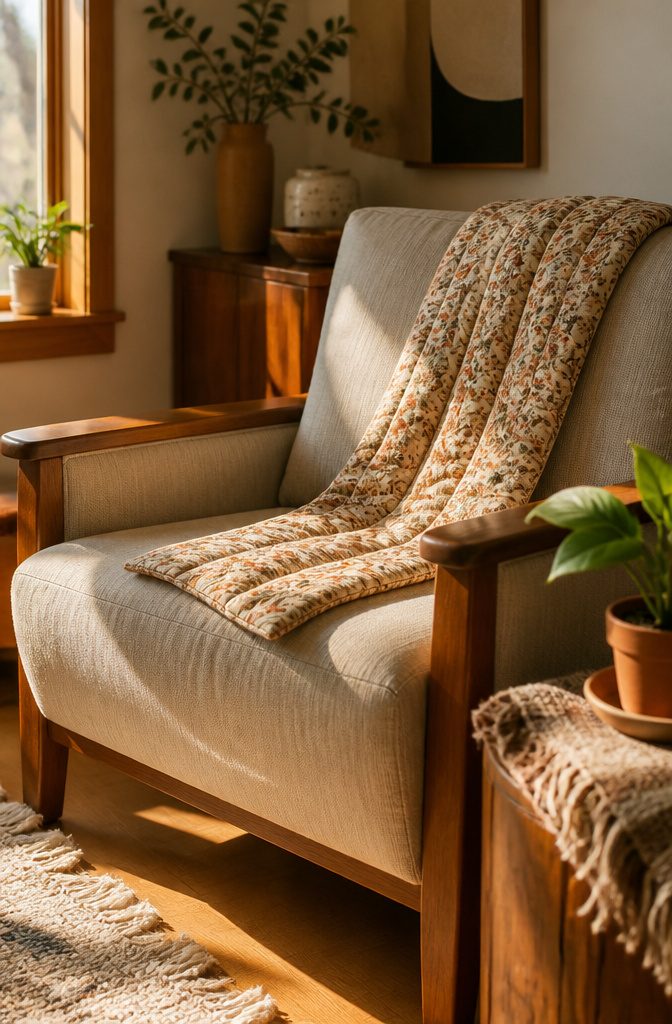
Flannel is the fabric I’d pick for a rice heat wrap. It’s soft against skin, it’s easy to cut and sew, and it’s the same cloth used for DIY hand warmers that people make in batches and give away.
Plain cotton works too, though it feels a little crisper against a sore neck.
The construction is straight seams and nothing else, which makes this a true beginner project. Sew a long rectangle for shoulders or a smaller square for hands, then fill it with rice.
Stitch the rice in with a straight line of seams so the grains stay put and the wrap drapes evenly across tired shoulders, feet or a sore back.
Make a few at once. They’re quick enough that gifting a set takes one afternoon.
5. One-Yard Magic Pillowcase
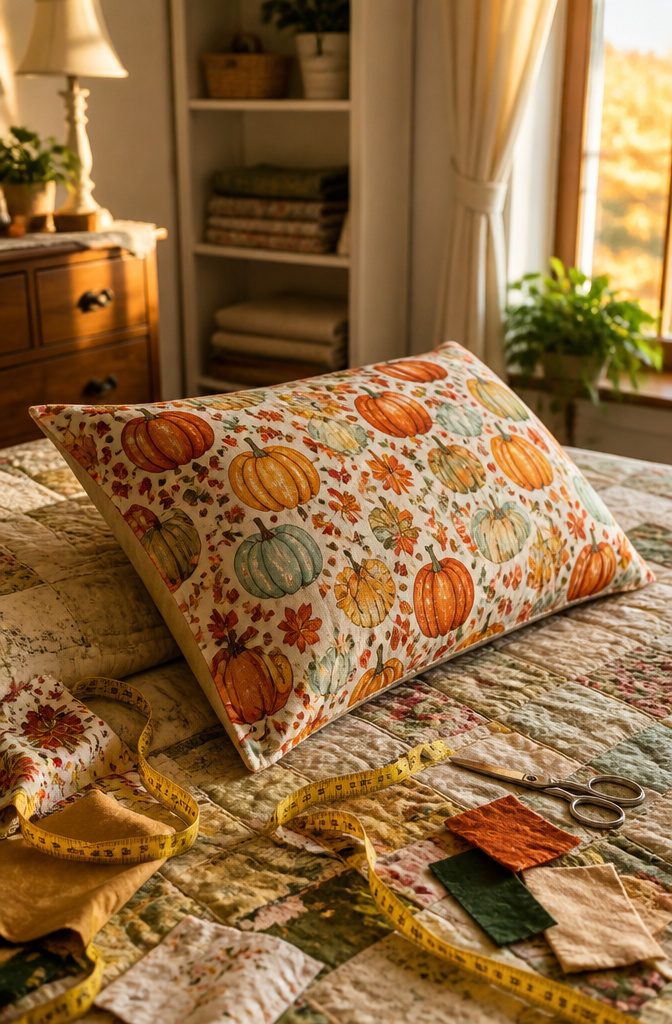
A pillowcase cut from exactly one yard of fabric uses all of it, with no waste, and every seam is a straight line.
That makes it the friendliest first project I can think of: you practice straight stitching and hemming, and nothing curves, gathers, or needs a closure.
Pick a print you love, since one yard is all you buy. Because it’s a single piece of fabric, a bold seasonal print shows off well here, whether pumpkins for fall or snowflakes for winter.
Wrap it around a pillow and it makes a weekend gift that costs very little and looks store-bought.
Stash cuts work too. If a favorite yard has been sitting in your cabinet waiting for a purpose, this is a good one.
6. Fabric Card Case
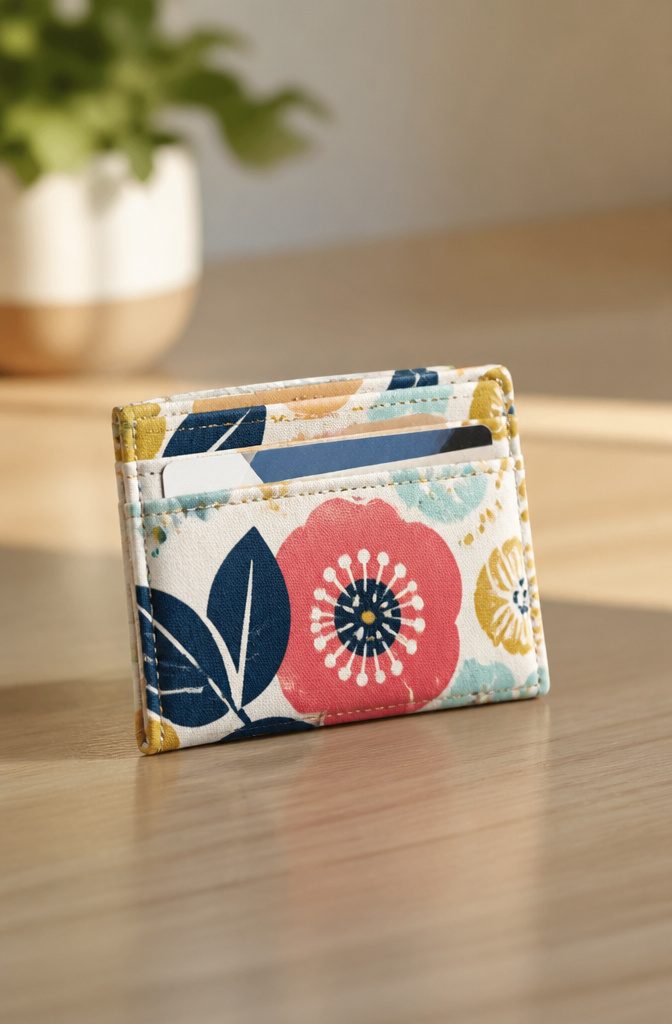
A card case is one of the few projects where scraps are the whole point.
It takes a small amount of fabric, and a structured, polished-looking holder comes together in about 20 minutes. That makes it a project you can start after lunch and still have time to wrap it.
It holds business cards, gift cards, or a transit pass, so it suits nearly anyone on a gift list.
I like it for the gift card habit in particular: a gift card is a safe present, and a handmade case around it gives it a personal touch.
Pick a fabric you would be happy to see every day, since the case will live in a pocket or purse.
Stiffer cotton scraps hold the slim shape best, and a pair of coordinating prints makes a good outside and lining.
7. DIY Tote Bag
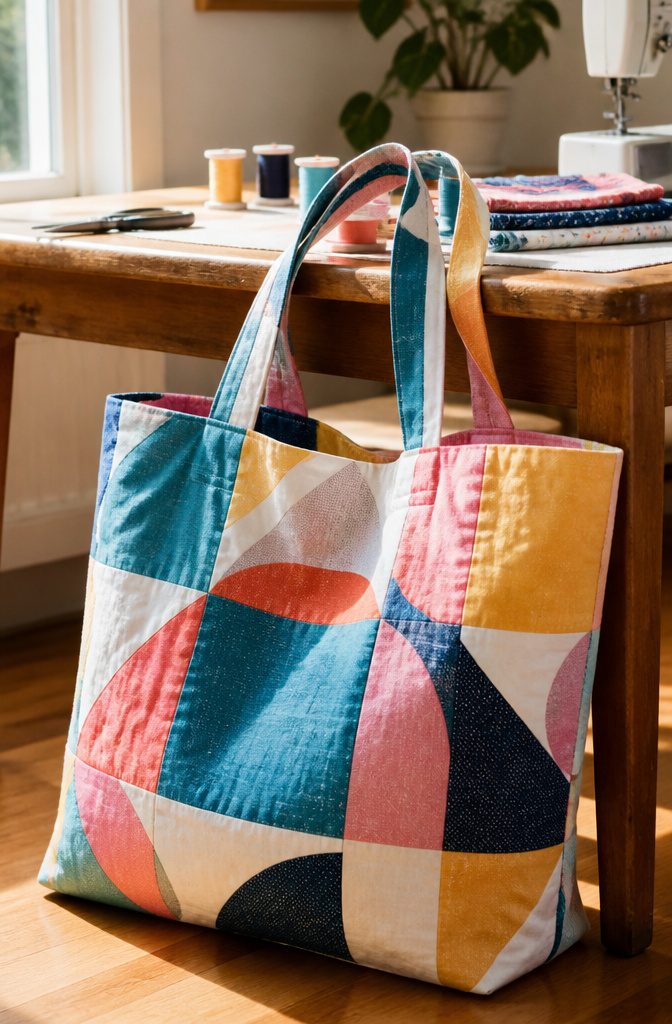
Straight seams are what make a tote the project I’d hand to anyone with a machine and an afternoon: cut two rectangles, sew the sides and bottom, add handles.
Quilting cotton is the easy pick because it’s stable, cuts cleanly, and comes in endless prints.
An unlined oversized tote is the quickest version, and it’s one of the most popular patterns around. Line it only if you want a sturdier bag.
Plain canvas totes can be customized with quick upgrades, so even a store-bought bag becomes a canvas for your own style.
Because the shape is so simple, a batch of totes in different prints is realistic for a craft fair table. Make a few sizes and let the fabric do the selling.
8. Reusable Makeup Remover Pads
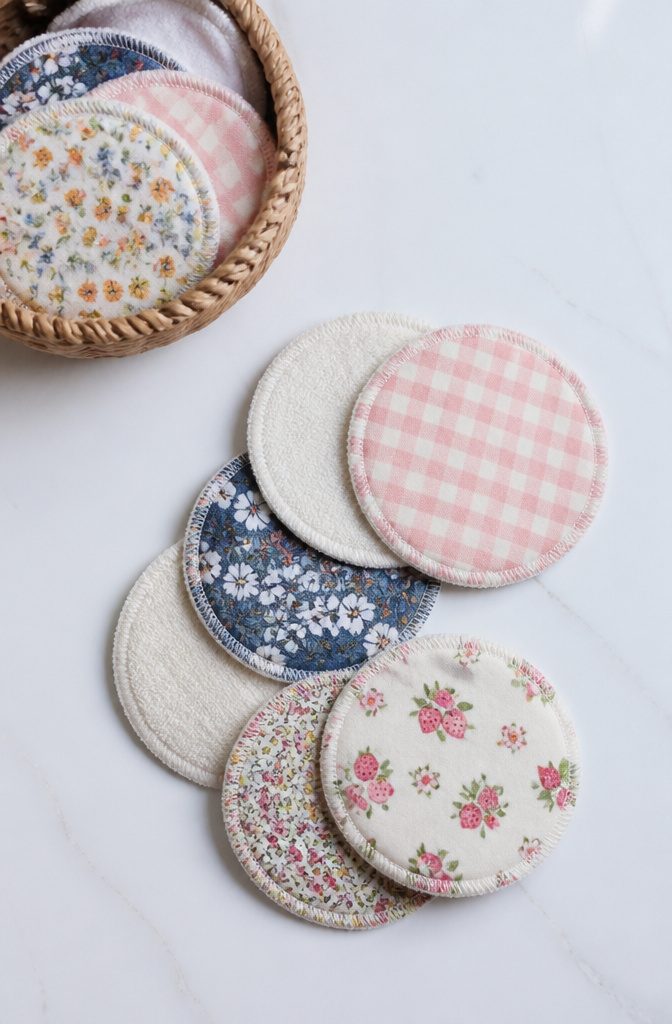
Reusable makeup remover pads are one of the fastest ways to use up fabric scraps, and a small round of soft fleece or a cotton and flannel layer replaces a disposable cotton pad without much fuss.
Stack a cotton top with a flannel back, and the pad has a gentle side for your face and a grippier side for stubborn product.
Because each pad is so small, you can join several together and sew a whole batch in one sitting at the machine.
I would pick this over a bigger project when you only have an evening and a scrap box to empty.
Bundle a stack with a small bag and they make an easy homemade gift. The one limit is that they are tiny, so expect to sew more than you think you need.
9. Sleep Mask
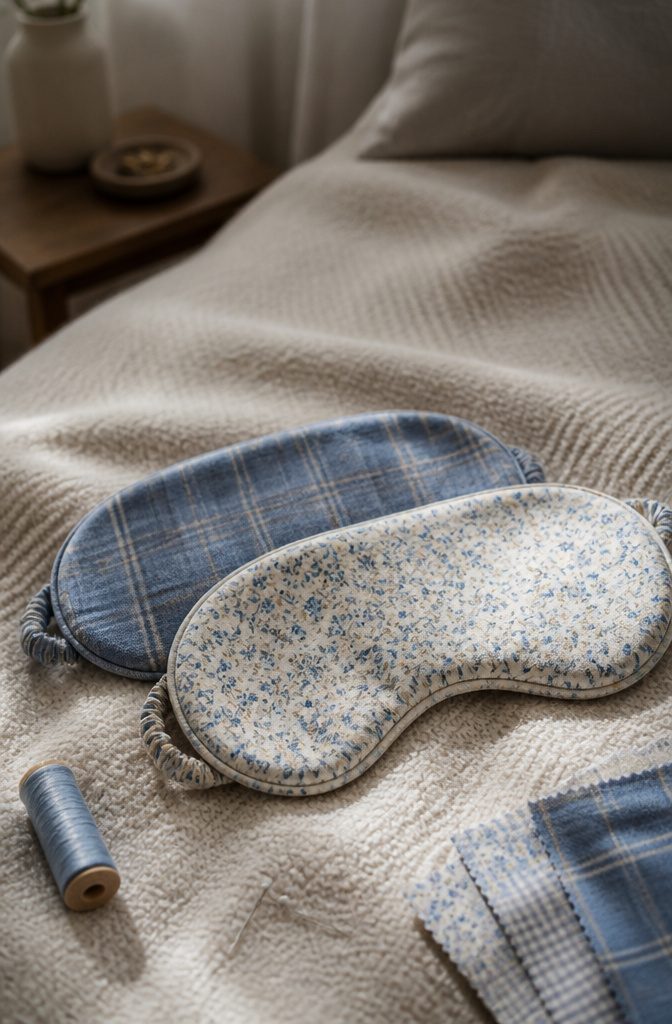
A sleep mask is one of the quickest accessory projects you can sew, and the curved shape is the detail that decides whether it’s comfortable.
A flat rectangle presses on your eyelids, while a curved pattern sits over the eyes and blocks light.
Free printable patterns exist for both curved and reversible versions, and I’d pick a reversible curved mask so you get two looks from one afternoon.
Flannel and cotton are the fabrics to reach for. Both are soft against the face, and a layer of each gives you a cozy side and a crisp side.
Add elastic for the strap, sized to sit snug without pinching behind the ears. The mask finishes fast, which makes it an easy handmade gift, especially for a friend who travels.
10. Dog Bandana
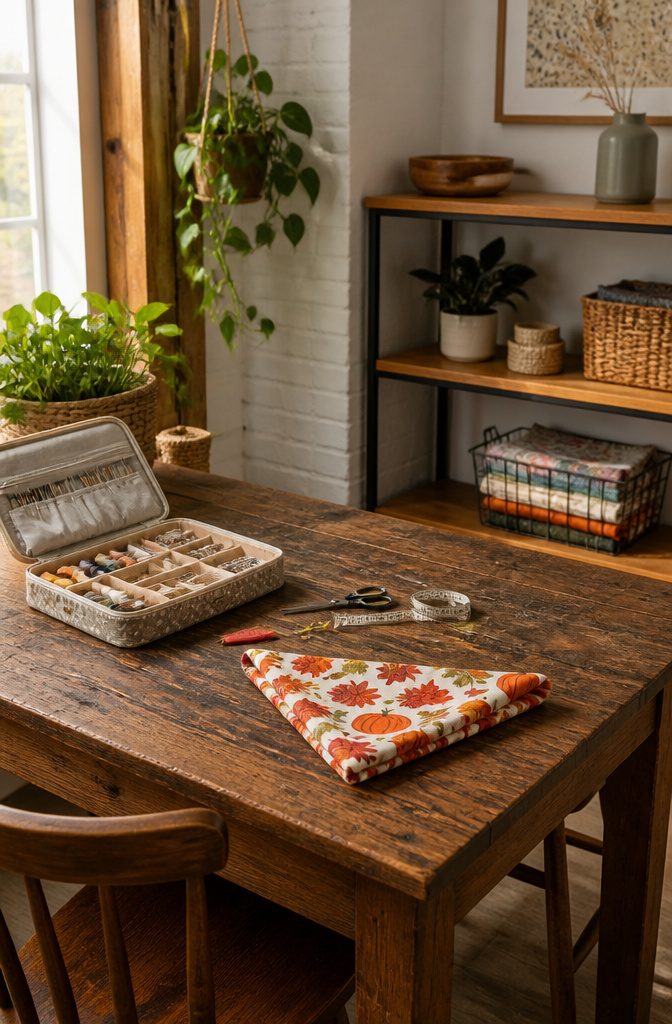
A dog bandana is about as forgiving as sewing gets: a triangle of fabric with hemmed edges, and no fit problems because the dog does the adjusting. Cut a square, fold it corner to corner, and cut along the fold.
Each square gives you two bandanas. Press the edges under twice, then stitch them down with a straight stitch.
Seasonal prints are where this project pays off.
Cotton quilting scraps in red and green, pumpkins, or small flags let you make a themed set from leftovers. Pick fabric that washes well and doesn’t fray heavily, since these get slobbered on and dragged through mud.
I’d make a dozen before stocking a craft fair table. Holiday bandanas sell best when they’re in the booth a few weeks ahead of the date, and a small size range keeps pricing simple.
11. Scrunchies
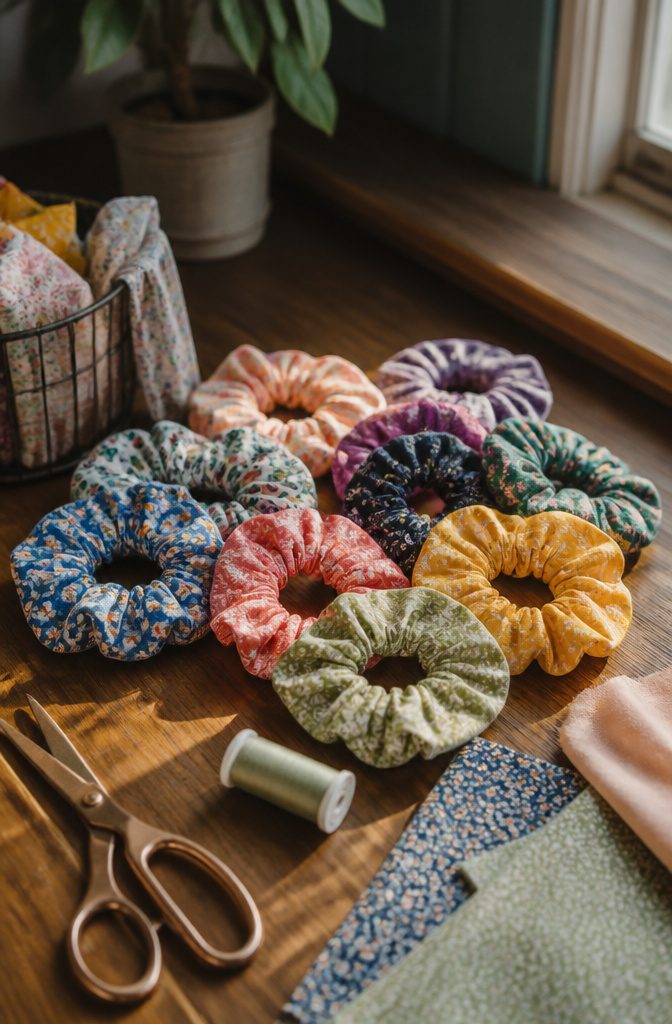
Scrunchies are the hair accessory that shows up on nearly every beginner sewing list, and the reason is simple: it’s all straight sewing.
You sew a rectangle of fabric into a tube, turn it right side out, thread elastic through, and close the opening. No curves, no pattern pieces.
Scraps are all it takes, so a fat quarter, one of those small pre-cut squares of fabric, covers several.
A mistake costs you one scrap, not a yard. If you want a clean finish, look for a no-visible-seam closing method.
I’d make a batch of them in one sitting, since one rectangle of fabric and a length of elastic is the whole kit. Extras sell well at local markets or online, and they make easy gifts.
12. Fabric Baskets
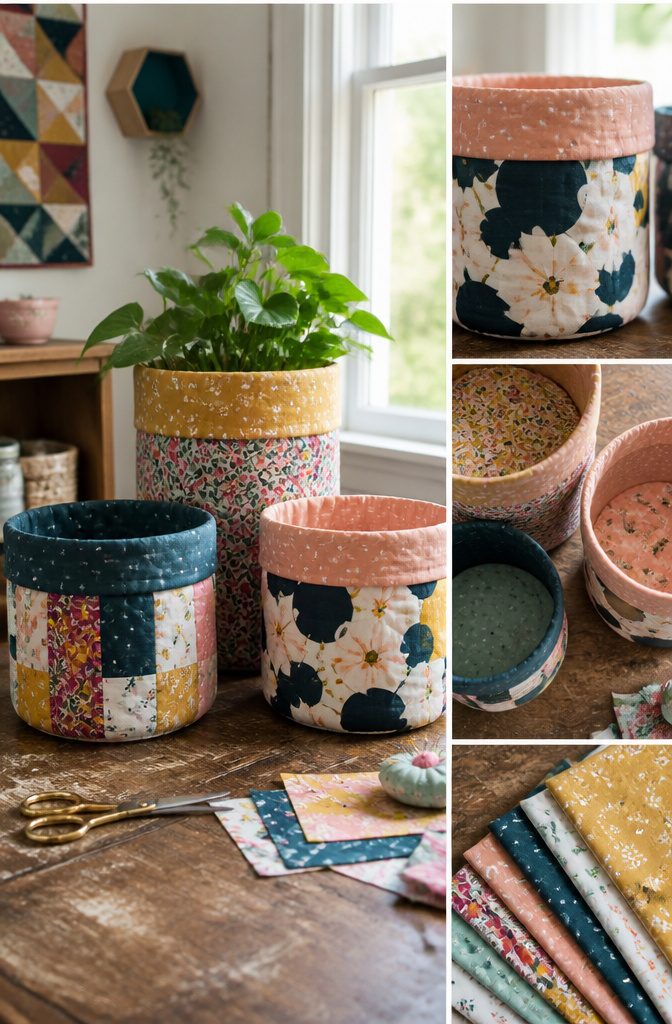
Interfacing is what turns a floppy square of cotton into a basket that stands up on its own, and a box corner (sewing across the bottom corners so the base sits flat) is what gives it shape.
Both are beginner moves, and a couple of hours covers the whole project.
For sturdiness, fuse or sew interfacing to your outer fabric before you stitch anything else. Waterproof Oxford makes a tougher container still, though it adds a hammer and grommets if you go the drawstring route.
Scraps are where I’d start.
Mix and match fabrics for the outside and lining, so a leftover quilting cotton can pair with a plain remnant. Sized for pot plants, kids’ toys or a sewing room, one pattern covers all three.
13. Simple Tote Bags
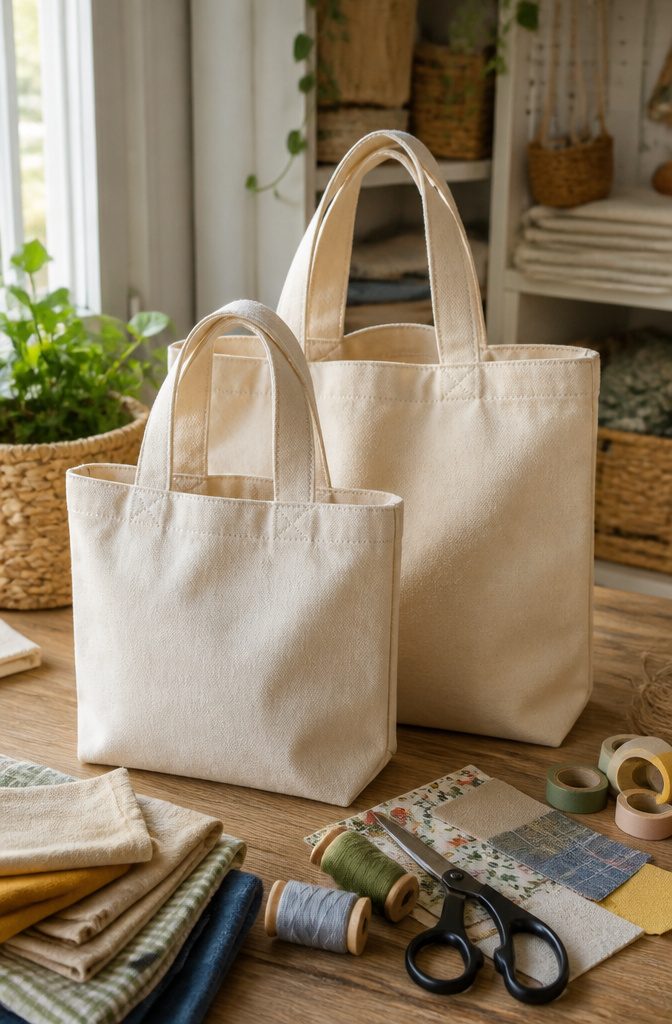
Two rectangles of fabric and two straight seams on the sides and bottom make the plainest tote there is.
Cut both pieces the same size, stitch them right sides together, hem the top edge, and turn it out. Sturdy cotton canvas or a mid-weight cotton holds up best, and a thin quilting cotton will sag under a few cans.
Straps are the only real decision.
Cut two long strips and sew them into the side seams before you close them, and you skip the step of attaching them later. I’d rather do that than topstitch loops onto a finished bag.
A tote like this makes a good gift at the register or the baby shower: fill it with a book, a candle, or a few market finds.
14. Pincushions
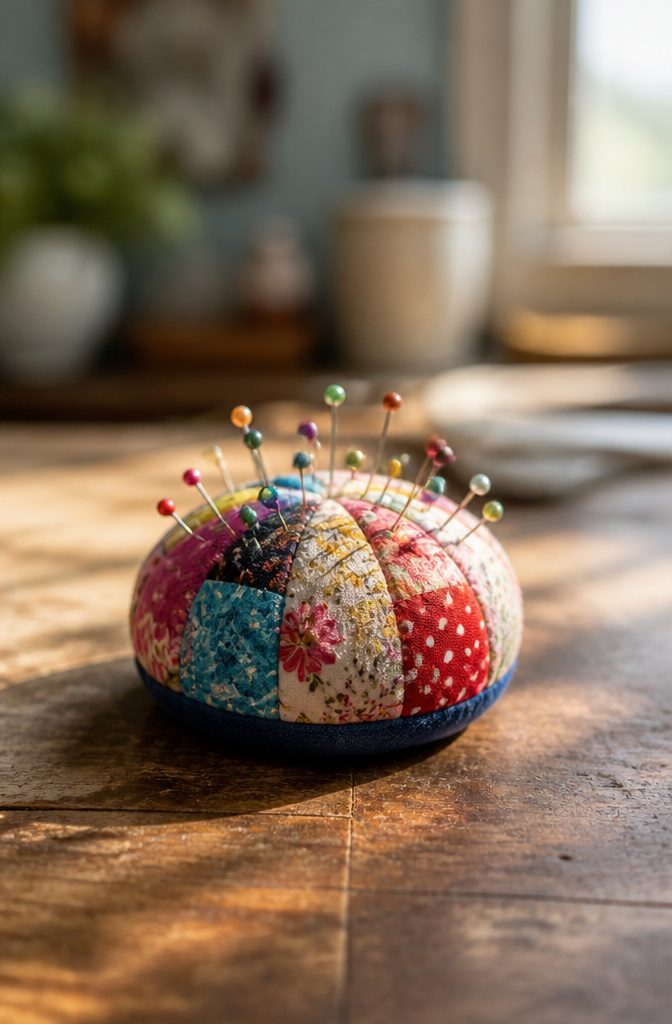
A pincushion is the smallest finish on this list, and that is why it works as a first project.
A few fabric scraps, one straight seam and a sewn-on button cover two skills you will use on every other project here.
A patchwork top uses up the odd bits left over from larger projects, so the cost is close to nothing.
Stuffing decides how it feels in use.
Pack it firm enough that a pin holds without leaning, and keep going past the point where it looks full, because it settles. Choose a tightly woven cotton so pin tips don’t fray the weave.
I’d give one to any sewer who already has a drawer full of loose pins. It sits on the table where they work, so the maker’s stitches get looked at every time someone reaches for a pin.
15. Reusable Sandwich Bags
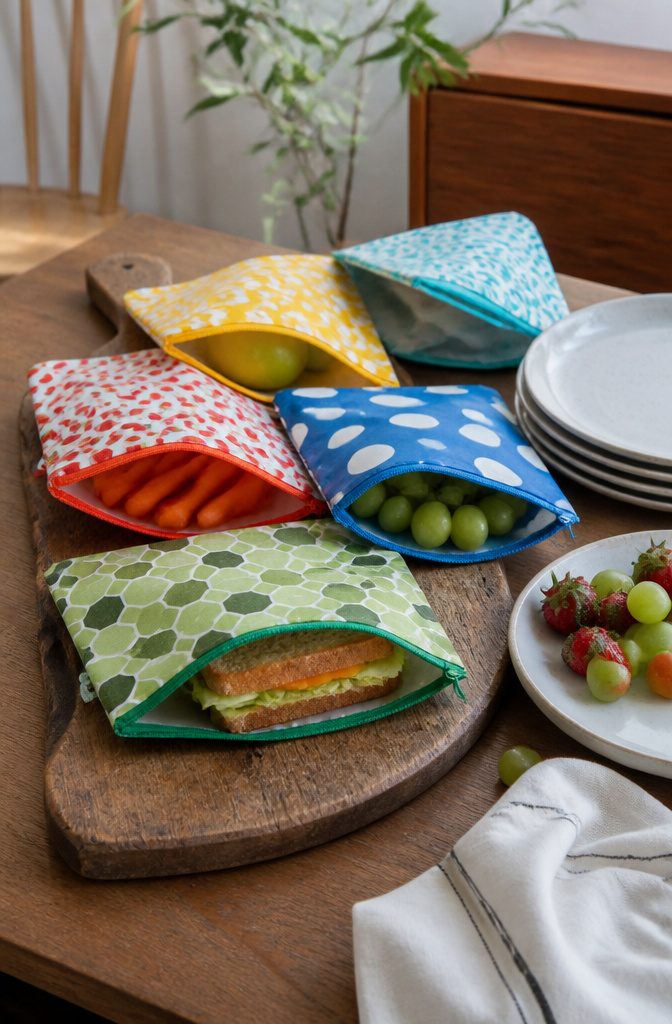
Laminated fabric is the material that makes a sandwich bag worth sewing.
Plain cotton soaks up crumbs and moisture, while a laminated cotton wipes clean with a damp cloth, which is why I’d pick it over any untreated print for lunch duty.
The one trade-off is that laminated cloth can feel stiff and sticky under the presser foot, so go slowly.
The construction is easy as pie: a few straight seams on a sewing machine, and one bag takes a short stretch of an afternoon. Cut several at once and sew them in a row.
Make a set of three or four and the gift is done.
A stack of bags tied with a ribbon suits anyone trying to cut down on plastic wrap, and mixing prints lets each person in a household claim their own.
Best Fabrics for Beginners
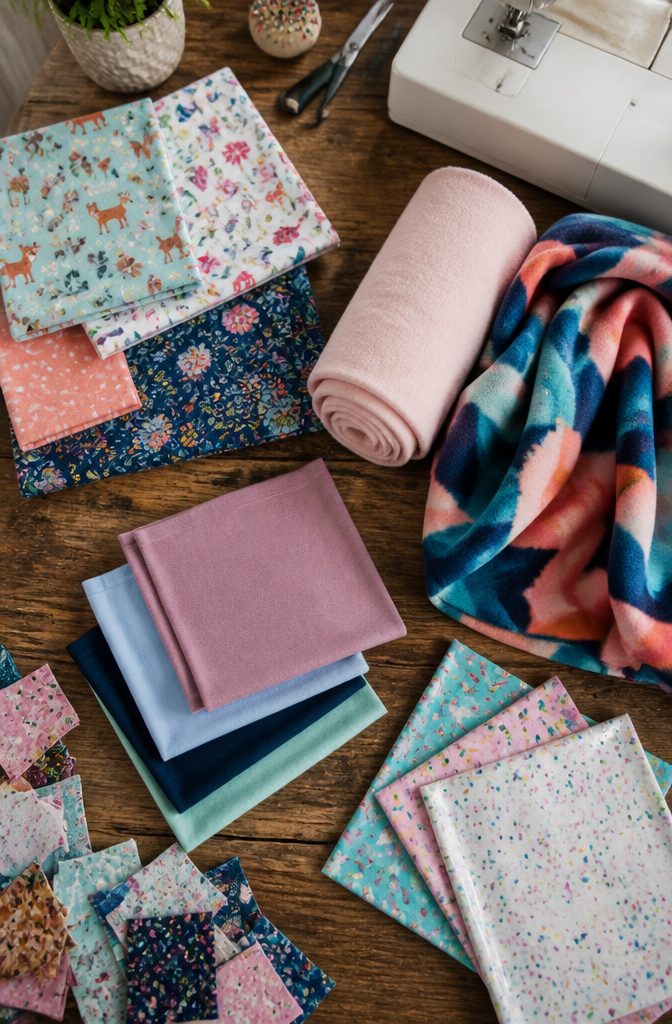
Quilting cotton is the fabric I’d hand any beginner first. These are the options worth buying, and one worth saving:
- Quilting cotton: easy to cut, easy to sew, and available in endless prints. It also works for bibs, bookmarks and cord holders.
- Flannel: soft and forgiving, and a good pick for burp cloths because it absorbs drool and spit-up.
- Polar fleece and sweatshirt fleece: cut cleanly and don’t need hemming, though they’re bulkier under the needle.
- Cotton spandex jersey: stretchy and comfortable, but I’d wait until you’ve sewn a few woven projects.
- Laminated cotton: wipes clean, which suits bibs and anything that meets a spill.
- Scraps: squares and strips become bookmarks, pattern weights, bunting and fabric twine, so you can skip buying yardage for small projects.
Skill Level and Time
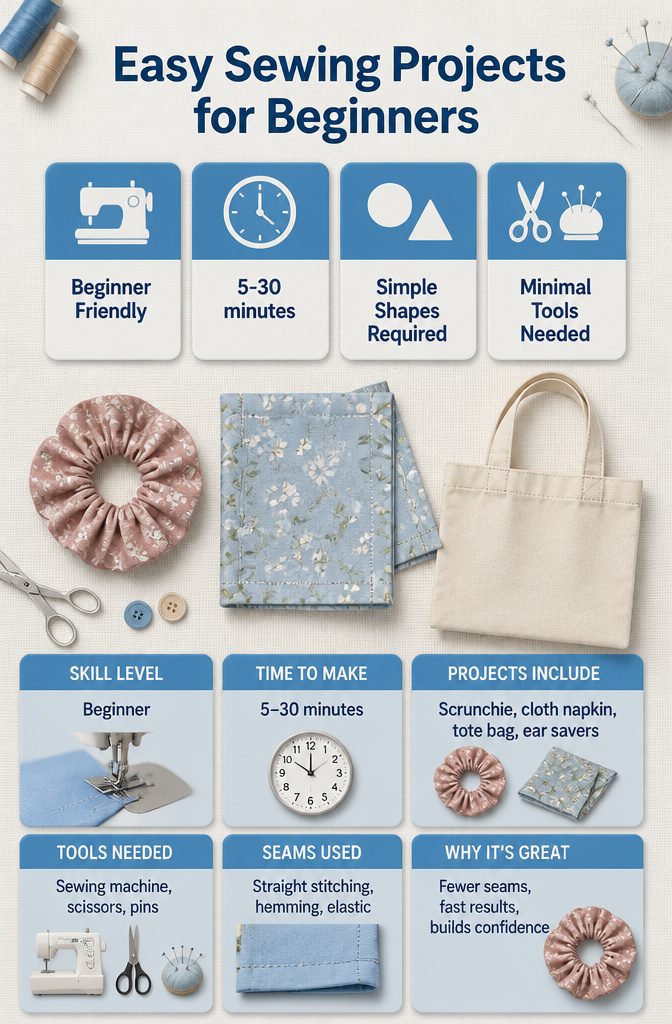
Most of these projects ask for straight seams and simple shapes, and that is why they suit beginners.
A scrunchie, a cloth napkin or a pumpkin pincushion (two circles, stitched and stuffed with a little polyfill) needs nothing beyond a sewing machine, scissors and pins.
A simple project takes about 5–30 minutes, and a cloth napkin with mitered corners can be sewn in 10.
Even a tote bag with straight seams usually fits inside an hour. Ear savers, made from leftover scraps and a couple of buttons, go faster still.
For a first project I’d pick the one with the fewest seams. Straight stitching, hemming and inserting elastic cover nearly everything on this list, and once those feel easy, the longer projects stop looking intimidating.
Gifting and Selling Projects
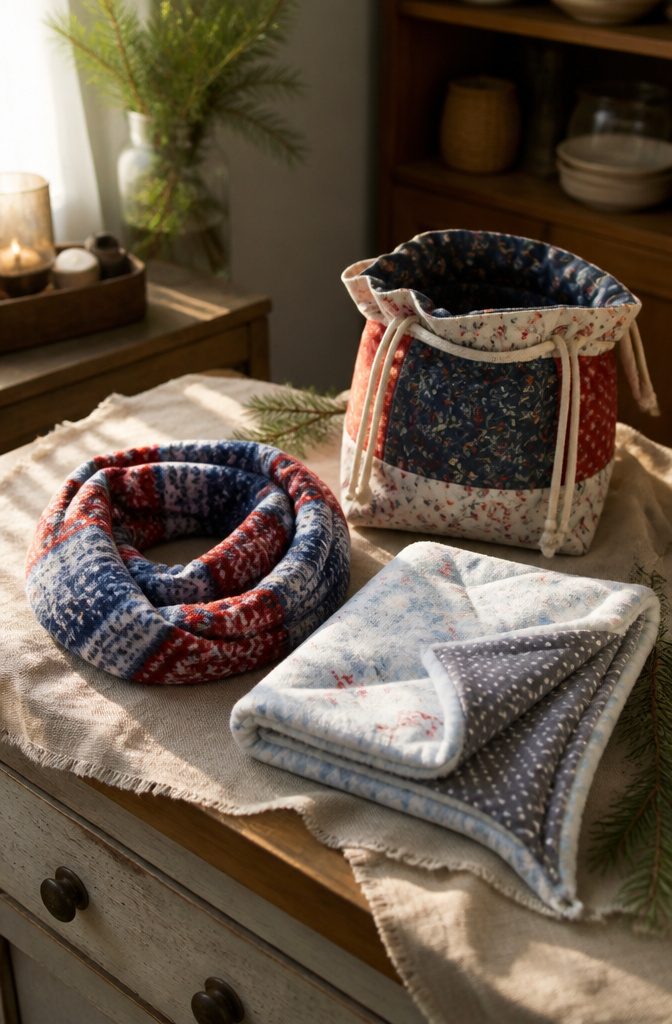
Small, quick projects make the best gifts and the best stock. An infinity scarf needs very little cutting and stitching, a reversible baby blanket works for any shower, and a drawstring bag can be sized to fit whatever goes inside.
I’d pick the blanket for new parents: flannel on both sides, or flannel paired with cotton, and you’re done.
Most of these also sell well at craft fairs or online. Pick projects that sew up fast and use small amounts of fabric, so your time pays off, and favor items that photograph well and explain themselves on a shelf.
Holiday themes help here: the same drawstring bag in seasonal prints becomes a gift bag, and a scarf in winter colors suits the weeks before the holidays.
Frequently Asked Questions
What are some easy sewing crafts for adults who are just starting out?
Start with projects built from straight seams and simple shapes: zipper pouches, tote bags, scrunchies, pillowcases and fabric baskets. A small zipper pouch is a good first pick because a crooked seam costs you almost nothing.
How long does it take to sew a simple project?
Most simple projects take about 5–30 minutes, and even a tote bag with straight seams usually fits inside an hour.
A grocery bag holder or a fabric card case runs about 20 minutes once the fabric is cut. A fabric basket is the slower end, at a couple of hours.
What fabric is best for beginner sewing projects?
Quilting cotton is the best first choice because it cuts cleanly, sews easily and comes in endless prints.
Flannel is a soft, forgiving second pick, and fleece needs no hemming. Wait on stretchy cotton spandex jersey until you have sewn a few woven projects.
Can I sell the sewing projects I make?
Yes, many of these projects sell well at craft fairs or online.
Choose ones that sew up fast, use small amounts of fabric, and look good in a photo or on a shelf without needing an explanation. Totes, scrunchies, zipper pouches and seasonal dog bandanas all suit a craft table.